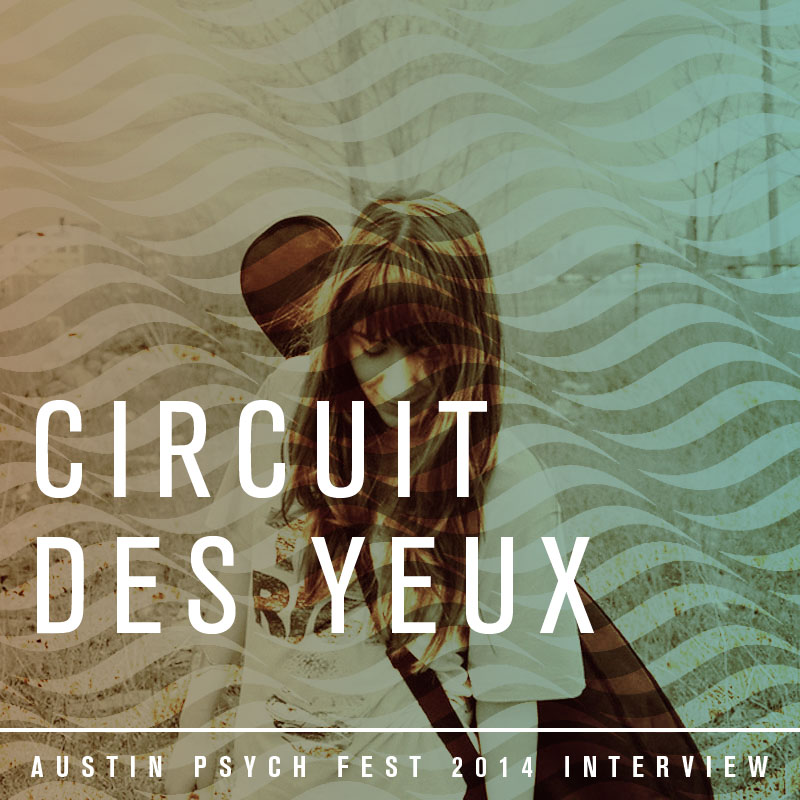
Revolt of the Apes’ interview with Circuit Des Yeux is up now at the official Austin Psych Fest 2014 website. Read the entire interview there, and look for the complete text to show up here in the very near future. Here’s an excerpt:
What was your very first experience performing music live and what element of that experience was most surprising to you – either in a positive or a negative way? What bands or artists persuaded you directly or indirectly to start creating your own music? How do you think your concept of yourself as a musician or artist has evolved since beginning Circuit Des Yeux?
When I was a senior in highschool, my boyfriend at the time was in a band. It was the summer of 2007, and my boyfriend’s band, Katie Leming, Drew Davis, and my friend Kevin Failure of Pink Reason were all kind of hanging out at one particular house. My friend’s parents had left town for like 3 months so people were literally just hanging out there all time, basically wrecking the place. Anyway, my good friend Katie was walking up to the house. It was after her first day on the job at a bank and she was really looking terrible. Come to find out she was robbed at gun point! She was robbed at gunpoint…on the first day of the job! My boyfriend’s band had a set up downstairs for practicing and had all of their instruments plugged in. Katie wrote this really beautiful poem about a cavity she had and we went downstairs and just jammed. She played the drums and yelled out her poem, and I took a beer bottle and rubbed it against a guitar. Drew & Kevin booked us a show for the next night at this really shady sports bar, so we came up with a name, and the next night we played our first show. I didn’t know how to play the guitar, Katie didn’t know how to play the drums, we played to about 10 people and it was fucking awesome. I couldn’t believe how great it felt. I loved it, I felt impowered, and I never went back. I have to thank the people who forced that really surreal event to take place. Eventually the band fell off and I began solo work. The work that Katie and I did together laid an exploratory foundation for the way I approach music. I think I’m much more grounded and refined now, but my music is still based on a feeling, and emotional obstacles.
Revolt of the Apes is pleased, stoked and chuffed to support Austin Psych Fest 2014 through a series of interviews with many of the artists involved, answering the kind of ridiculous questions you’ve come to know and – maybe – love. Many more coming soon.
“My Eyes Are Closed When the Sun Comes Up” goes the title of the first song we heard by Winkie, a NYC duo with gothic tendencies and noisy propensities, coupled with a flair for creating melodic memories. It’s fair to say we were hooked from the very start.
Upon the release of Winkie’s debut full-length, “One Day We Pretended To Be Ghosts,” it’s fair to say that the word “hooked” doesn’t quite cover it. Our response to this album feels less like discovering a new favorite for mix tapes and late-night lounge-abouts, and more like having the curtain raised on a barely remembered dream. Truly, it feels like an introduction to a ghost.
A wise man once said if you have ghosts, than you have everything. Winkie have everything – including an almost painfully perfect debut album and miles of road ahead of them. The duo of Peter and Gina were kind enough to provide their thoughtful answers to our ridiculous questions below. Enjoy.
What is your own personal definition of a ghost – and how does that definition differ from what might be called the “conventional” definition of a ghost? Do you think this concept of ghosts directly impacts the music you make, in either a literal or a symbolic way? How so?
Gina: My own personal definition of a ghost- a ghost is an unsettled soul that I never wish to confirm with a visual. Conventionally I would say that people tend to think of ghosts as messengers from above, or below, or in the middle, for the living and for the benefit of the living. I can’t really confirm whether or not the concept of ghosts has a direct impact on WINKIE but I can state with certainty that the living do. Speaking of ghosts- “The Ghost of Each Room” by cEvin Key is a really good album. I wonder how he would answer this question.
Peter: At times, we all become a living ghost. Whether we are going through the motions, being an “outsider,” blanking out in the middle of a crowd or getting lost in societies idyllic norms … I like to think our music allows listeners to momentarily separate themselves from one consciousness and enter another. On the album, we record all of our parts separately. Each time either of us open an incomplete song it’s a surprise to hear what new “ghost” may now reside within it.
Can you name a specific song or a specific band from the past – perhaps even one that predates your own lifetime – that communicated with you in such a compelling way that it’s as if the sounds were speaking directly to you? What was it about that music that you found so compelling? How has that sound – or that message – influenced the music you make today?
Peter: “Keeping Banging The Door” by Public Image Ltd. is one of the songs that flipped me on my ear. To this day, “Flowers of Romance” is a constant source of musical education. The repetitive drum patterns and Levene’s layered textures are almost perfection … really amazing. There is also a song called “Diseases” by Thrush and the Cunts. It was included in Richard Lowenstein’s film “Dogs In Space.” The song is all of 1 minute and 3 seconds but it informed me about everything I wanted to hear in a song: distorted tones, un-changing drums and a piano-line that takes me to John Cale’s presence on “I Wanna Be Your Dog.” Years ago I found the record in a small shop in New Orleans and it is one of my most treasured records. Both songs resonated deeply and pushed my exploration of texture and rhythm patterns.
Gina: The song “Sometimes” by My Bloody Valentine. I was introduced to MBV when “Loveless” was released. I was a huge Jesus and Mary Chain fan and that’s probably how they came on my radar. The song has been floating in and out of my head on a daily basis for at least 20 years. There is a line in it where Kevin Shields says “turn my head into sound” which completely resonated with me and still does. I don’t know about a specific message, but if you think about having your head filled with sound – as a musician it makes total sense. You can hear his vocals enough to sort of understand what he is saying but he’s not overpowering the song with them. I also love how the keyboard line slowly comes into the song and becomes the dominant sound at the end- like the sun coming out from behind the clouds. I think that WINKIE has some elements of that. Peter would disagree though. He says there is no sun, only clouds.
Is there a single element or attitude that you feel ties the two of your together as Winkie in a way beyond being in a relationship together? Was this something you have experienced in other artistic endeavors, musical or otherwise? How do you think that feeling has evolved since Winkie began?
Gina: I think it helps that we have both always been a little bit delusional. Winkie has definitely heightened this ridiculous delusion to a whole new level. Peter is probably going to answer this question by saying something like, “we are from NY and both have an awesomely hostile NY attitude.” Being in New York has had such a deep impact on both of us and I think that staying here has, although it sounds strange, helped with the evolution of WINKIE
Peter: I cannot deny the impact my environment (New York) has had on what I do and me. Gina and I have worked together (musically) within many projects. We always had a sound in our head and Winkie is the first time we were able to actualize it. This was the result of being secure to exist among our differences and a commitment to the vision.
For the most part, we try not to inquire about the origin of a band’s name – but in the case of Winkie, we can’t resist. What can you tell us about the decision to name the band Winkie? What does the name represent to you? Is there a connection between the name and the way in which you choose to present yourselves visually when performing live?
Gina: We were trying to come up with something “fun” because we were scoring music for a short film and wanted to change our direction into a more ambient, electronic, pretty-sounding band. Clearly we succeeded – HA! WINKIE was taken from a David Lynch movie which I believe he took from the Land of Oz. I’ll let you research that one. Our current visual has no connection to the name but I love David Lynch, and”The Wizard of Oz.” And my late Grandma used to say I was Dorothy from “The Wizard of Oz.” And she is not an unsettled ghost. She is in heaven. Depending on our mood – we do like experimenting with colorful vs. black and white dreamlike visuals, and wearing veils and big hats … Ok, so maybe it does … I just realized that our current visual does tie in with our initial intention of making everything dreamlike.
Peter: Yes, originally, this was a project to provide music to our friend’s (Paul Natale) short films. We wanted a name that distinguished itself from our previous work. The name refers to the “I had a dream about this place” diner in “Mulholland Drive.” The way David Lynch allows dreams to shape sound, story and visual is inspiring. We had a dream … about this sound. Live, we attempt to bring the audience into the “dream” through backing videos, lighting and occasionally obscuring our appearance.
Would you care to comment on the rumor – the rumor that we are attempting to start right now – that you previously recorded an album that has thus far not seen the light of day, entitled “Goth Fonzie,” using the band name, “Henry Winkie”?
Peter: We cannot confirm or deny the existence of that album but it could have been the soundtrack for an unrealized Jim Jarmusch film staring Alan Vega in the lead role.
We won’t hesitate to say that we’re more than a little entranced by your debut full-length, “One Day We Pretended to Be Ghosts.” We find it to be a very nuanced album – the combination of somewhat delicate (?) vocal melodies with a bit of a harsh, noisy; almost Einstürzende Neubauten-esque landscape is particularly compelling, and ultimately very memorable. How do you feel about the album now that it’s complete and gone to live on its own in the world? Was there an overriding theme that you wanted to present with this collection of songs?
Peter: First, thank you for describing our music as delicate, harsh and a “Neubauten-esque landscape.” I think of it as a space between My Bloody Valentine’s “I Believe” and Brian Eno’s “An Ending (Ascent).” Musically, we wanted to achieve a collection that could also work as movie score. The listener could imagine each scene … being consumed by the ocean, driving a speeding car toward the horizon … I think we were successful at setting this environment – if you allow it.
Gina: Thank you. We are thrilled that you like it and I think it will be OK out there in the world and hopefully it will meet some friends while its out there.
I cannot say that we had any sort of plan when we wrote this album although I know that I had this constant horrible feeling being restrained by a myriad of things during the period of time when it was completed. New York City is wonderful but at the same time there is this constant feeling that you cannot simply just be. I think that the songs reflect a sense of that in some sort of strange and unintended way. I hate to be that annoying person who refuses to explain their work – I am not trying to be vague – but it was not my intention to create such a harsh sound. I was surprised when people started saying that it was a very harsh sound. I thought it sounded pretty and can hear pretty elements in our song although Peter completely laughs at me when I say that.
Picking a highlight of an album this strong is perhaps counter-productive, but two songs in particular – “Sometimes” and “Vacant”, struck us. Can you tell us a little bit about the inspiration for these songs, both musically and lyrically?
Gina: We were just talking about these two songs yesterday at practice. I was telling Peter that “Sometimes” is one of those songs that I will never be happy with. I don’t know why but it never sounds finished to me. It has taken a really long time to complete and I take full responsibility for that. Peter wrote it and I messed around with it – for a few years, like a tease – leading it on but never committing. I love the word “sometimes.” Depeche Mode has a song on “Playing the Angel” where it is used in such a perfect way. Then again, Depeche Mode also has an amazing song called “Sometimes.” Then again, Depeche Mode is always perfect. I can’t tell you what the lyrics mean though. It’s my secret.
As for “Vacant” – that was the only song on our album where Peter put down some melodies and I immediately knew where to go with it. We have a different version of this song where the drumbeats cut out and it’s less fuzzy, and I think that version is really great as well as the one that ended up on the album. The words are really sad. I was extremely sad when I wrote this song. I don’t like being sad. I try not to be sad but sadness has a way of sneaking into your head and heart. Sadness is such a creeper … kind of like a ghost …
What music have you been listening to lately? If push comes to shove, what’s your favorite song by Bauhaus song and why? Please show your work.
Gina: I will leave the Bauhaus song to Peter because I am not a fan of Peter Murphy. I do adore Love and Rockets though. Lately I’ve been listening to Brian Ferry (with and without Roxy Music), X and HTRK. When I’m on the train I like to think that I’m in a train car filled with Brian Ferry’s and they are all singing to me. It makes the commute much more tolerable. HTRK is one of those bands that have that sound that I wish I had. The vocals are so incredibly fox-tastic. They have an alluring and seductive quality about them that I am quite jealous of. I’m not very alluring. Maybe if I stopped trying to capture the sounds tornadoes make I would be alluring … OK, that “Who Killed Mr. Moonlight” song. I think David J. sings it. I like that Bauhaus song most.
Peter: HTRK! They have been in constant play for me. I am looking forward to hearing their new album. A friend turned me onto Wrekmeister Harmonies’ “You’ve Always Meant So Much To Me” … which is beautiful. Bauhaus is a funny topic with us – as Gina just mentioned. We both agree that Daniel Ash is an amazing guitar player. “The Three Shadows Part 2” may not feature his signature tone but it is a striking statement of what they were capable of (“Passion Of Lovers” would be a close second).
In his novel “Jitterbug Perfume,” Tom Robbins – a huge fan of Throbbing Gristle, we’re sure of it – writes the following:
“A mask has but one expression, frozen and eternal, yet it is always and ever the essential expression, and to hide one’s telltale flesh behind the external skeleton of the mask is to display the universal identity of the inner being in place of the outer identity that is transitory and corrupt. The freedom of the masked is not the vulgar political freedom of the successful revolutionary, but the magical freedom of the Divine, beyond politics and beyond success. A mask, any mask, whether horned like a beast or feathered like an angel, is the face of immortality. Meet me in Cognito, baby. In Cognito, we’ll have nothing to hide.”
Your thoughts?
Gina: My thoughts – “unhappiness is the ultimate form of self indulgence.” And THIS is why I try not to be sad.
I’m totally impressed. You completely get it. If you ever come to NY for a visit, I will buy you a martini.
Peter: A mask can allow the wearer to shape perception. It can also allow moments of freedom and imprisonment. Yukkio Mishima’s “Confessions Of A Mask” (I just started reading this) would support the later. The mask is held by a delicate string and must be worn with care (I wish we ran into Tom Robbins at TG’s Coachella performance).
What’s next for Winkie?
Gina: We actually started talking about writing some new material. I’ve been working on a song for the past few weeks – so far it has three layers so it needs work. I keep changing the direction of the third layer, which changes the direction of the rest of the song, and I’m not sure that I want to change the direction entirely. We have some shows lined up and look forward to meeting more awesome people and have wonderful experiences doing what we love to do. Hearts.
Peter: The album is out and we want to support it with more performances outside of New York and we hope to fill 2014 with many performances and another album.
“One Day We Pretended to be Ghosts” is available here.
Can you recall what the first album you ever bought with your own money was, or perhaps that first album that you ever begged your parents for? What attracted you to that music in the first place? How do you feel about it today?
Steve: Led Zeppelin 4. It was so dark and mysterious to me. Really the first album I bought myself and didn’t just steal from my older brother. It will always give me the creepy, exciting feeling when listening to it. Now knowing the history, you can really hear the haunted manor house they recorded those sounds in.
What has been the biggest shift in either your listening habits or musical appreciation between your youth and today?
Steve: Now I don’t have the time to really dig into an album like when I was younger. It’s unfortunate but sometimes the love of music that makes you want to play and get “involved” also fills up your free time, relieving you of those precious moments when you could get lost in tone and melody. The one thing that has stayed the same is if I like something, I want to listen to it over and over again, at least in the background these days.
Revolt of the Apes is pleased, stoked and chuffed to support Austin Psych Fest 2014 through a series of interviews with many of the artists involved, answering the kind of ridiculous questions you’ve come to know and – maybe – love. Many more coming soon.
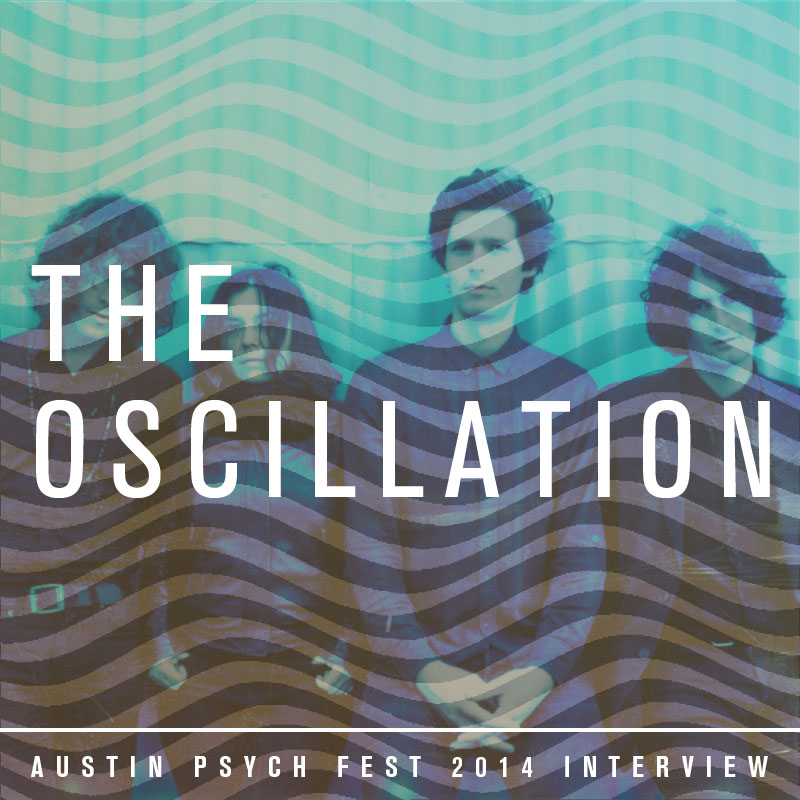
What energy or inspiration do you feel you draw from other musicians? How do you feel that energy is transferred to the recordings of The Oscillation? Can you cite any specific experience in which a collaborative musical effort influenced your approach to music you made in the future?
I guess you end up taking something from everything you listen to whether consciously or unconsciously. There’s so many bands or artists that I look up to and speaking for myself you just hear all these amazing other records or players and take as much as you can from it and try to consolidate it all somehow. I would never expect to be on the same level as most of the artists I love but that’s the big part of making music, having something to aspire to even if you never achieve it. I think you can feel when someone is channeling sound or emotions that resonate with you and once that happens it’s inevitable that it will influence you. I was always learning different instruments but I didn’t really know how to cohere it until I’d built up some kind of palate of influences to draw from. I was learning saxophone for a while at school and I was pretty bad at it but I persevered for a few years. My teacher was really into jazz and was trying to get me into improvisation. Sometimes a whole lesson would just be him playing piano on some repeated chord progression and encourage me to play over it. Even though at the time I didn’t really click with it, I’m sure that it must have filtered through when it came to composition later on and how to interact playing live with other musicians. In a way that was quite a big deal in retrospect, being pushed to improvise and come up with my own ideas. He must have had a lot of patience or had earplugs in, ha ha …
Revolt of the Apes is pleased, stoked and chuffed to support Austin Psych Fest 2014 through a series of interviews with many of the artists involved, answering the kind of ridiculous questions you’ve come to know and – maybe – love. Many more coming soon.
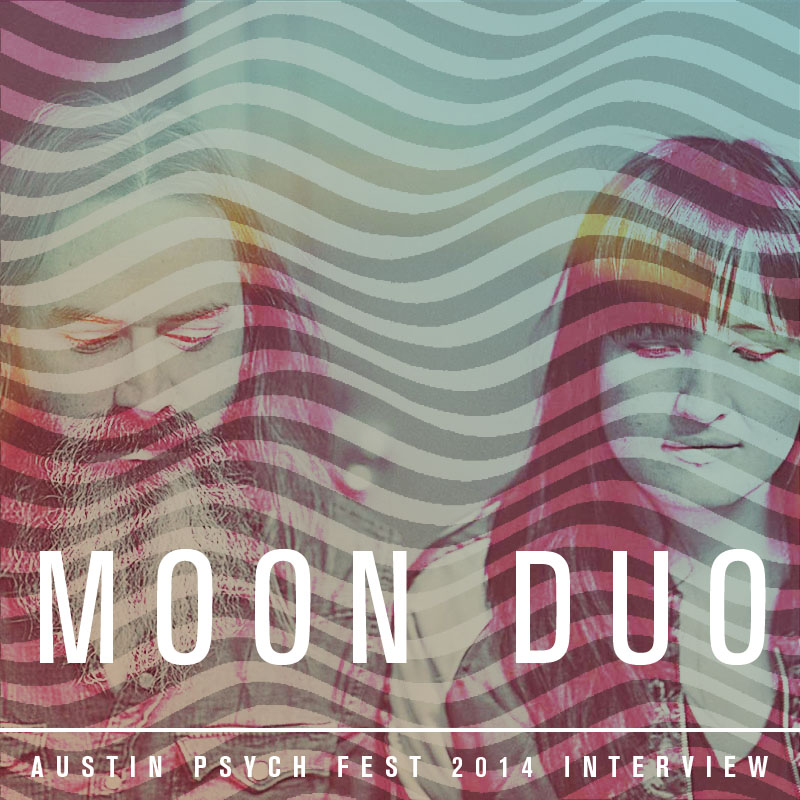
Revolt of the Apes’ interview with the mighty Moon Duo is up now at the official Austin Psych Fest 2014 website. Read the entire interview there, and look for the complete text to show up here in the very near future. Here’s an excerpt:
How does the moon define or describe you as a duo and as individuals, musical or otherwise?
Our name loosely refers to the idea of two moons, like Phobos and Deimos of Mars. They orbit the same planet but at different speeds and in different paths. That’s how we approach most of our songs.
Any cool memories of your previous visits to Austin Psych Fest? Are there any bands in particular that you are excited to have the chance to see play?
I think I played at the second festival [2009, with Wooden Shjips] and it was pretty small, so it’s been cool to see it grow over the years. Sky Saxon played that year, which was cool. I’m a big Seeds fan. I want to see everything this year. I want to discover something new.
Revolt of the Apes is pleased, stoked and chuffed to support Austin Psych Fest 2014 through a series of interviews with many of the artists involved, answering the kind of ridiculous questions you’ve come to know and – maybe – love. Many more coming soon.
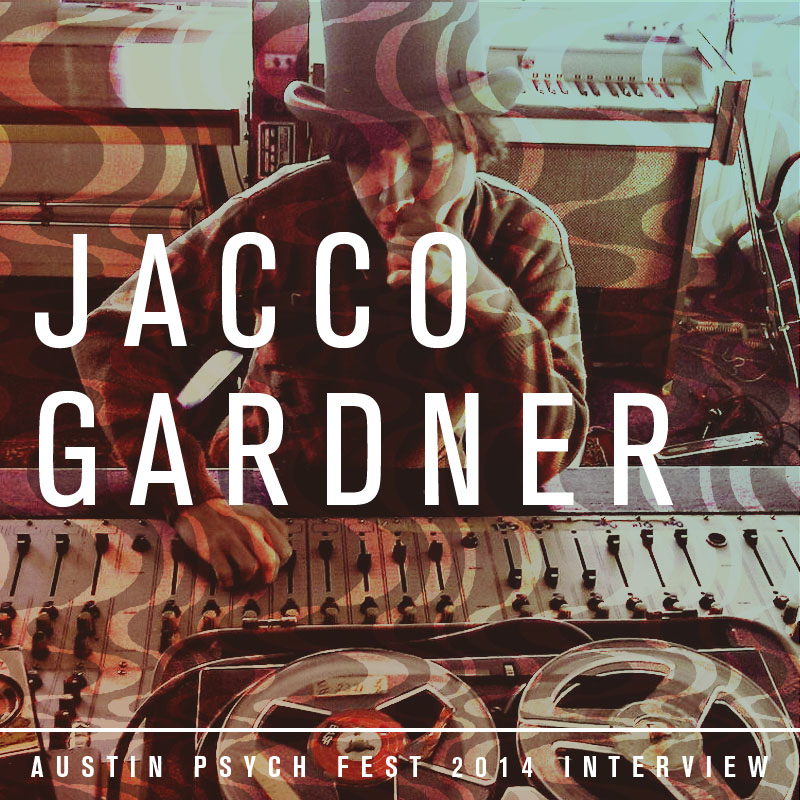
Revolt of the Apes’ interview with the great Jacco Gardner is up now at the official Austin Psych Fest 2014 website. Read the entire interview there, and look for the complete text to show up here in the very near future. Here’s an excerpt:
What can you tell us about the origin of both the song and the album title, “Cabinet of Curiosities”? We think of the term as being a precursor to museums – have you ever had a musical inspiration spawn directly from a museum visit? If you could pick one song made by someone else to be on permanent display in a museum, what song would you choose and why?
Well, I really like the idea of explorers exhibiting their discoveries in a cabinet of curiosities, especially the ones that do not exist, like bones put together in the wrong way, resulting in a strange and non-existent animal. What I like about that is that the imaginary world kind of blends in with reality. I didn’t get the idea directly from a museum visit but it definitely has something to do with museums I visited in my life. I’d choose “The Truth Is Not Real” by Sagittarius because it blends with reality in a way for me. Of course every song changes the way you perceive reality but this one in another way.
Revolt of the Apes is pleased, stoked and chuffed to support Austin Psych Fest 2014 through a series of interviews with many of the artists involved, answering the kind of ridiculous questions you’ve come to know and – maybe – love. Many more coming soon.
Considering the strange case of The Dandelion is made all the more strange given that the name of their debut disc is “The Strange Case of The Dandelion,” and the strangest thing happened when we The Dandelion flowered: we fell instantaneously in love with their songs.
Not to turn The Dandelion into “The Thin Red Dandelion,” but to paraphrase (read: hijack) a few turns of a phrase …
What is this? This great love.
Where does it come from?
How’d it steal into the world?
What seed, what root did it grow from?
Who’s doin’ this?
Who knows? It’s strange.
It’s not that the music planted by The Dandelion is so strange – in many ways, it strikes our ears not as not nearly as strange as it is comforting, familiar even. Which in itself is very, very strange. Throughout “The Strange Case,” and beginning with the lead-off mood-setter “Strange Case Opening,” we’re treated to a reunion with old friends: fuzzy guitars, brilliant bass lines, Farfisa-fueled “She’s About a Mover” flashbacks, fluttering flutes, and vaguely Eastern melodies and vocal lines, all snaking together in to a single, coherent, whole.
And hooks. So many hooks. Those sing-able, hummable, memorable hooks. We’re not made of stone. We love hooks.
Take, as just one example, the song “I Turned On As You Turned Around.” This is an unavoidable, undeniable top-ten hit in our imaginary universe. Compact in size, massive in impact, the song is not necessarily stoned, but beautiful (and high as living fuck), with a central hook that pierced the brain of these apes with minimal effort – all phasers set to stunning.
In just under thirty-six minutes, these thirteen tales of Australian bohemia never overstay their welcome, which lends to repeat multiple listens, or perhaps multiple repeat listens. Whatever the case – we’re madly in love with these songs.
There’s “Here Comes Love,” easy riding on an easy riff, over-modulated and adorned with accents of flute and Farfisa, all dancing madly with each other, jubilant that they’ve found each other.
There’s “Leaving It Behind Blues,” featuring a moaning ghost of a harmonica, blowing for all the world as if it has indeed been left behind, before the song merges into the delicate, miniature, three-king-fishers-in-a-tea-cup grandeur that is the “Medlar’s Wisdom” interlude.
There’s “All Seeing Eye Wisdom,” which dares ask the musical question, “It’s the all-seeing eye, just always around / does it look you up or find us out? / Or could it be something that we never thought about before?” Our immediate response: Play that song again.
Strangely enough, that was also our response upon hearing what may be our favorite song on the disc, “Pleiadian Love Vibration.” Maybe. Maybe our favorite song on the disc. Maybe our favorite song of the year. Certainly one of our favorite song titles of the year (challenged only by The Dandelion song that follows, “Borderline Originality Disorder” and, it bears mentioning, “Maybe We Could Meditate Together or Something” by the mighty Strange Forces. But we digress).
Thirteen songs in thirty-six minutes. Not a wasted moment, and they’re ALL wasted moments. It’s brilliant. It’s strange. It’s love.
“The Strange Case of the Dandelion” is not only out, but apparently sold-out. Listen to it online here and pray for a reprint. Meanwhile, a six-song EP is expected in the near future, courtesy of Bad Afro Records.
“One experience ends, the next begins, but nothing really changes. We’re still packed inside that cosmic seed together. We simply have a little more room to breathe. But don’t worry: we’re coming back together. Each day, we’re getting closer and closer to the source, and each other. Try to not be afraid, and I’ll try along with you. Let’s practice the dark celebration of mourning, and release, on the cushion and in our lives. We are part of a process, and eventually the momentum, like the inhale or exhale, will shift the other way. Perhaps death is merely the negative image, or reverse process, of life. The same thing heading the opposite way. One universe, differently emphasized.” – Shozan Jack Haubner
It wasn’t long ago that we ended summer with a salute to The Aquadolls – the Californian commandos of stoned-surf-stunners. And for a brief moment, it seemed as if The Aquadolls were ending as well … but all is not as it seems.
While The Aquadolls continue to exist, the next release from their vocalist/guitarist will come out under her own name, Melissa Brooks.
Melissa Brooks’ upcoming debut album, then, will be entitled “Stoked On You.” And we’re stoked on it. And her. And you. And The Aquadolls. We’re all stoked. And in the meantime, we’ll wade into “Wander,” available to stream and download below. Enjoy.
There’s future in the past, and plenty of past in our future – but none of this nonsense seems to be slowing down The Future Primitives, a band driving forward at high-speed, without ever taking their eyes off the rear-view mirror.
On their recently released third album – and, it should be both noted and admired, their third album in just over a year’s time – The Future Primitives steer themselves directly “Into the Primitive,” and their take on “primitive” in this case is something we can use more of in our lives. For this trio of South African rock and roll lunatics, “primitive” means simply a focus on capturing a certain energy, a certain timeless approach, and less about having their vocals lost in the mix, or making sure the drums sound like pencils tapping on a phone book.
That energy – that primal, upbeat, adrenalized and fully realized perfection of rock and/or roll music – spills over the edges of “Into the Primitive,” and the result plays like evidence of someone planting some highly-caffeinated Seeds in Cape Town. A thirteen song, thirty-seven minute crash-course in speed, snarl and hook-after-hummable hook, “Into the Primitive” took the expressway to our heart. Case in point: the should-be hit single, “Every Night,” finding the band happily picking up where The Lemon Drops dropped off.
Few albums this year will strike us as immediately and urgently as “Into The Primitive,” and we couldn’t be more fortunate than to have the whole band answer our ridiculous questions below. Enjoy.
What does the notion of being “primitive” mean to you? What do you think the word means with regard to your approach to making music? What activity in your life do you wish could be perhaps more primitive? What activity do you wish could be less primitive?
Johnny: Being wild, free and barbaric. In music it’d be the freedom to do what you want, also to keep things simple – that’s the key. In life, for sure, there are times when you wanna just go live in the wild and get away from everything. It’s a strong word “primitive.”
Heino: I think it’s all about making use of what you have in order to reach a certain goal, like in the past people found stuff in their surroundings to help them make fires and hunt in order to survive. As a band, we focus on stripped down rock n roll using what is necessary to create a song – we don’t overdo or overthink it. With recording, The Future Primitives make use of old analogue gear, playing live to tape in order to create a certain sound. That’s pretty raw if you consider all the technological advances we have today – although it’s the only way that makes sense to us.
Warren: For me, Primitive is simplicity. When approaching music it makes sense to me that less would be more. There is something there that is far more tangible in music when stripped of everything; a song is only as great as it sounds in its most simplistic form – I’d really dig it if cell phones could only make calls and texts. Everything else is a drag. Driving is a bitch, so I’m amped on this teleportation thing whenever that’s happening.
Is there a single band, artist or album that has had an enduring influence on you personally, although one that you didn’t latch on to until some time after your initial introduction? Do you think of the inspiration you received from this music as perhaps ahead of its time – futuristic, even?
Johnny: I have a weird relationship with music. Lately I’m not really interested in hearing anything new. I’m quite happy to put on “Safe As Milk” and just disappear into the mind of Don Van Vliet. And yes, Don wasn’t just five years ahead of his time – he was way ahead! And still leads the way.
Heino: When I first heard “The Psychedelic Sounds Of The 13th Floor Elevators,” I was caught off guard by the jug in the background – I actually thought it was some weird effect on a very fast bassline or something. I was familiar with The Spades from garage comps though so I recognized “You’re Gonna Miss Me.” But since that first listen it’s one of the albums I could never stop listening to – definitely my personal favorite release them.
Are all of the members of The Future Primitives from South Africa originally? In what ways – if any – do you think your geographic locale has impacted the musical approach of The Future Primitives? What do you find most advantageous about your location? What is the most difficult, either personally or musically?
Johnny: Yes we are all from South Africa. We were actually asked a similar question recently – with the internet and stuff it doesn’t really matter where you are in the world because it has made the world really small and we have access to anything. But from a personal aspect there are downsides like when it comes to physical things – live music (not a lot of great bands come here), gear (it’s not as easy to find decent gear and old gems), same with records – I got all my gems when I was in London for a bit.
Heino: Like Johnny said, our location doesn’t have any affect on what music we like or the music we started making. Our approach to The Future Primitives would’ve been the same anywhere in the world, I guess. The most difficult thing about staying here is probably that isolation you feel when cool bands tour and play everywhere but here, what’s more is the lack of venues for local bands so getting bored playing the same places over and over again is not unheard of, and probably the worst, we don’t have a record press here.
Warren: Living in South Africa I think you have a choice, you could sit and listen to the radio and watch your MTVs and whatever else the Western culture wants to shove down your throat or you could get up off your ass and find your own niche with the help of the internet and local shows. Find that genre/song/artist/album that is personal to you. I think far too often people settle for what they’ve been given without too much thought. It’s sad, but I do believe it’s a choice.
Were there experiences with other musical projects that directly led to the formation of The Future Primitives? What do you think you’ve learned about each other from a musical perspective that it most surprising? What do you think you’ve learned about each other from a personal perspective that’s most surprising?
Johnny: Well, Heino and I had The Revelators before this – so that’s two out of three members the same. I’ve learned musically that when you jam with people long enough you almost become one unit and if you jam with other people then you suddenly realize just how strong that bond actually is. And from a personal aspect – things are just so chilled, we’re good friends and we never even have any issues – it’s almost weird how we never fight or have any shit.
Heino: Yeah, we learned a lot by playing together in The Revelators. We played a few shows, attempted our first live recording to a cassette machine and then stopped. And it does feel out of place jamming with other people. We knew we’d always do something new somewhere down the line, so after a while we started jamming again. After finding Warren, the few songs that came out of those initial jams lead to the release of “This Here’s The Future Primitives.”
Warren: I feel Johnny and Heino have changed the way I’m listening to music. There needs to be energy now, I need to feel that song that I’m listening to pound at my heart and move me. When I’m behind my kit and playing our songs, through each one, I have an emotional response. So when I listen to music I need to have that same reaction.
Not only are we rightfully in love with the music banged-out by The Future Primitives, but we’re in love with the pace with which you seem to be releasing that music. To what do you attribute your relatively accelerated album release schedule? Don’t you guys have anything better to do than play this demonic rock and/or roll nonsense?
Johnny: No, we just really like making albums. We are also very interested in recording, like the process. Warren and I are into sound and we record other bands too. But when you’ve got no one else to record, and you wanna record, then you got to make an album right?
Heino: It’s great to have both Johnny and Warren know what’s up with recording and all … I just play bass and I’m more than happy to write new material and record with these guys. Sure, sometimes it’s a bit strenuous but in the end it’s all worth it.
Warren: Johnny and I are both Sound Engineers, and Johnny having his own studio and gear is great, it definitely helps us in that we don’t have to find a studio and work up the cash to pay for everything as this can take time. I definitely don’t have anything better to do.
What can you tell us about the art direction on your two albums of original material? The covers for both “This Here’s The Future Primitives” and “Into the Primitive” are both very compelling in their efficient evocation of the music contained therein – just fantastic stuff. And where did you meet the young child who drew the cover for “Songs We Taught Ourselves”?
Johnny: Haha … wow … I’m actually the young child that drew the cover for “Songs We Taught Ourselves”! I’m left-handed – well, ambidextrous, but both my hands are useless when it comes to accuracy.
Heino: Hayden Phipps was the photographer for both album covers. He basically came up with both directions and it was really cool working with him. He’s got a website that you can check out over here. Haha … I love the cover of “Songs We Taught Ourselves.” It suits the concept of the whole album so well.
Would you care to comment on the rumor – the rumor that we are attempting to start right now – that the band will soon cut their hair, take to wearing collared shirts and neckties, and reform under the name “The Prim-and-Proper Lives”?
Johnny: It’s been a long time coming, but yes, we are working towards this. As soon as we can afford it – it’s happening.
Heino: That sounds like an amazing boy band name … Might have to take you up on that “rumor.” Also, Johnny is a great hairstylist – just look at my do.
Warren: Have you been reading my script?
What music have you been listening to lately? If push comes to shove, what’s your favorite song by The Sonics and why? Please show your work.
Johnny: I haven’t really been listening to music lately – I go through phases where I sometimes just don’t wanna listen to anything. Favorite Sonics song – probably “The Witch” because it was the first song I ever heard by them and its what got me hooked. I also like “Boss Hoss” a lot. But as you say – if push comes to shove. Everything they did was great. Except the “Jingle Bells” cover – I can’t handle that.
Heino: Lately, I’ve just been digging up and through a whole bunch of comps. But no matter when you ask, there will always be a little Thee Oh Sees, early Ty Segall and early Black Lips in the mix. The new Night Beats album is also really cool! When it comes to The Sonics, I’d have to say “The Witch” hands-down. As with all Sonics songs, the vocals and drums play a huge part. The guitar solo in “The Witch” is so raw, the lyrics are kinda creepy and that bassline is just so damn groovy.
Warren: Dead Ghosts, Los Dos Hermanos and some wild teen punk from Peru.
Winston Churchill – also a great fan of The Sonics, we’re certain – is quoted as having said the following:
“It is a mistake to try to look too far ahead. The chain of destiny can only be grasped one link at a time.”
Your thoughts?
Johnny: I think it’s very true. The present is the only thing that’s real, and the only time when things are created. You have to have some goals obviously, but a lot of people only have goals and never achieve them because they are too fixated on the final outcome that they can’t even begin. It’s really good to break things down – it brings us back to simplicity and why that’s important.
Heino: We don’t really look too far ahead anyway. When it comes to music, most of our influences are buried somewhere in the past. All we can do is draw from it and experiment with it in a way that is unique to us.
Warren: Yeah, I don’t know…
What’s next for The Future Primitives?
Johnny: European tour…
Heino: Yeah, we’re touring Europe in October and finally getting to meet our split release friends, Dusty Mush! After that, we’ll see what happens but something new is bound to come out sooner or later.





 Revolt of the Apes