Maybe it’s because we’re so square – or maybe it’s because we never heard the debut album from Nymph – but when we listen to their highly transformative, extraordinary second album, “New Millennium Prayer,” we don’t think of dancing, frolicking nymphs.
Well, maybe dancing – but not frolicking.
OK, maybe a little bit of frolicking.
Rather, when we listen to “New Millennium Prayer,” we naturally think of prayer, beginning with the incredible, hypnotic, and incredibly hypnotic twelve-and-a-half minute sonic supplication that opens the album, called “Beyond.”
And when we listen to Nymph, when we listen to “New Millennium Prayer,” when we listen to “Beyond” – as we have down now, repeatedly, for the past several weeks – our mind’s destination certainly seems to be beyond. We listen to Nymph, we listen to “New Millennium Prayer,” and we think of “Our Prayer” – appropriate given the addition of alternately shrieking and soothing horns to Nymph’s effortlessly kosmische cellular infrastructure of sound. And when we think of the kosmische when thinking of Albert Ayler, we tend to think of the even more cosmically concerned Sun-Ra, who of course told us in no uncertain terms that space is the place – words and a worldview, a weltanschauung, that Nymph seem to have digested fully, suffering little to no spiritual indigestion in the process.
And when we think of Sun-Ra, we think of the sun. And when we think of the sun, we think of Icarus – appropriate given that the song-prayers of Nymph seem designed specifically for liftoff, to soar high above the earth, into the heavens and – yes – crash back down with a great noise, wings afire, having given flight to their fight – “Battle Funk,” without question.
Icarus is said to have crashed along the shores of the Greek isle of Icaria – the very same island that was once home to Psalacantha. Who? A nymph! A nymph that (we’ll assume) both danced and frolicked, but ultimately pissed off Dionysus, enough so that Dionysus turned Psalacantha into a plant.
They say that Dionysus had regret over turning this nymph into a plant. As penance, Dionysus wove the plant into the wreath of his wife, Ariadne – the “Mistress of the Labyrinth.” That wreath was given a permanent home in the heavens, known to our human eyes as the Corona Borealis constellation.
Why? Because space is the place. The gods told us so, while listening to our prayer, the “New Millennium Prayer.”
“No act of mine is done without prayer. Man is a fallible being. He can never be sure of his steps. What he may regard as answer to prayer may be an echo of his pride. For infallible guidance man has to have a perfectly innocent heart incapable of evil. I can lay no such claim. Mine is a struggling, striving, erring, imperfect soul.”
There’s some synchronicity to be noted between our inability to properly pronounce the name Tjutjuna upon first blush, and our continued inability to properly describe their music.
A blessing it is, then, to have a member of the band – Brian Marcus – answer our ridiculous questions below, and school us both in proper pronunciation and the proper interpretation of the title given to their recent, spectacular album, “Westerner.”
“Westerner” itself could easily find placement at the top of our list of the year’s best albums – except we don’t really believe in such lists, and the album isn’t really a product of this year. Recorded in the recent past but just released this year by FireTalk Records, “Westerner” makes it clear to us that the best from Tjutjuna is yet to come, perhaps in the past of the future, or perhaps in the future of the past.
Or something. Forgive our disorientation, but there’s a form of vertigo – an ultimately pleasant, somewhat surprising form of vertigo – that emerges from repeated listens to “Westerner,” beginning with the patient lift-off of “Mousetrap,” a song that opens both the album and a crack in your skull as well. The beat is steady, a mousetrap-motorik, with endless layers of sound, building one on top of another, summoning spires of synths that reach mountainous heights, transforming without a trace into a squall of guitar noise that tags the following song, the beautifully named “Heavy Metal Dick.” With such sonic vertigo, it’s somewhat hard to know exactly where we stand – until we follow the surreal serenity offered by both “Montauk” and “Harry Krishna,” and see that we’re home, and always have been.
“Westerner” is an endless array of tones and textures, wheels of sound within wheels of sound produced in enormous scope, yet characterized by an unselfconsciousness and directness. Which is to say, it’s really awesome.
We couldn’t be more pleased to offer the Tjutjuna interview below. Enjoy.
Have you by any chance seen the most recent movie directed by Bobcat Goldthwait, entitled “Willow Creek,” which concerns one couple’s efforts to capture the elusive “Bigfoot” – a creature sometimes referenced as the “Yeti” or “Chuchunya” or “Tjutjuna”? Have you seen the poster for “Willow Creek” (seen below) and if so, do you think it would have made a good Tjutjuna album cover or t-shirt? What were the circumstances that led you to choosing to name the band Tjutjuna? What’s the worst butchering of the name you’ve ever seen in print, on a marquee or heard pronounced?
We choose that band name because we liked the way it looked written and it was unique – there wasn’t another band with that name, which is very rare these days. It is very hard to pronounce (Chu-Choo-Na) but a lot of people also do have trouble spelling it. I think the worst butchering is something like “Junjunta” or something. We jokingly say Tijuana, Tijuanica, or my favorite, Jewtuna.
As far as the movie goes I don’t think any of us have seen it – I haven’t, at least. For the record, I like 80’s Bobcat the most. That poster is great – love it. Super hesh. It reminds me of this artist, Skinner. His stuff is similar but a little more colorful. That would be a great album cover.
Regardless of the movie referenced above, epic, sprawling music of the type made by Tjutjuna is sometimes tagged with the adjective, “cinematic.” Can you recall ever being directly influenced, musically, by a particular film or section of a film? Is there a visual component that you’re conscious of when creating music? Is there a single adjective or phrase you regularly use to describe Tjutjuna’s music to someone who’s not heard it before?
I personally love film music. Ennio Morricone might be my favorite, but I also love John Williams. But my favorite film soundtrack might be “Conan The Barbarian” by Basil Poledouris . There’s so little dialogue in that movie the score does a lot of the narrative heavy work. But when I was younger I definitely wanted to bite everything from Ennio Morricone’s western stuff.
As much as I love cinematic music I don’t necessarily think of us as being overtly cinematic. We normally describe it as psychedelic or hypnotic. There is a visual component to our music. It’s less conceptual and narrative based and more like the Star Gate/Space Port scene from “2001: A Space Odyssey.”
Over the past several weeks, we’ve found ourselves listening to your most recent album, “Westerner,” repeatedly. That speaks to our overwhelming fondness for the other-worldly sounds contained within the album, but also to our discovery that “Westerner” sounds fantastic – and feels refreshing – in any variety of contexts: first thing in the morning, late at night, driving, etc. Was there an overriding theme that you hoped to express on the album, through its music and its sequencing? Is there a particular context in which you find yourself most often listening to music apart from that you make with Tjutjuna? Is there a particular context you find yourself most often creating the music for Tjutjuna?
Thank you very much. There was definitely not so much an overriding theme but definitely some tweaks in lineup and approach that changed the way we did things this time around as opposed to the first record.
As far as sequencing goes, we try to keep it unique on each side. So no two songs that sound too similar on one side of a record and no two that sound similar placed in the same location on either side of a record.
There’s no particular context for listening to music for me, personally – I’m always listening to it. As far as a context for creation, it’s normally at band practice, based off a philosophy, and then we improvise with that in mind. Each song (especially on “Westerner”) is pretty philosophical in its structure and approach.
What does the title “Westerner” represent to you? We’re reminded of a story told by Lama Surya Das in his book, “Awakening the Buddha Within,” who writes:
“Back in the early 1970’s, I remember trying to discuss drugs with Lama Yeshe. I described to him in colorful detail my cosmic mystical experiences during a one-week solitary trek through Nepal. I spent two days meditating at a Himalayan hot spring, under the influence of hallucinogenic mushrooms. I had hoped and even expected Lama to explain these things and even help me understand. Instead, he laughed loudly and exclaimed, ‘Western boy’s dream!’ He would say no more. He just kept laughing.”
There’s a great love of Japanese bands like Acid Mothers Temple, Flower Travellin’ Band and Boredoms in our band. It refers to our Western interpretation of their Eastern interpretation of rock music.
Our understanding is that “Westerner” was recorded a couple of years ago – in 2011, in fact, the year we had the opportunity to see the band at Austin Psych Fest. Is there any particular reason for the gap between recording and release? How do you think your perspective on the music made by the band has evolved, if at all, in that intervening time?
It was – it was right after a tour in 2011. The reason for the break was there was a period where we kind of muddled about, not sure of the direction or future of the band. I’m happy we released it when we did because we would not have been able to do the things we’ve done this year if we had released it sooner.
Our perspective has changed since then but we had a fresh perspective coming off that tour. Playing every night changes the way you function and we found ourselves as a three piece after that tour. And those experiences shaped where we were as a band. We tried to keep it a little simpler than our self-titled album. Bands like Spectrum and Suicide do so much with so little and we were really impressed by that and how powerful and cool they can be live.
Not too long ago, you had the opportunity to tour with Acid Mothers Temple. What was the most surprising thing you learned over the course of the tour, both about music in general and about yourself in particular? How many metric tons of vinyl would you estimate the members of Acid Mothers Temple purchased during this time on the road?
That was the best tour ever. We all would get back in the van and do it again in a heart beat. It just ended and we’re already nostalgic. The most surprising thing that we learned was that we could keep going on that grueling tour schedule. And a few not so nice things to say in Japanese. We really miss those guys.
We’d always ask how much vinyl they bought that day, and they would normally hold out their hands, like they were measuring it by depth. I’d wager each member bought three-to-five inches a day. I know there were a few days when one guy would spend over $100.00.
Would you care to comment on the rumor – the rumor that we are attempting to start right now – that your song “Heavy Metal Dick” is a thinly veiled reference to the largely forgotten period in Tjutjuna’s history when the band was fronted by legendary heavy metal vocalist King Diamond?
Oh no – not King Diamond. Please, let’s not have that be a thing. It’s actually a “Trailer Park Boys” reference, which is a Canadian television show. So far we’ve had a reference on every album and we hope to keep the streak going. I would really like to name a song. “Public Idiot Number One Has Gone One Step Too Far. We’re In the Eye of a Shiticaine here, Julian – Ricky Is a Low Shit System,” but that’s a little long.
What music have you been listening to lately? If push comes to shove, what’s your favorite Tangerine Dream album and why? Please show your work.
I personally have been listening to Vinyl Williams, who I recently discovered, as well as Food Pyramid, Harald Grosskopf, Lindstrøm, Boredoms, Master Musicians of Bukkake, Forma and I still listen to “Good Kid, M.A.A.D City” a few times a week.
In his book “Brave New World Revisited,” Aldous Huxley – an early supporter of Tangerine Dream, we’re certain, despite having died several years before their debut album was released – wrote the following:
“In regard to propaganda, the early advocates of universal literacy and a free press envisaged only two possibilities: the propaganda might be true, or the propaganda might be false. They did not foresee what in fact has happened, above all in our Western capitalist democracies – the development of a vast mass communications industry, concerned in the main neither with the true nor the false, but with the unreal, the more or less totally irrelevant. In a word, they failed to take into account man’s almost infinite appetite for distractions.”
Your thoughts?
Excuse me – I need to go through page after page of Reddit with glazed eyes, clicking on links that I won’t even fully look at. I’ll also browse Netflix constantly, while settling on a TV show I’ve already seen that I won’t even watch, but will be playing on a different tab in the background. I just closed a Facebook tab – I better reopen it, not realizing I had just closed it and absentmindedly scrolled through the same banal musings and links I saw fifteen seconds ago. By the way, I’m not going to realize I did any of this.
What’s next for Tjutjuna?
We’re demoing an album currently. And that’s been fun and going well. There will be less time in between these albums. We’re also going to be hitting the road in September, it’s looking like.
It’s been about six months that we’ve been listening –constantly, consistently, contentedly – to the most recent album by Psychic Ills, “One Track Mind.” And for all the time we’ve spent with this album – the long drives for which the album has served as the score, the early mornings we’ve put the album on in a half-conscious state, the late nights where we’ve done the same – you’d think we’d have developed something coherent to express, some way to summarize just what it is about the songs on “One Track Mind” that have us returning, over and over, again and again.
We don’t. We’d use those words if we had them. Yet when it comes to Psychic Ills in general and “One Track Mind” in particular, this indefinable, ineffable aura seems to be its very vibrating core. It’s all there in the first minute on the first song, “One More Time” – “I wish I could let you see what I mean.”
What else can really be said? We connect to this music instantly, deeply, and without any possible – or any necessary – complete explanation. Despite using the same tools that many other bands use (guitars, drums, keys and a voice that’s just slightly less hypnotic than it is becoming hypnotized), Psychic Ills don’t really sound like anyone else. In fact, some might argue that, from album to album, Psychic Ills sometimes don’t sound like Psychic Ills.
We’d typically salute such a compellingly chameleon-esque approach, though in this case, it’s not clear it applies. Going back through the fractured fractals of time and listening to songs from the band’s 2010 EP, “Astral Occurrence,” the wavelengths are easily identified as originating from the same source – this is indeed the same band. But where the band was previously focused on easy journeys to other planets (and may indeed one day again focus on the astral approach), “One Track Mind” sees the band living up to the focus of the mantra-like album title – look at the mind, look at the mind, look at the mind.
Then again, it’s probably not even accurate to describe “One Track Mind” as inward facing. More accurately, it’s the sound of a band that’s absolutely present. On “See You There” – when the floating volume swells of guitar glide like giant, black triangular UFO’s over a patient, persistent bass line – we hear a band that has developed an equilibrium, a calmness. And it’s a calmness in its most expansive form, a stillness like that which exists in the eye of a hurricane.
This isn’t a docile calm. There’s more than a trace of venom, of resentment, of disengagement born by endless suffering in the words and sounds of “One Track Mind.” “Depot” – a low, perpetually rumbling earthquake of a song – gives us the declaration, “Whatever you’re selling, I ain’t buying – I know that my mind is fine.” The way the words linger in the air, it’s hard to say if it’s a voice that is defiant, or a voice that is defeated. It’s even more difficult to ascertain whether it makes any difference.
There’s simplicity to “One Track Mind” that merges perfectly with the enormity of Psychic Ills’ sound. But what we call simplicity may more accurately be the manifestation of a wise and discerning mind, one track or not. Perhaps that wisdom is the true nature of “One Track Mind,“ as on display in the song “Tried to Find It” – “I’ll take it easy on you if you take it easy on me” goes the call, while the guitar does an impression of a magic wand, everything shining and vibrating in its wake, like ripples on a still pond, like thought waves tracking across a “One Track Mind.”
Take a walk outside, clear your head. Listen to “One Track Mind.” You’ll get by – even when the day is long. That’s all we know right now.
“All numbers are multiples of one, all sciences converge to a common point, all wisdom comes out of one center, and the number of wisdom is one.” – Paracelsus
It’s a good thing we like the music of Heaven’s Gateway Drugs – not least because we are Heaven’s Gateway Drugs. And so are you.
Confused? Read on – or perhaps more immediately, have a listen to the debut album from Heaven’s Gateway Drugs, entitled “You Are Heaven’s Gateway Drugs.”
We became aware of Heaven’s Gateway Drugs – and the fact that we are Heaven’s Gateway Drugs – just about one year ago, via an astoundingly unforgettable song called “Psychic Sidearm,” which quickly became included on any variety of listening devices throughout the Revolt of the Apes headquarters. It’s got a sinful surf-rock hook and a squealing, monster vocal, painting an alternate reality where The Ventures not only learned to sing, but were fronted by singing vampires. Needless to say, we were immediately on board.
And you may very likely jump aboard, too. “You Are Heaven’s Gateway Drugs” shows a band that has not drowned themselves in so much swirling, multi-colored oils that they forgot how to transmit a catchy song in the process. Consider the album closer, “Turncoat,” which pledges allegiance to a smiling-yet-spooky flag, with the repeated refrain, “I’m not worshipping you.”
You don’t need to worship Heaven’s Gateway Drugs. After all, you are Heaven’s Gateway Drugs. And so are we. We’re all one, dude. We’re pleased to have C. Ray Harvey (vocals/guitar/keys) and Derek Mauger (vocals/guitar) answer our ridiculous questions below, and tell us more about who they/we are. Enjoy.
Which came first for you – a desire to make music, or a fascination with the music made by others? What was the earliest way that desire to make music manifested itself in your life? What was the earliest way that fascination with music made by others manifested itself in your life? Which of these two things holds a greater sway in your life today, and why do you think that is?
C. Ray: Fascination with the music of others was the starting point, and as early as I was able to see people making the music I was hearing, I wanted to join the family. Today, regardless of whether I ever heard another song by another band ever again, I would keep writing songs. In fact, that might be an interesting experiment … to keep writing based on a gradually fading knowledge of the music made by others.
Derek: Definitely the fascination with others’ music. My parents were always playing music, mostly The Beatles. At a very young age, I distinctly remember thinking The Beatles story was the archetype for all bands: you got three of your friends together, practiced hard, got famous and ten years go by and you have long hair and break up. I figured I could do that – silly kid. I’ll always be fascinated by music – that’ll never change and I believe that has to do with how powerful music can be, emotionally, and how it can completely transform where you are in that moment you are experience it. I think from that comes the desire to create and for me that desire is so strong that it has since become more of a compulsion.
Was there a particular moment in your own personal musical evolution wherein you became confident in your ability to make music? Is there ever a danger in being overly confident when it comes to making music? What strategies do you employ – consciously or unconsciously – to keep yourself humble … if at all?
C. Ray: I think the danger of overconfidence is so real to me that I’ve never yet experienced full confidence. I don’t have to put effort into staying humble – having band members helps tremendously in that regard. I think about the songs that I enjoy most, musically and lyrically, are the ones where you can feel that the player/singer has something to lose. Even confidently delivered lines seem to be best delivered when they feel newly discovered and a bit surprising to the person delivering them.
Derek: I’ve never felt completely confident with my ability but I think at this point I’m at peace with that. Currently, that is mostly due to being surrounded by such great musicians. I know I can take a loose idea to the band and those guys can run with it and create something really special. Also, I never really feel overly confident or smug because I see myself as a student, and I know there are a million things out there I still want to learn. Knowing everything would be boring.
What can you tell us about the name Heaven’s Gateway Drugs? How did the band come to choose that name? What does the concept expressed in the words, “You Are Heaven’s Gateway Drug” mean to you? What led to the expression of that concept as the title and cover art for your debut album?
C. Ray: The name came from a series of names generated through a surrealist exercise of trying to blend commonly used turns of phrase and pop culture touchpoints. Some of the castoff names were absolutely ridiculous. Derek threw that one out and I really latched onto it. I wouldn’t let anybody else in the band question it. Even before the discovery of the name, while we were putting a lot of thought into how we would perform our songs, we knew that we wanted to be an overwhelmingly inclusionary band. We chose Ben as a front man, even though he doesn’t sing, to act as the central point of focus when we play. His presence and personality is highly magnetic and his on-stage movement can be hypnotic. None of us speak onstage, except Ben, and only to repeat “We are Heaven’s Gateway Drugs” and then, toward the end of the set, “You are Heaven’s Gateway Drugs.” The phrase has always been a core concept to the songs, the performance, and the ideology of the band – it’s an invitation to do more than absorb.
Derek: We’ve never had, as a group, any sort of political or spiritual message that we wanted to preach but from the very beginning there has been a huge effort to make the band and more specifically our live shows as inclusive as possible. The cult reference in the name nods to that philosophy. The “You Are Heaven’s Gateway Drugs” mantra is just an extension of that. We don’t talk between songs, only Ben speaks and he only says, “We are Heaven’s Gateway Drugs/You Are Heaven’s Gateway Drugs,” and it drives the point home even more. We don’t want people on their cell phones during our shows – we want them to be present with us. If they feel compelled to get on stage, then we want them to get on the stage with us. If we feel compelled to go into the audience, we do. It’s about removing the fourth wall and also about removing that rock band ego and tired cliche of, “We’re the band, you’re the audience, shut up and watch us.” Naming the record “You Are Heaven’s Gateway Drugs” seemed natural and obvious to us, as did featuring our friends and loved ones on the cover.
We could fairly be described as being entranced by the songs that make up that aforementioned album, and with the album’s opening and closing tracks in particular, “Radio” and “Turncoat.” What can you tell us about the origin of these two songs? Do these two songs share any particular connection, aside from their placement at opposite ends of the album’s audio trip?
C. Ray: Both began the way many of our songs do, with either Derek or I sharing a guitar part with the other. Then we build off of that guitar part to find the other guitar parts and a vocal melody. Sometimes the person with the melody sings it, sometimes not. Then one of us writes a chorus. Then one of us writes a bridge. Then we share it with the band. It’s also common for the bridge to not be written until the rhythm section hears the song. Very few of our songs are crafted by one person before sharing them with the band, and this means that there are several half-formed songs that never get completed, but in the case of “Radio” and “Turncoat,” only the primary guitar parts were really known before the drums and bass were working their parts in. Derek had the starting guitar part for “Radio,” and I added the lead part over the top of it, and the rest formed in practice. I had the starting riff for “Turncoat,” then Derek added the chorus. The bridges for both songs were worked out in practice. Lyrically, both were penned primarily by Derek, with minor input from me, and he sings lead on both songs. We usually have the music most of the way worked out, and something in the chords or melody triggers a theme for Derek or I, and we build around that theme. We try not to be too blunt or direct in our lyrics, but we also aren’t trying to confound people with endlessly spiraling metaphors that don’t actually meet up at any point.
Derek: Lyrically they are almost polar opposites. “Radio” being about wanting to be with someone and “Turncoat” is more about escaping someone. In some sort of far flung poetic sense, “Radio” is an introduction to a person or us and “Turncoat” is the frantic exit. I could act like that was the plan all along, but it wasn’t. “Turncoat” has been a go-to set closer since almost the beginning – it lends itself nicely to smashing up our gear.
C. Ray: SOYSV … what a bunch of dudes. We met them briefly at Cincy Psych Fest last fall, then invited them to play in our hometown of Fort Wayne, IN. While they were here, I cornered Sean and Eric and hammered them with questions about how they recorded their last record (which I loved). After finding out they recorded in Sean’s basement, I started laying the groundwork for a trip through Michigan that would end up in that basement. We tracked drums, bass, guitars, and percussion in that basement. Then we took the tracks off of the tape machine and brought what we had back to Fort Wayne to finish in my apartment. We did all of the vocals, keys, additional arranging, and fiddly bits there, and then I mixed the record.
Derek: Small world. We met Sisters at Cincy Psych Fest last October and immediately hit it off. We played together again a few months after and got to talking about recording with them at their studio. All of us were impressed with the sound they got on their record so we knew that they had the skills to make a really amazing sounding record and wanted that for ourselves. We even went so far as to have it mastered with Dave Cooley in L.A., who did their record. They’re great dudes – we hit them up all the time with random questions. They’re like our musical mentors. Eric did all the tracking on the record, Sean was there mostly for moral support and comic relief. C. Ray took what we did with them in Detroit home and mixed the record himself. He did a phenomenal job.
Salvador Dali was said to have sought sunlight while sleeping in order to induce bright, extremely vividly-colored dreams into his subconscious. In what way – if any – do you use your natural surroundings to impact your art?
C. Ray: Salvador Dali (a true entertainer) aside, I think to state that any artist’s work is influenced directly by their surroundings, and that those surroundings can be arranged to conjure certain tones, is unarguable. For me, there isn’t anything particularly out-of-the-ordinary about my daily life, so making art is really the escape I use to reach beyond it. It’s probably different for many of the other guys in the band. In fact, I’m certain it is. But for myself, my desire for brighter color, stranger sound, and deeper experience is just constantly building while I walk through a fairly normal living condition. I create to let the pressure off, and when I don’t it starts spilling over into my otherwise fairly controlled other life. That’s a long explanation to say that, I guess, I surround myself with normality until my creative self has brewed up something I can use to wreak havoc.
Derek: Fort Wayne isn’t Austin. It isn’t NYC. It certainly isn’t L.A. There aren’t mountains or beautiful beaches. However, there is a sense that anything is possible here so long as you build it. I think the musical world we are creating is a reflection of our imaginations and the environments inside our heads. In that sense, it’s completely freeing.
Would you care to comment on the rumor (the rumor that we are attempting to start right now) that you will soon leave the music world behind in order to open a carpeting store called, “Heaven’s Gateway Rugs”?
C. Ray: There’s a joke in here about sweeping that rumor under the rug … shit, that is not funny. Uh, you could tell people that there is a local cover band starting called “Heaving Segway Drunks” that we endorse as a true likeness of our music.
Derek: Only if it was a toupee store.
What music have you been listening to lately? If push comes to shove, what is your favorite Beatles album and why?
C. Ray: I’ve been unable to stop listening to Mikal Cronin. Looking for melody ideas in Animal Collective records. Enjoying old Lo0p records. Re-listening to Billy Nichols, always. Derek and I curate a Spotify playlist several hundred tracks long that grows whenever one of us finds a song that impresses us or we think has an idea we can mine into gold with HGD. Oh, and I don’t think it’s actually their best record, but my favorite is “Magical Mystery Tour.” Or, fuck, maybe “Revolver.” Radical Mister Revolvour?
Derek: I’ve been listening to a lot of the country-er Byrds lately and that horrible disco-y/vaguely reggae era of the Rolling Stones. “Monomania” is probably my record of the summer at this point. I always thought Deerhunter was just OK but I saw them 2 summers ago and they blew my mind – I’ve been waiting on that record ever since. My favorite Beatles record is always changing. One day its “Revolver,” the next it’s “Meet The Beatles!” They covered so much ground and each record is its own little world. My mood that day dictates which one is my favorite. Can I just say “It Don’t Come Easy” by Ringo so I don’t have to offend anyone?
In his book “Steppenwolf” (named such as a stirring tribute to his favorite band and his proclivity for magic carpet rides), Herman Hesse says the following:
“Every ego so far from being a unity is in the highest degree a manifold world, a constellated heaven, a chaos of forms, of states and stages, of inheritances and potentialities. It appears to be a necessity as imperative as eating and breathing for everyone to be forced to regard this chaos as a unity and to speak of his ego as though is was a one-fold and clearly detached and fixed phenomenon. Even the best of us shares this delusion.”
Your thoughts?
C. Ray: I agree. The perception that this thought-process or processes that we refer to as self can somehow be consolidated and distinguished from ourselves so as to be scrutinized for motive, measurement, or morality, is false. Ego is not an ego, and even the consideration that this can be understood by those of us enlightened enough to know it both proves and simultaneously disproves it.
Derek: The Kingdom of Heaven is within you, just like Roky said.
What’s next for Heaven’s Gateway Drugs?
C. Ray: We have the songs for another full-length, but will probably continue crafting them and satisfy our desire to publish by releasing a 7″ with two of those songs by the end of the summer. We are shopping for a record label to help with overall publishing efforts (hint to anybody you know), and lining up mini-tours for our new band van for late summer and fall.
Derek: We’re always writing. Hopefully that means recording a few songs this summer with Eric for a seven inch. Playing more and more out of town dates, we recently got a band van and aim to put many more miles on it.
We don’t have the time. We’re too busy listening to Hey Colossus.
We’re too busy trying to make it all the way through the forty-five minutes of our life that we repeatedly give over to the sounds of “Cuckoo Live Life Like Cuckoo” without finding ourselves breaking out in a cold sweat, trembling, our eyes rolled back toward the back of our head, our third eye squeegeed quite cleanly, our tongue out, out, all the way out.
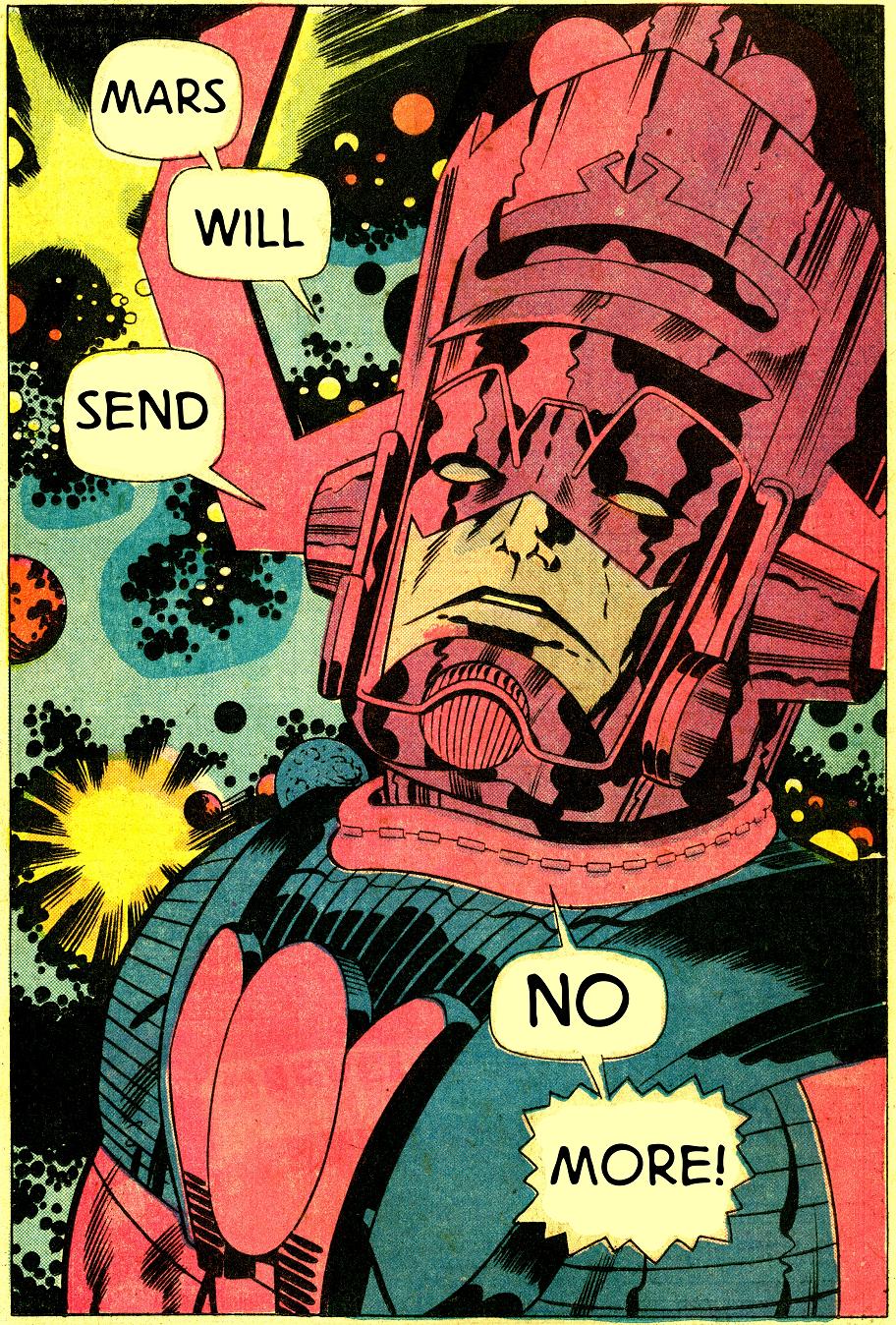
We’re too busy trying to memorize the lyrics to “Hot Grave.” We’re too busy trying to imagine who wins in the battle between Hey Colossus and Galactus – if Hey Colossus have not Doc Ock, but rather the “Oktave Dokkter” on their side.
We’re too busy trying to figure out if there will be a song more trance-inducing than “How to Tell Time With Jesus” at any point in the next thousand years or so. We’re too busy trying to figure out if we’ve gone cuckoo, or if the sound of this music is really the band channeling “The Sound of Music,” or if “Cuckoo Live Life Like Cuckoo” has simply become one of our favorite things.
We’re too busy – let’s be honest – playing “Color Zen.”
We’re too busy trying to figure out how we’ve reached our advanced age with only recently being introduced to Hey Colossus, some ten years and eight albums in to their trip. We’re too busy trying to figure out if that means we’re now going to have to resolve ourselves to moving through their back catalog, and whether there’s any chance we’ll survive that particular journey.
We’re too busy wondering what was wrong with the brown acid, anyway.
Listen: you try to describe the sound of Hey Colossus.
“Cuckoo Live Life Like Cuckoo” is available now from MIE. We are not responsible for what happens after you’ve been exposed to Hey Colossus, nor before.
“Resolve to serve no more, and you are at once freed. I do not ask that you place hands upon the tyrant to topple him over, but simply that you support him no longer; then you will behold him, like a great Colossus whose pedestal has been pulled away, fall of his own weight and break in pieces.”
There’s not a lot we can tell you about Paw Paw – except that we’ve been drawn to their exquisitely poetic music for only a short period of time feels like an eternity.
That the nature of Paw Paw’s music seems to be one that imparts upon the listener a sense of timelessness, a temporary term of eternity, is perhaps it’s greatest strength to these ears. That we could listen to Paw Paw’s most recent release – “Temporalis / Epiphysis” – for just a couple of weeks and yet now have difficulty saying for sure exactly when we first heard it should give some notion of the highly transportive nature of these sixteen songs.
But don’t take our word for it – turn off your mind, relax and float in to Paw Paw’s “Floral Aura”…
It seems an appropriate enough track for giving some sense of Paw Paw’s wares, with respect to both the natural blossoming that occurs in these songs and the distinctive atmosphere – the aura – they create. The way that atmosphere comes to life feels so effortless as to give the impression to the listener that it wasn’t created at all – that it simply exists, and what Paw Paw has done is to have tuned in to the proper frequency, the exact wavelength to execute their transmission. Maybe this is true. Maybe it doesn’t matter.
And while “Temporalis / Epiphysis” sounds utterly effortless, we know that’s seldom, if ever, truly the case. Perhaps it’s closer to the truth to say that these songs sound completely focused, and completely natural. Maybe this is true. Maybe it doesn’t matter.
What matters to us right now is that it’s almost impossible to express how the songs on “Temporalis /Epiphysis” have managed to inspire and illuminate. And that we don’t have to express this – you’ll hear it for yourself.
“The sacred sense of beyond, of timelessness, of a world which had an eternal value and the substance of which was divine had been given back to me today by this friend of mine who taught me dancing.” — Hermann Hesse
WRIR DJ Shannon Cleary likes to take his show – “The Commonwealth of Notions” – on the road … if you consider the road being right outside his front door. Consider his mission statement:
“The Commonwealth of Notions is a reaction to the idea that good music is dead in the city of Richmond. While being a careful observer and participant in the music scene, I find myself constantly amazed by the creative energies put on display. Whether they are the songs played within the walls of living rooms, basements or bars, they should all be heard.”
For the past two years, Cleary has put his motion where his mouth is, going outside the confines of the WRIR broadcast booth to curate nights of live, local music showcases. It’s now time for the third volume of the live Commonwealth of Notions and – much like the universe we live in – Cleary has decided to expand.
This year, WRIR and Cleary will host four nights of live performances by local artists across the city, at four different venues. The festivities will kick off at the beloved Strange Matter on Thursday, July 18th, before moving to the equally beloved Balliceaux on Friday, July 19th. On Saturday, July 20th, it’s a return to their ancestral roots at Gallery 5, and closing things out on Sunday, July 21st will be a night of burrito-fueled mayhem at Bandito’s.
Cleary and WRIR have decided to slowly begin unveiling the bands that will be participating over these four nights various through a variety of local channels. And while secrets don’t seem to stay secrets for too long in our fair city, we could not be more thrilled to announce the events of Friday, July 19th at Balliceaux, which will feature the long-awaited return of the best thing to happen to Richmond since indoor plumbing … The Diamond Center.
It’s been almost exactly one year since The Diamond Center have graced their adopted hometown of Richmond with a live performance – though that time off hasn’t really been time off at all. Rather, the band has focused on both procreation and the continued creation of their next full-length album, “Crystals for the Brass Empire.”
Our love for The Diamond Center is long-standing and we’re quite confident saying that you’ll not find a more compelling live performance in the city of Richmond, nor the planet of Earth.
Rounding out the entertainment for the night will be fellow WRIR DJ’s Jamie Lay (“Love and Other Crimes“) and Paul Ginder (“Paul’s Boutique“). Oh – and some additional soundscapes will be provided by a mysterious unit – and we do mean unit – known as Revolt of the Apes. Mark you calendars for Friday, July 19th, and watch this space – and others – for more details.
We can think of no greater sign of our enduring love for The Vacant Lots than the fact that what you see below marks the third time that the band has been interviewed by this very (and very ridiculous) website.
And while the first two of these interviews were directly related to the band’s two appearances at Austin Psych Fest, the short volley of questions we proudly present to you today is directly related to two other things near and dear to our heart: music and the written word.
Persisting with the love of the written word may seem to be something of a folly in this modern age, but then, “the highest form of bliss is living with a certain degree of folly,” said Desiderius Erasmus Roterodamus.
And we know that because we once read it in a book. Or maybe we heard it in a song.
So then: as a music website that has for threeyearsrunning persisted in listing our ten top pieces of reading material, along with being fortunate enough to present interviews with a handful of authors that we greatly admire – all to the detriment of our radically declining hit-count …
… We could not feel more fortunate than to have one member of The Vacant Lots – Jared – present us with a list of ten books that have recently made an impression of him, while the other – Brian – presents us a list of ten songs that he’s currently digging. And we couldn’t be more fortunate than to have the opportunity to share these things with you. Enjoy.
What does the relationship between books and music represent to you, personally? Do you think of them as two sides of the same coin (or, if you prefer, two sides of a multi-sided die) or as separate entities by definition? What prompted you to compile this list of ten songs and ten books?
Jared: The lyrics have always been important to me. I like when a line contains ambiguity – that way the listener can interpret their own meaning. I didn’t pick up a guitar until I was 18, so all I had then were books and my own writing. In that sense, the writing has always come first. I’m also attracted to how different forms of art interconnect. And how one form draws from another. You can get as much inspiration for a song idea from books and films as you can from records. As for the list idea, it was really simple. It’s a way to inspire other people by sharing what we are into at the moment. I wrote down some of the books I have read this year and Brian has given some songs he likes.
If you could have one musician that you admire try their hand toward writing a book, who would it be and why? If you could have one author try their hand at recording an album, who would it be and why?
Jared: I would like to see Tom Verlaine write a book. Even something autobiographical or about Television. Or Sonic Boom. Sonic’s emails always take on this kind of experimental poetry form. I think if Pete wrote a book, it would be as interesting in content as it would be visually. There is a lot of uncertainty and myth that surrounds Television and Spacemen 3. Reading the story through the lens of both of those artists would be interesting, I think. I would have liked to hear what Rimbaud could have done with sound. Most writers before the turn of the century would have only been able to work with what they knew, which was classical. What he did for poetry was incomparable. I wonder if he would have produced a similar effect with music.
We’ve recently become somewhat obsessed with The Vacant Lots’ contribution to the “Psych For Sore Eyes” compilation EP, with your absolutely amphetamine-fueled song, “6 AM.” What can you tell us about the origin of this song?
Brian: We were rehearsing, trying to incorporate some new electronic elements, and there was one beat I started that got Jared going on what became the driving “6 AM” riff. We jammed on it for a half hour or so and all the lyrics were written by the time we finished.
A big Vacant Lots fan, we’re certain, Rainer Maria Rilke said the following:
“Find out the reason that commands you to write; see whether it has spread its roots into the very depth of your heart; confess to yourself you would have to die if you were forbidden to write.”
Your thoughts?
Jared: It’s interesting that you pulled that phrase. In fact, that line in “Letters To A Young Poet” where Rilke asks, “Must I write?” produced a profound effect on me when I was figuring out what I wanted to do with my life. It made me realize I didn’t need to be in college in order to make art, so I dropped out.
What’s next for The Vacant Lots?
Brian: Putting out our debut LP, more touring, planning for Euro/UK shows, more singles, a documentary on the band by Bret Zausmer, productivity, speed and intensity.
Much as we might aspire to be worldly, perhaps even universally tuned in, with regard to our general outlook, the fact is that our Weltanschauung is colored by our own cultural programming. And, as it turns out, the chains forged by that programming are awfully hard to break.
So we ask for your forgiveness as we pair together two bands who may or may not have much in common, aside from their country of origin and the fact that we’re absolutely hooked on the sounds provided by each. We turn our attention now to Sweden – the ancestral home of nihilists and flying machines, and where we currently find other things that we enjoyverymuch. Today, we add Dean Allen Foyd and Skogen Brinner to that list.
Dean Allen Foyd’s EP entitled “Road to Atlas,” their second release from Crusher Records, immediately paved a path deep in to the center of our brain, its five songs delivered in twenty-two minutes and thirty-three seconds being an absolutely perfect, absolutely pop-able pill of melody and madness.
The EP begins with a gallop, a song titled “Sadness of Mankind” immediately sounding anything but sad. It reflects something of a cosmic cowboy vibe, furious finger-picking forging a happy trail that reminds one of a message in the service of quicksilver. The finely-phased vocals deliver a message perhaps more in tune with the song’s title – “Where clouds are marching across the sky like soldiers heading toward the killing fields … I’ve been so afraid for years, I cannot even go beyond my doorstep.” Out of nowhere, there comes a breakdown, the guitars momentarily punched in to the red, before giving way to a more gentle feel. “There must be a brighter day for me,” it’s sung as the band turns its face towards the sun, and here we hear the band’s penchant for a sound that forever changes. High praise? Indeed, but such is the scene set by Dean Allen Foyd.
These songs are not just catchy – they seem determined to climb inside our ears with an intensity we can only describe as Khan-esque – appropriate, given the refrain of “Insects are crawling / Bugs start a-creeping in” that follows on the second song. While the drummer beats on what we assume is a mountain and a Hammond organ wheezes and gasps for air, the band slowly gathers momentum, heading up from the skies and ultimately finding the road back to earth on “Hwy Lost (Revisted).”
The EP ends with the title track, recalling to our biased ears something of the incense-burning, cross-legged magnetism of a monster – not a bad thing at all in our book. “My veins have grown tired of receiving / But these are the pains I’ve grown to know,” we hear as the EP comes to a stunning end, with no doubt in our mind that we’ll continue to know this “Road to Atlas” for quite some time to come.
Truth be told, there’s nothing subliminal about the sound of Skogen Brinner – it’s overwhelmingly clear and immediately infectious, at least to anyone who spent their youth (and maybe some time after) marveling at Bill Ward’s impressive array of sweaters. Imagine the overdriven melodies of Witchfinder General’s “Death Penalty” only sung in Swedish, and you’re halfway there. To get all the way there, inhale deeply, turn the volume up, and watch this:
The last thing we intend is to give short shrift to Skogen Brinner. There’s absolutely nothing easy about making music that sounds so … easy, we have to assume – otherwise, everyone would be doing it (we hope). And even within the enviable, seemingly endless riff circus of “1ST,” Skogen Brinner give off moments of absolutely crushing charm, such as the pop-ready hooks of “Pundarvarning” (“Junkie Warning”). OK, maybe not pop. But we’re singing along, in a language we don’t know, yet completely understand.
Dean Allen Foyd’s “Road to Atlas” is now available from Crusher Records.
“There are no nations! There is only humanity. And if we don’t come to understand that right soon, there will be no nations, because there will be no humanity.”
The threads the connect Ghost Box Orchestra – the Boston-based group that just recently appeared with an extraordinary second LP, entitled “Vanished” – with Thought Forms – their contemporaries from across the pond, who not too terribly long ago scaled great heights on a stunning album called “Ghost Mountain” – are arguably so thin as to be invisible. Some might even say these threads are ghost-like.
But then again, couldn’t the same be said about all that connects us? We’re all one, dude.
Maybe we’re getting ahead of ourselves. Both of these bands circle around a label we’ll define as somewhat indefinable, mowing down a large, multi-colored swath from a very large field of influences in order to create something quite striking, something quite memorable. And while neither band is strictly vocal-free, the voices here seem greatly intertwined with the music, as opposed to soaring above it, and both bands are comfortable and compelling when they choose to set the controls of their musical machinery for instrumental overdrive.
Thought Forms ride along a wavelength that, solely by description, sounds like something approaching madness. While built from a highly improvisational foundation, Thought Forms are comfortable taking cues from distant ends of the sonic spectrum. Certain peaks and plateaus of “Ghost Mountain” (like the opening missive, “Landing”) could be mistaken for something like the punishing sludge of Thou, while other points of the audio ascent could be mistaken for unreleased Lush b-sides. Thou art in for a spooky night on “Ghost Mountain” – as evidenced by the haunting howl that opens the album’s centerpiece, “Burn Me Clean,” a thirteen-minute purification-via-amplification ritual that’s equally threatening and transcendent.
In contrast to the way that Thought Forms sculpt their sound through panoramic peaks and valleys on “Ghost Mountain,” Ghost Box Orchestra have delivered on “Vanished” an album that positively bursts with impressively microscopic detail.
The vision here is largely refined, streamlined and precise – the complex geometry of fractal mysticism given life in song. Yet for all the precision on display throughout “Vanished,” from the bad-ass bass-rumble that opens the album with an imperial march of “Vader” to the cosmic cowboy closing of “Desert Lights,” the band never sounds anything less than human. Not to put too fine a point on it, but “Vanished” is never in danger of disappearing up its own ass. Driven by a precise yet human heartbeat, the band can recall the best moments of the kosmische sounds that inspire our devotion. A case in point: “Rhythm of the Hills,” all steady beat, wordless, echoing chants, oscillating guitar lines and fabulously freaked-out synth stabs.
Do we believe in ghosts? No comment. But for the time being, we’re confident in declaring a strong belief in Thought Forms and Ghost Box Orchestra.
“I think fear is a result of impurity. And impurity means, thoughts that define oneself in a ‘profane’ sense, that is, thoughts which define oneself as separate. As long as you are attached to those thought forms, you are going to fear, because it involves the extinction of that separate being, that separate conceptual entity … In the Tibetan literature they say, ‘Embrace your ten thousand horrible demons and your ten thousand beautiful demons.’ You’ve just got to take it all and keep going. All your fears have to be embraced, entertained, honored, and you go on with them.”






 Revolt of the Apes