Perhaps it was that the eye-catching cover of “Globe Master” – the recently released and instantly engrossing album by Leisure Birds – subliminally put thoughts of an easy journal to other planets in our mind before we’d even heard the opening track. Perhaps, as it is a journey we’ve made (or attempted to make) in the past, we felt at ease shifting into the multi-dimensional musical moonlight that shines brightly, continuously throughout the album.
Perhaps Leisure Birds show the size and scope of their wingspan on the album’s nearly nine-minute opening opus, “SETI Signals.” It’s difficult to fight thoughts of astral flight – not that you’d want to, as Leisure Birds score the outer-space journey magnificently, magnetically.
But something happens once we pass through the heavenly haze that starts the album. Once we land aboard the “Silver Runner,” an earth-bound collision of chants and wobbly, wandering synths that seems to produce an impenetrable gravitational force that lingers for the remainder of the album, something shifts. As the journey of Leisure Birds continues its earth-bound course, in its celebratory, cosmic-crush of the ecstatic and odd, our impressions takes a redshift turn away from the intergalactic and towards the introspective.
Is there a difference? Ground control to Major Thom:
“Where there is carrion lying, meat-eating birds circle and descend. Life and death are two. The living attack the dead, to their own profit … But they soon go elsewhere. When they are gone, ‘nothing,’ the ‘no-body’ that was there, suddenly appears … It was there all the time but the scavengers missed it, because it was not their kind of prey.”
Ground control to Leisure Birds: “Globe Master” is cleared for landing in our conscious and subconscious mind. Thanks for putting us at ease and we’re certain we’ll be taking this journey again and again.
“Under the Pale Moon“ – the first full-length album released by Wymond Miles – easily passes the through the gate as one of our favorite albums of recent years, judged exclusively on the merit and metric of repeated listens, in addition to the number of times we find fragments from this stunning collection of songs dropping directly and dramatically upon our conscious mind, at random yet consistent intervals.
But why?
We’ll likely spend the remainder of our lives seeking an answer to that question. It’s not that there aren’t ready clues awaiting us within each of the ten songs on “Under a Pale Moon” – clues manifested in otherworldly pop hooks, guitar and bass lines a mile wide, and a singular vocal yearning that brings us face-to-face with memories of autumn afternoons spent piloting cars in various states of disrepair, listening to “Dawnrazor” by The Fields of the Nephilim and greeting the world with an unconditionally confrontational stance.
So let us be clear: We are moved by “Under a Pale Moon” because of its convergence of beautiful and bold sonic and poetic qualities. It sounds great, it has a unique voice – we haven’t tried dancing to it, but we believe in endless possibilities.
What “Under the Pale Moon” has us considering, rather, is a set of larger, evolving and largely unanswerable questions. Why does music act as a great stimulus in our lives? Why do we persist in mining these songs for the vibration that yields the rare gem, in the form of a flash of insight that provides us with a greater understanding of the world around us, a greater understanding of the world within us?
“I feel my fate, my fate finds me. I feel my star, my star finds me. I feel my aims, my aims find me. My soul and the world are but one.” – Rudolf Steiner
In this complex, combustible combination of burden and joy, we don’t see a riddle to be answered, or a problem to be solved. But we are happy that we have the work and art of people like Wymond Miles to share and pioneer the continued exploration. And we’re even happier that Wymond was kind enough to answer our ridiculous questions below. Enjoy.
When we last “spoke,” in the context of an interview preceding the appearance of The Fresh and Onlys at Austin Psych Fest 2011, you said, “Song sequencing is big in my book.” How did that manifest itself in the choices you made with sequencing “Under the Pale Moon”? Did you have a fairly concrete sense of the sequencing early on, or is it the type of thing that might sway and shift after recording?
So I had taken a hiatus from writing songs on my own, then one night, quite uneventfully, “Strange Desire” just fell into my lap. Then “Pale Moon” came shortly after. Tunes come and go but as lyrics took shape I got excited and thought these were the stepping stones toward making a record. I got them recorded right away, writing the parts as I went along. An LP was just too ambitious, too insurmountable, so I had thought about forming this into an EP. I sent it to a few friends to check out and they fortunately all urged me into making a record. So I basically just trudged along thinking, ”What kind of song would I want to hear next?” It’s like I made an imaginary record in my head and just one tune at a time gave it shape. Most everything wound up being in the order I conceptualized it – I think I flipped “Run Like The Hunted” for “Lazarus Rising” to opposite sides of the record. I wasn’t gonna be stubborn about it, it just worked.
Relatedly, can we talk a bit about two songs in particular on the album – the first, “Strange Desire,” and the last, “Trapdoors and Ladders.” What was it about “Strange Desire” that led to its placement as the album’s first song, both from a specific musical standpoint and more broadly, from the aesthetic perspective? What led to “Trapdoors and Ladders” holding the counterpoint spot at the album’s end? Can you talk a little bit more about what it means to you when you sing, “I’m so tired of this strange desire”?
As the record started to take shape I kept thinking, “Whoa boy, this is gonna need an epic closer” and I was nervous about how I was gonna be able to pull it off. I got lucky with “Trapdoors and Ladders” because it was as quick as the first few to write. I wanted to nod at a couple particular songs by Swans and Death In June, and really cut to the heart of things, subject wise. So I just got brave and did it. It’s fairly uncomfortable for me to listen to because it’s just so raw. “Strange Desire” was the first song to come around in awhile. It wasn’t particularly the strongest tune – the whole thing is two chords – but it was so open-ended as to the production possibilities. It just set the tone creatively to how I was gonna do the record. I wanted to really focus on the bass lines – they’re what got me excited. It’s really naked and sparse for me. I finally got that bass sound out of my head, one really glassy guitar, drums that were incessant. It was all done in six bounced tracks of tape. I could’ve made it as dense as tunes from the “Earth Has Doors” EP were, but it just sounded cooked after six tracks. Lyrically I was just taking the subject of desire head on – they too were very direct. The whole thing was very playful and light for me. The bass line just had such a swagger to it that it kept pushing me to take on the charge and confusion of lust in a more candid way. When you ask about what that lyric means to me it’s just that, no riddles. However, what brought it all on gets a bit more complex …
You’ve indicated that “Under the Pale Moon” came about in a way somewhat less labored-over than its predecessor, “Earth Has Doors.” How did that manifest itself in the writing of these songs? Do you find any patterns in what may trigger the impulse or inspiration for writing your own songs? How do you think your trust, confidence or other term for the internal psychic barometer you use to gauge your songwriting satisfaction, has evolved since the release of “Earth Has Doors”? How much – if at all, or perhaps, how little – did the reception of the EP serve to influence or evolve that barometer?
Luckily I finished the record before the EP was even put out, so really no outside influence touched either of those recordings. I had put more than enough pressure on myself to just move on and begin again anew. The impulse of inspiration is still elusive to me – when it’s gone, it’s long gone, but when it arrives it’s fairly effortless. Scary business. I’ve found that context is everything. I can’t work without an intended goal and a timetable. There has to be fear involved or there is no arc of accomplishment. There has to be a calling toward the mystery, and this is the most complex aspect – it’s initiatory, and it tests you. “Earth Has Doors” wasn’t necessarily labored over in writing or recording the songs, but psychically they were heavy chains around me. Now that they’re out in the world a burden has been lifted. They’re really vivacious to play live. They were just sitting around in my den too long, starting to rot, stinking up the place.
Wayne Coyne was recently quoted in an article about The Beach Boys, saying the following:
“When I was young, The Beach Boys would confuse me. ‘Good Vibrations’ is one world, then there’s the campy stuff like ‘Barbara Ann.’ I’d think, ‘If they can do that, we are they doing this?’ But as you get older, you realize that’s the power of the group. It’s a lot of strange influences going in to make this magical, other-dimensional thing – music made by the cosmos.”
Your thoughts? Not to draw comparison between yourself and Brian Wilson (though we suppose there are worse fates), nor to indicate in any way that the music of The Fresh & Onlys is camp in any pejorative way, but your solo material does seem to be coming from a different galaxy, even if a neighboring galaxy. Did you ever have any hesitation about revealing your own music in light of this contrast? How do you balance these two creative impulses, or more important, how do you celebrate the differences?
Yeah, they’re just different aspects of who I am. Creatively they’re very distinct and I can wear two different hats entirely. I needn’t try and balance them. The Onlys are four really strong-willed people. That stark contrast of personalities is exactly what lets the Onlys engine burn the way it does. I was/am very hesitant to release these records because I’m very private, and my vulnerable belly isn’t hidden in these records. There’s no irony to hide behind. They also don’t reflect my day to day voice nor humor very well, although there’s some dry black humor. I never want to get pinned down as some miserable guy. Another stark contrast is I have a son and family and my days are nothing but play. I’ve never been as assured of life as I’ve been the past five years or so. Artistically these just caught me pondering the cosmos, gaia, sex, and death. Never shy away from the dark stuff, or it’ll consume you in unhealthy ways.
If forced to pick a favorite among an album of favorites, the song “Run Like the Hunted” might top our list – it strikes us in its way as an alternate-universe power-pop radio hit, the type that should be blasted out of car windows all summer long. What can you tell us about the origin of this song? Are we hearing correctly when you sing, “there was something in those clothes we wore that night” and if so, can you discuss a little more what that specific might represent? Can you do the same for the line, “I can’t help but wonder, I can’t help but think we are idle hands”?
That’s so great to hear! In my weird universe it’s a total power pop rock ‘n roll rebellion hit as well. It’s just a very straightforward tune of dissent against endless war and violence. It’s about seeking communion, but finding only apathy. It’s about opposing paradigms, but seeing the potential for love in the eyes of the “other.” That clothes lyric is correct. I was that kid in a Smiths shirt asserting my identity in a sea of N.W.A. and Limp Bizkit. Likely just aligning with that sense of asserting yourself in the world with what we wear. Chogyam Trungpa wore a suit as warrior, to assert his self dignity as a human in the world. I think about that often.
Were there any specific musical touchstones that were in your mind during the recording of “Under the Pale Moon”? What music were you listening to for your own pleasure during the recording or songwriting that you think may have transmutated into what we hear on the album?
I was touring with the Onlys for almost 6 months last year, so whatever stuff Shayde was jamming on the stereo, mostly. Lots of 70’s anglo guitar pop, early 80’s synth minimalism, Sarah Records jams. I knew I was gonna make a big romantic record like all my favorites when I first got turned onto alt-rock in the 90’s – The Jesus & Mary Chain’s “Darklands”, Go-Betweens, Slowdive’s “Soulvaki,” etc. I just wanted a record chock full of sweet basslines!
What music have you been listening to lately? If push comes to shove, what is your favorite Kate Bush song and why? Please show your work.
I only own two of her records – “Hounds of Love” and “Sensual World.” I’m saving my Kate Bush phase for my 40’s. Gotta be patient and let these things grab you when you’re ready for them rather than just scooping them up. That video she made for her last record with the crying snowman melting away has stuck with me for the past year. I’ll probably listen to nothing but her and dub and D’Angelo when I turn into a silver haired fox.
Would you care to comment on the rumor (the rumor that we are attempting to start right now) that the title of your new album is actually an allusion to your long-standing student-teacher with Frank Zappa’s daughter, Moon Unit, and a comment on her inability to achieve the golden California tan of American legend?
I’ve never been able to sit through a whole Zappa record. My IQ isn’t that high to understand what the hell is going on with that gentleman’s career.
Helen Keller is quoted as having said the following, we presume after listening to Hawkwind for a few hours:
“There is in the blind as in the seeing an Absolute which gives truth to what we know to be true, order to what is orderly, beauty to the beautiful, touchableness to what is tangible. If this is granted, it follows that this Absolute is not imperfect, incomplete, partial. . . . Thus deafness and blindness do not exist in the immaterial mind, which is philosophically the real world, but are banished with the perishable material senses. Reality, of which visible things are the symbol, shines before my mind. While I walk about my chamber with unsteady steps, my spirit sweeps skyward on eagle wings and looks out with unquenchable vision upon the world of eternal beauty.”
Your thoughts?
Plato all the way. That’s my breed of philosophy – transcendent and permeated with religious romanticism that can be a redemptive force to will change in the world.
What’s next for Wymond Miles?
Touring the west coast this summer. My last for the year. Then the Onlys record will have crept of our womb and we’ll start showing that off to the world this fall. I’ve written an albums worth of orchestral ballads that the world will crucify me for making such a pretentious second record so I’ll likely start from scratch these next few weeks trying to write something that won’t sign my critical death of a sophomore slump.
“There ain’t no cure for the summertime blues, except for the end of summer, dude,” goes the unwritten, unrecorded sequel, never to be voiced by the inimitable soul-roar of a voice described by some one as “an aural apocalypse of defiant energy.” And who are we to argue?
Yet we herald the end of summer, where the question of temperature can be answered in a word: “cool.” There ain’t no cure for the summertime blues, and – hey – that’s cool.
Our summer soundtrack ends much in the way it began, with repeated listens to the “Ego Opressor“ album/mind-training offered by Virginia’s own Manorlady.
Manorlady’s music, to these ears, offers some sort of kind of 23rd-century, mercurial machine music, built upon the ashes of every burned-out, sun-bright pop-hook that ever saw the light of day. In other words – really cool.
“Ego Opressor” offers enough of a sinister sneer among it’s streamlined sweetness to make it unclear whether you’re ears are being delighted by a deception or deceived by delight, a great strength of an album that attempts to make a long-form race through a gloom-glitch sea, sleek-sadness happily buoyed by anguished/angelic vocal counterpoints and accidental death-metal sunshine-pop. In other words – really cool. Songs of losing control, deep-dives into promises of protection, monsters – in other words, ego oppression.
“Ego is the absence of true knowledge of who we really are, together with its result: a doomed clutching on, at all costs, to a cobbled together and makeshift image of ourselves, an inevitably chameleon charlatan self that keeps changing, and has to, to keep alive the fiction of its existence.”
We’re going to try it some time.
But we’re not going to do it without a doomed clutching on to The Chaw. California’s Chaw comes on cool, traveling an equally deep and dark road, though one dustier and dirtier, all autumn-orange and smoky atmosphere, an inhale-able haze, with nephilim traces in the fields. “The Road” opens the convincing and convincingly-titled “EP.”
“The Road” begins this EP but The Chaw find a fine path of their own, one that doesn’t necessarily end as much as it keeps turning. This is the sound of old doors creaking open, and as a listener, we’re blissfully unsure of whether there’ll be angels or demons staring back at us over a straining door chain lock.
Or maybe it the difference is negligible, imperceptible – worthless, even. “Jeder engel ist schtrvhlich” sang Maria – and conversely, every terror we face directly, honestly, can then becomes an angel. In other words – be cool. So when the bedroom-doom-trip-drip of Floridian-freakery calls itself Worthless, don’t believe it for a second.
There ain’t no cure for the “Slumber Time Blues,” the slo-mo, wake-and-shake slither the oozes out of the gates, only to be followed by the eleven-plus minute post-planetary psych-bliss out of “Fantastic Planet,” a transmission pulled out of the air and into your ears, echoing HAL-cyon encouragements for those traveling 9,000 light-years from home without leaving the bedroom. In other words – space cool.
So it goes with Worthless – far-out and spaced-out, simple and shaggy, but willing to “face the fear, stare down the emotion, go into the neurosis, and assert the nondual logic of the unconcious and the emotions, where the love is also hate and where pain can morph into pleasure.” And where the Worthless is priceless – or at least, a steal at seven-bucks.
The stars – and complex touring schedules – have aligned to bring you the choice of three mighty events full of emancipation via sound vibration, all taking place the second weekend of September.
Out on the West Coast, you’d be silly not to try to attend the Echoes West Festival, presented by The Echo and our friend Sasha Kaleidoscope Vallely from The Silver Chords and the mighty Spindrift, on Saturday, September 8.
Split between two venues, The Echo and The Echoplex in Echo Park, you can expect this all-day event to guide you through an exhilarating exploration of the sounds of reverb, drone, space and beyond. And the line-up is … beyond. Dig it:
This will be an all day, 18+ event which will also include vinyl vendors, food trucks, light shows and vintage poster art displays.
STRAWBERRY ALARM CLOCK * DEAD MEADOW * SPINDRIFT * LORDS OF ALTAMONT * THE SILVER CHORDS * GRAM RABBIT * STERLING ROSWELL (SPACEMAN 3) * SLEEPOVER * ELECTRIC FLOWER GROUP * UNITED GHOSTS * WAKE UP LUCID * STRANGERS FAMILY BAND * SPELLTALK * MR ELEVATOR & THE BRAIN HOTEL * DANIEL AQUARIAN * TEARS OF THE MOOSECHASER * SABRINA LAWRIE * OCHA LA ROCHA * FREE THEE MOLECULES
In addition to the requisite mind-expansion, you can also expect to find vinyl vendors, food trucks, light shows and vintage poster art displays.
Not to be outdone, our friends at Psychedelic Light & Sound will be doing their part to keep our ancestral home of Austin, Texas, weird and weirder, with the latest installment of their sonic sideshow on Friday, September 7.
The intense line-up is this time headlined by the red-hot The Vacant Lots, piloting their c-a-d-i-l-l-a-c from their Vermont home heading for a destination in the late-summer Texas sun. For a taste of the other bands on the bill, take a spin of your own through the mix-tape lovingly compiled by the festival freaks.
Slightly closer to (our) home, we’d be remiss (and a little stupid) if we didn’t give a quick plug for next Saturday’s ordinary, everyday show here in Richmond, Virginia, headlined by that extraordinary, other-worldly band, White Hills.
Our love of White Hills iswell–established and we don’t feel even slightly hyperbolic saying there’s not a better live band on the planet. They’ll be joined this night by Odonis Odonis, James Wallace and The Naked Light, and Richmond’s own underground outer-space merchants, Caves Caverns. Be there or be … you know … four corners, dude.
Here’s where we’re coming from: About two years ago, we became fascinated and fully enthralled with an album entitled “Where We’re Coming From” by Eagle Winged Palace, a shining light of psych-folk songcraft that still finds its way on to the Turntable of the Apes with alarming frequency. This in turn led to a connection with one of the contributors to this Palace, Michelle Vidal – who we interviewed for this very site at the tail-end of 2010.
At the time, Michelle was at the very beginning stages of working on her own solo material. A lot has changed since then – seasons, songs, states of mind – which has led to many of these songs being born and reborn for inclusion within a new project called The Fur Traders.
Primarily a collaboration between Vidal, Nathan Van Hala and Will Scott, the debut EP by The Fur Traders is ready to be unleashed upon the world – thanks to the success of a Kickstarter campaign just hours away from completion.
Together with an extended cast of friends – including such Apes-faves as Brian Filosa of The Whispering Pines, Kirpatrick Thomas of Spindrift and Guy Blakeslee of The Entrance Band – The Fur Traders have crafted an EP that is … well, what is it?
In Vidal’s words, “It is not super-psych – it is more of roots-influenced: Doors-ey, Otis Redding-ish, some Deep Purple … there’s a John Prine cover.”
Of course, our fondness for Vidal’s previous musical contributions to our life notwithstanding, the day we turn down those taking direct influence from Deep Purple is the day we close up the Revolt. Let The Fur Traders be unleashed.
Are you an experiment? Have you ever been an experiment? Regardless of your answer, regardless of the probability of screaming or crying, we are of the belief that our measly world can be transformed by the experiment of sound.
Transformation would seem to be an operative word within The Ocular Audio Experiment, given the title of the project itself, along with the title of the latest “experiment,” “The Witch’s Whispering Tomes.” We find ourselves face to face with this transformation, this audio-alchemy, on the aptly-titled “She Transforms,” a lurch towards (away from?) the lilting light, a lurch that precedes the funeral procession of (the also aptly-named) “Transcendor.”
More experimentally-minded still, these “Whispering Tomes” actually represent two albums, each featuring the same twelve songs in two different styles. In this way, The Ocular Audio Experiment is, for us, a living, transformative reminder of the most important teaching: “the oneness of the duality. Not two, not one.”
Whispering witches, experimental audio, the oneness of the duality – you’d be excused for thinking these “Tomes” transform toward an altogether chaotic journey. But chaos has a companion named harmony along for the ride – a ride that chief ocular-experimentalist Alex Pollack describes, in part, as “a doomed, satanic, Looney Tunes wagon ride into hell.”
But then, hell ain’t a bad place to be, sang one of the most learned philosophers of our time – and that realization came without having the great pleasure of hearing “The Witch’s Whispering Tomes.” In the hands of The Ocular Audio Experiment, hell in fact turns out to be a great place to be – a place full of panoramic beauty, languid vocal invocations, and an overall sound that finds its spiritual antecedent buried deep underground, comfortably lined in velvet. We’re unable to call this particular Experiment anything other than a complete, captivating success.
From these subterranean sounds we’re led to consider another experiment in sound, one that finds its birthplace underwater rather than underground.
Atlantean Runesis the title given to the latest project of Evan Sobel, the demented wizard of sound first brought to our attention while playing guitar with the mightiest manifestation of astral-metal, La Otracina, and somewhat more recently as the architect of the space-spiral sound found on Eidetic Seeing‘s “Drink the Sun,” easily one of the most brain-busting albums of this year or any other.
Given this sound foundation in some of the most foundationally-sound, massive, rocket-fueled riff-rides of recent years, it’s an unexpected thrill to find Atlantean Runes converging upon an altogether different stream.
Exploring sound in a manner that somehow articulates a simultaneously human, alien and divine presence, Atlantean Runes exists amongst the rubble of rock’s most radical remnants, krautrock crumbs and ambient debris – somewhere, somehow, pressed and formed together into a single force.
This force reveals itself again and again as being more than able to bring forth a certain amount of order amongst the chaos. Within the Atlantean Runes, all sound is submissive to the amboss, shaped and formed by continuous strikes against it. In this way, we find Atlantean Runes to be the sound of the ancient and the advanced, forever lost and always, undeniably, gloriously found – we behold these beautifully bent Runes as our new home.
Beauty, of course, is in the ear of the beholder, and our ears have also recently beheld the beauty of The Be Helds. Forget for a moment the explorations and experiments that have brought us face-to-face with worlds both undersea and underground, because The Be Helds bring sounds from an even more unexplored, perhaps even more eternal land: Montana.
Desirous as we may be to claim there being nothing particularly special about a rock and roll band hailing from any one of Les États-Unis, we’ve searched the record collection of the apes high and low for a single release hailing from big sky country, to no immediate avail. “Vol. 1“ – the appropriately named first release from The Be Helds – then fills the slot quite nicely, the simple, seductive screen-printed sleeve being our first sign of beauty beheld.
Once inside the cover, the beauty of The Be Helds follows along a similar path: simple and seductive, enormous and broadly pleasing in a way that befits their big-sky origins. Opening number “Leave It Be” sets the thump-and-jangle tone, with well-placed harmonica-huffing setting our mind between the buttons of The Be Helds.
The experiment of The Be Helds, to these ears, then, is the experiment of believing in rock and roll as a transformative experience, as a conduit for experiencing ecstatic joy, as a means for escape from or escape to. We’re not sure which side of fate’s flipped coin The Be Helds are on, but it’s of little concern – by the time the album-ending ode “Run Away With Me” hits some stunning “ohh-ohh’s,” there’s no doubt that the experiment is a success.
If we were to describe The Vagabond Storiesas being a rock and roll band with a distinct literary aura surrounding them, coursing through them, and centering them like the drum-beats that center their magnificent songs … we could be accused of damning with faint praise.
We don’t want that. Mostly, we don’t want our praise of The Vagabond Stories to come across as faint. Simply put, our introduction to the band’s spectacular EP, “The Lonesome Death of Hedonism” served as a necessary bit aural refreshment for the relentlessly-routed state of our rock and roll brain. “The Lonesome Death of Hedonism” imprinted itself on our landscape with a full, furious sound that strikes us as more communal than lonesome, more in control of its sonic desires than given over to a hectic hedonism, more full of life than a celebration of death.
So which part of this is “literary” and what does that even mean when it comes to the music of The Vagabond Stories”? We turn momentarily away from The Vagabond Stories home of Germany and away from our own American-centric perspective for the words of a French woman named Sidonie-Gabrielle Colette – no stranger herself to hedonism, both lonesome and living – who declares in her book titled “The Vagabond”: “I have found my voice again and the art of using it …”
Undoubtedly, The Vagabond Stories have found their voice and the art of using it. We feel fortunate to be able to receive that voice and equally fortunate to have many of the band members (Paul: floor-tom, guitar, perc., Moritz: drums, Niko: bass, Fabian: vocals/guitar, Thomas: guitar, and Susi: percussion, synth and vocals) respond to our ridiculous questions below. Enjoy.
Despite our preternatural lack of rhythm (evidenced by the spastic movements we call “dancing”), we remain fascinated by drumming and drummers, considering the drum to be the central element in most of the music we enjoy, the center around which all other elements gather. What first drew you to playing the drums? What was the most difficult aspect in regard to drumming when you first began? What do you find most difficult about drumming today? Which drummers remain a source of inspiration or fascination for you, and why?
Moritz: I heard that the first instrument the kids run to when entering a rehearsal room is the drums because it seems so joyful to hit on it. I think it was like that for me, too, only that I was 17 years when I started out. I always liked to play really repetitive with very little use of cymbals or fill-ins, almost like playing a riff on the drums. Some sort of pattern.
At some point I found it quite hard to come up with really “original” drumming; beats that you may not have heard a lot of times. I was trying and trying to find some new beats. I got quite frustrated over it. I was trying to think of beats only with my brain and not with the heart. At some point I realized that there is no such thing as “old” or “new” in terms of expression – especially expression in art – and that it’s just about wether what you do, in this case drumming, is alive or not. It took a lot of pressure from me. I think it’s a strange modern phenomenon to think too much, also about what has already been done and what not. It’s not a bad thing, per se: To go searching for new boundaries. But if it’s your only goal in making art, I think it’s also able to suck the life out of it. I do also write, and drumming just as typing is a really reduced language. That’s one of the reasons I like it so much. It is very, very direct.
Paul: Drummers which inspired me in the past were people like Buddy Rich. He does a great show, just because it all looks so easy and great fun … and of course he does the one handed roll. Which is quite impossible. Also Mitch Mitchell, the drummer of The Jimi Hendrix Expirience: Self-taught drumming and a lot of fill-ins. But these days they are not really an inspiration. Clearly there are songs that you like to re-enact but that has nothing to do with one drummer. I guess making music with different people is what inspires me, or maybe us, the most. No matter which instrument: You have to comunicate with each other and each person speaks in another way. Sometimes totally different. In any case, try to restrict yourself as little as possible! Simply go out. Either it fits or not becuase there are no rules.
More broadly, when did you fascination with music begin? Would you call music the primary artistic or creative impulse in your life – and why, or why not? Can you recall the first album or song that truly captured your attention in a sensational way, beyond mere enjoyment? What was it about that music that made such an impact on you? What are your feelings about that music today?
Fabian: For me, my primary artistic or creative impulse was skating and watching skating. When I was young it was a perfect way to be outside, see new things, be around open-minded people and to express yourself in a creative and somehow productive, though destructive way. It´s a truely free feeling, you stop thinking … it´s comparable to playing music.
And that, music, was always around. Early on, I was especially obsessed with the first Strokes record. I was listening to it for about three or four months in the winter everyday when I came back from school. It was something about the way it made me feel, it made me somehow feel comfortable. Musically, I cannot truly describe what I liked so much about it. I don’t know what exactly it was that had this special impact on me. Because now I dont especially like the guitars or the singing and I never really liked the drumming … it must have been something about the overall sound and some lyrics that made me fall in love with it.
At the same time, it was the banana record from the Velvets and Nico. But on that I would at first mainly like the more poppy tunes like “Sunday Morning.” And I immediatly fell in love with “If Love Is The Drug Then I Want To OD” from the BJM. The guitars, the repetition in the end … that was magic to me.
Moritz: I remember listening to a melody on a cheap Casio keyboard over and over again in the room where I played with friends as a little child. I repeated that melody over and over again. It had some sort of sailor-feeling to it. As if it could be sung far out at sea. A bit sad and nostalgic but also providing hope at the same time. That was the first song that really got me. When I heard it at a fleemarket the other day I recognized it already from twenty meters away and it gave me chills. I dont remember lot of things from the childhood years but when I hear that melody, I know quite well how I felt back then.
The Vagabond Stories is a very evocative name, one with overt literary ties. What does the name represent to you? If music and literature are both forms of communication, where do these two things intersect when it comes to The Vagabond Stories? When it comes to your own life in particular?
Thomas: Being very fascinated with the pureness and the dynamics of beatnik literature and its outcome, the name just came into our minds all of a sudden. I’d say that in some way, most of the music we are listening to has this dialogue between vocals and instruments. So it’s not only the lyrics carrying the meaning of the song, but also the instruments and especially the guitars, creating an epic atmosphere and expressing a feeling or a situation. Since the members of the band don’t live all in Berlin but also in Stuttgart, the band name was rather chosen by coincidence and then gained more and more appliance. For a few years already, at least one or two of us had to travel quite a long way to play concerts or even just to rehearse.
What can you tell us about the origin of The Vagabond Stories? Had the members played in any other projects together before coming together in this form? What has been the most pleasantly surprising part about playing with The Vagabound Stories thus far? What pleasant surprises do you wish to experience in the band’s future?
Thomas: We came together as friends with a certain fascination about modern guitar music and just started jamming a lot. After some time, you get sick of just improvising all the time and so we needed to start writing songs and to arrange them.
Niko: The most wonderful and surprising thing about our band is that we never know where our music is going. We try to be not too conceptional, not to stick to a certain genre too much This makes it difficult as well, cause the future stays very blurry, but it‘s fantastic at the same time. It emerges out of energies between us as people and playing together.
What can you tell us about the origin of the song “Eastern Highway”? We’re drawn to the songs outstanding mix of propulsive rhythm and neo-Eastern guitar lines, producing an explosive, mesmerizing effect. What imagery does the title – or the song in full – evoke in your mind? Are we hearing correctly when we hear the line, “The Western world, it drives me insane”? What does this line mean to you? Would you suspect that, were you a part of the Eastern world, you would be driven equally insane?
Fabian: It´s a longer story behind this song. When we wrote the guitar lines – we mostly start with that – we stayed out very long the day before. We managed to catch three hours of sleep, thanks to medicine. We awoke in my apartment in Stuttgart. We were all very dizzy and nervous or at least I was. We had breakfast listening to Turkish music that came from the apartment above. Beats like “boum-catchunka-boum, cathounka-boum.” This may have influenced the main spirit of the song. But I’ve been into eastern music and world music ever since I first heard beautiful tunes in kebab stores. When the evening approached the colours finally got darker and we went to a friends place. We had a smoke and jammed on balalaika and guitar. The main guitar riffs walked towards us. We brought it into the rehearsal room, added drums, bongos, and structure. I wrote spontaneous lyrics. Two days later we recorded the song.
You’re right hearing that line. It fits on a day when you wake up from three nervous hours of sleep and walk through Stuttgart. The city is all filled with expensive cars, wealth, police and straight-headed minds. And it´s clean as hell, so if you feel a bit dirty or criminal you´re having the feeling of being watched all the time. Basically it is capitalism everywhere.
Well, what I really wanted to express is the need to get away from a city that is too degenerated, decadent and unbalanced. Thats what the “eastern highway” is all about. The need for the western world to change. To be fair there are still a lot of cool and creative people in Stuttgart – maybe because of this tension between the shit surrounding you and the will to make it better.
I’m not sure what kind of being I would be if I was born in the eastern world. Maybe a stone and I don´t know if a stone could be insane or not…
To what degree do you think the band’s home in Germany has influenced your sound? We’ve held a fascination with the music and art of post-WWII Germany for many years – from krautrock to Kreator and beyond – but we wonder if we aren’t just being cultural carpetbaggers, as it were, or perhaps dilettantish in our appreciation. Does modern (late 20th/21st century) German music hold the same fascination for you? Why or why not?
Moritz: At first it influenced us in that we did not want to be anything at all like other German bands, because there was (and for the most part, still is) almost only radio-pop-rock-clichés. You get more inspiration from drinking a sip of water. But yes, when I discovered Krautrock a little bit later, I loved it and I think we all still do. It is very free, very artistic music.
We had the pleasure of meeting you here in the United States, as you filled in on drums for The Blue Angel Lounge during their American tour with The Brian Jonestown Massacre. How much advance notice did you have in regard to this temporary venture? What, if anything, gave you the most pause about the journey? What were the most enjoyable or illuminating experiences you had during your time with The Blue Angel Lounge and/or The BJM?
Moritz: Mel (The Guitarist) called me up two months before the tour. We only rehearsed four times. Fortunately, we had a small Poland tour before the States (with a, let’s say, energetic driver that carried a baseball bat next to the gearstick – he called it “the translator”). That was good to get used to the songs and all the troubles you have to face on tour like, “put your smelly feet somewhere else!” No, really, the thing that was quite hard for me is that you don’t have a room for yourself, where you can just chill down and think – you are surrounded by people 24/7. It took me a while to get used to that, to build up some mental refugee camps. It’s quite exhausting.
In the States we barely had time to do anything – we drove 10.000 km in 17 days. I saw the States basically through the backwindow of our car. One of the most illuminating moments in the States was driving through some lunar landscapes listening to, and it’s funny because Fabian just mentioned it, The Strokes. I am not a very nostalgic person, in fact I don’t really like a melancholic approach towards life – I guess that’s one of the few things that seperated me from the BAL-fellows, a lot of rather grey music in the car – and so I was quite sceptical if I actually wanted to hear it since I link it so much to the past. But as soon as the first tones hit, Mel and I were celebrating the record a lot. We sang every song at full voice. It was very joyful to watch those wide open landscapes with honest music that also carries that colourful spirit. “We’re not enemies, we just disagree … We all disagree, I think we should disagree, yeah …”
Walking trough the steep streets of San Francisco on a mild, windy afternoon gave me a great feeling (thinking of Sixto Rodriguez), and having some margaritas with cool local musicians in a cheap, worn-down bar in L.A. (thinking of Charles Bukowski) and all the swimming pools and the last evening at a big mansion on a hill outside of L.A., underneath the stars.
What music have you been listening to lately? If push comes to shove, what is your favorite Neu! song of all time and why?
Thomas: Connan Mockasin, Disappears, Bill Callahan and lots of African music from the 70s. Favourite Neu! Song: “Fur Immer,” because the song is still being played in my mind.
Another German dude we like a lot was named Hermann Hesse, and though we think he spent time playing drums with Kreator, Sodom and Destruction, we’re more certain that he wrote the following in his book, “Demian”:
“Science as we know it today was unknown to antiquity. Instead there existed a preoccupation with philosophical and mystical truths which was highly developed. What grew out of this preoccupation was to some extent merely pedestrian magic and frivolity; perhaps it frequently led to deceptions and crimes, but this magic, too, had noble antecedents in a profound philosophy. As, for instance, the teachings concerning Abraxas which I cited a moment ago. This name occurs in connection with Greek magical formulas and is frequently considered to be the name of some magician’s helper such as certain uncivilized tribes believe in even at present. But it appears that Abraxas has much deeper significance. We may conceive of the name as that of the godhead whose symbolic task is the uniting of godly and devilish elements.”
Your thoughts?
Niko: Although I don‘t understand exactly what Mr. Hesse is trying to tell me here: I really love his writings. He is definitely one of the most influential persons on my life and my art. In “Narcissus and Goldmund” he drew a mirror of my personality: And in doing so, he demonstrated me the possibility to walk my life in a different way. The two main characters, Goldmund, a person who wanders around and lives the life of a rootless poet and artist, and Narcissus, a deeply religious Catholic priest, showed me that there are different ways of living a meaningful life despite the classic middle-class bourgeois path. In identifying these thruths in the time of my youth, I‘m now able to make music and write, and I am not just looking for the next big house and a cute baby bath tub.
Moritz: That’s funny – I just finished writing an essay entitled “The Arrogance of Science” about a similar topic. How science tries to take the only ownership of the term truth in the modern world. And how neuro-science leads us to strange paths of seeing the abilities of a person. Although there are plenty of other views on the world that are not more or less plausible then the scientific one and sometimes even less dangerous. So I can identify a lot with that quote!
What’s next for The Vagabond Stories?
We just released our 7-track EP, “The Lonesome Death of Hedonism.” It is completely handmade using silk-screen printing and comes with a poster.
After being seperated in between Stuttgart and Berlin for two years, in which we basically just played live, the whole band lives in lovely Berlin right now and we are finally able to write a lot of new songs and bring some fresh air to older ones.
We are also working on a music video right now and plan to tour in autumn.
That’s not because we’re insensitive, insecure and unfunny – or at least, it’s not just because we’re insensitive, insecure and unfunny. It’s also because a book like “Listen, Whitey!” needs to be approached with the knowledge of what it is.
“Listen, Whitey!” is not a book about politics, necessarily, though it is of course highly politically infused. “Listen, Whitey” is not solely a book about music, either – though the music is there, along with a love for it that clearly pulses through Thomas’ core.
And “Listen, Whitey!” is also not all-encompassing, not a history lesson, and not a collectors guide. We understand that many may not be able to separate The Black Panthers from the concept of “Black Power,” or may not even be able the tell the difference between Black Power and Black Sabbath. “Listen, Whitey!” doesn’t concern itself too much in this arena, either.
Yet in the introductory chapter of the book, the subject terms to the history of the phrase “Black Power,” including the words and legacy of (now largely forgotten) Representative Adam Clayton Powell, Jr. In his 1967 book, “Black Power: A Form of Godly Power,” Clayton asserts the following:
“Unless man is committed to the belief that all mankind are his brothers, then he labors in vain and hypocritically in the vineyards of equality.”
What “Listen, Whitey!” is, then, is a book-length discovery and celebration of how the concept of Black Power – one of the many, varied and emerging ways of liberation – influenced the culture of the time. It is also, without question, one of our very favorite books of the year.
The discussion of why exactly that is the case is perhaps framed best by our chat below with author Pat Thomas, who was kind enough to respond to our ridiculous questions below. Enjoy.
Is it surprising to you that – after your many dedicated years as a music fan, music performer, writer, label owner, etc. – your first proper book to be published would be one with a political context equal to its musical content?
That’s a very a good question, as I had two dreams in life – to either be a rock star or a student agitator (you know, one of those guys in the 1960’s who had taken over the college president’s office). I didn’t get too far on the rock star thing – although I had a mildly successful career as a “B” or more like “C”-level indie-rock musician and slightly more successful career as an “A”-level reissue producer and “B”-level record company maverick. So, the “Listen, Whitey!” book basically combines both ambitions into one … and when I lecture about “Listen, Whitey!” on college campuses – which I’ve done quite a bit of, from UCLA to USC to San Francisco State to Evergreen College – I feel like that student agitator!
Do you see yourself as someone who has spent much time thinking about what you ultimately “want to do” (for lack of a better term) within music, or more the type to take action and figure out its fit into your work at a later date?
Wow, you’re kind of blowing me away with these questions, as they are more insightful than most interviews I’ve done. I have spent decades of my life trying to decide “what I really want to do” – yet, I’m not one to sit around, so while I’m “thinking,” I’ve generally been really busy actually doing stuff – recording music, releasing CDs of my music and that of many other people (such as in my A&R position at Light in the Attic Records) – either new or old stuff, occasionally doing the odd bit as a music journalist. I’ve written for “Crawdaddy,” “Mojo,” and The San Francisco Bay Guardian. I’m a Doer and a Thinker, I guess. But I don’t retroactively give it meaning, although some ex-girlfriends might beg to differ.
In your teenage daydreams, aside from magically turning into Arthur Lee, what did you most hope to accomplish from your perspective as a music fan?
I had a pivotal moment around 1976 when I saw a Paul McCartney “Wings Over America” TV special – and I thought, man, I’d love to just play music and tour. At that point, I made a commitment to learn the drums and join a band – and I did about a year later.
What was the first awareness you had as an adolescent regarding the mere existence of “black power” being expressed in a musical context?
Pat: As a kid? I don’t think I grasped the concept of “Black Power” then – I was too young – despite (or because of) being born in the early 1960’s. Watching the TV show “Soul Train” (which was not a political act unless you came from a white, middle-class background like I did) just baffled the shit out of me – I didn’t understand that music at age ten. I’ll concede that I didn’t grasp how damn amazing that music was until I was around thirty, and then I knew that black really was beautiful.
What misconceptions did you hold at the time about what “black power” meant as a mode of musical expression, specifically? What misconceptions, if any, did you hold later in life that were dispelled by the writing and research of “Listen, Whitey”?
As I said, I didn’t really grasp it back in the early 70’s – but I did grasp that Abbie Hoffman and the YIPPIES were incredible funny and wild and that ultimately led me to Bobby Seale and eventually the Black Panther Party … but that process took a long time.
Speaking of research, the mere scope of “Listen, Whitey” contains an almost terrifyingly broad cross-section of areas of note – from relevant social sciences to music industry distribution techniques – all handled with considerable balance and aplomb. How did the scope of the book evolve from the origin of the idea to the finished product? Given the proper resources and dedication, we find that every chapter of “Listen, Whitey” could ultimately translate into a book-length investigation.
Wow, thanks again. I should hire you as a publicist – you nailed that one, better than I could have.
Well, originally, the project could have been a “box set” of music and spoken word CDs and some DVDs of movies, but too many cooks spoiled the pot as they say, and so I decided to rethink the whole thing and do it as a book – with myself as Captain Trips. I kept the story of the Black Panthers to a minimum, as that story has been told before – but I did want to tell the genesis of the story and tell it with a warm and fuzzy glow – as I love those guys and gals a lot – and wanted to do the Party justice. Originally there was a bit more about the Civil Rights era that led up to the Black Power Movement – but my publisher wisely yanked that, as again that story is elsewhere, but I wouldn’t have minded leaving a couple of thousand words about that. Yes, someone else should expand the Jazz section of my book into a whole separate thing – I’m not the right guy to do that, but I’d love to see, say, journalist Derk Richardson of Oakland and legendary jazz producer Michael Cuscuna tag team that someday.
What content do you wish you could have had the time or space to elaborate on even more fully?
Again, the jazz section could have been bigger – better? – but I got overwhelmed and I also knew that space was a consideration – as well as my patience.
What relevant content which was excised completely brings you the most pain?
Damn, I wish my had my old computer on right now, and I’d cut and paste what got taken out that I didn’t want to have taken out – it wasn’t super exciting, but a couple of things about Black political and/or music gatherings of the early 70’s that did NOT result in any recordings, hence the reason that they got yanked – for space reasons. Precursors to “WattStax,” if you will. When I mentioned that to my fellow archivist Rickey Vincent, he was shocked, but he’s published a few books, so he knows the game.
“Listen, Whitey” uncovers so much source material that has remained un-catalogued for years – why do you think that is?
As my pal Rickey Vincent said, “What took so long?” That, I can’t answer. Part of the reason is that most of what I wrote about is NOT easily available on CD, iTunes, YouTube, etc. – and people are no longer patient to do the research and pre-internet, it was nearly impossible to do a book like this, as I didn’t know what I was looking for, til I found it on a blog or Ebay.
It really is mind-blowing to think of a label like Motown, with so much to lose fiscally, being willing to release an album like “Guess Who’s Coming Home.”
You got that right! The companion book took another decade or so, for Wallace Terry to find a publisher and a couple more years for a PBS movie to go with it!
Can the above-ground music industry be rightfully accused of losing any nerve it may have once had, or do you think this reflects the changing priorities and “de-politicization” of the music-listening public as a whole? Some combination of the two?
I think a combo of the two (and again, these are some damn good questions, my good man!). Lots of nerve has been lost – in fear of offending someone – as in not being politically correct, but more likely, in fear of being TOO political – as everyone likes their entertainment to be kept “lite and breezy!” these days. So, you are correct.
Was there a particular record or performance that by description alone sounded like something that must be included in the book … but ultimately resisted your archeological efforts?
There was a record on Ebay that ultimately sold for way more than I could afford that I never saw again – a Black female folk-blues singer named Mable Hillery who had an album called “It’s So Hard To Be A Nigger,” released in 1968.
Is there one record in the book that took more effort to uncover than any other?
Well, mmmmm … some records were harder to find than others – some of the Black Forum Records on Motown are easier to find than others – but most of the time, I didn’t know what I was looking for until I found it, such as that SNNC album of gospel songs that I stumbled upon in a dusty old record store in Seattle – and then good luck trying to out “more info”!
How much – if any – resistance did you receive during your research regarding the fact that an overview of the sounds of Black Power was being compiled by (for lack of a better term) a white dude?
As I’ve mentioned in previous interviews – the Black Panthers treated me with respect and love . They were way more “down to earth” than half of the hipster (and white) indie-rock musicians I’ve met in my life!
We’d like to get your thoughts on two of the more stunning songs included on the companion “Listen, Whitey” compilation. The first being “Who Will Survive America?” by Amiri Baraka and the second being “I Hate the White Man” by Roy Harper. Baraka’s track is not only musically distinctive, but attitudinally as well, expressing an almost joyful nihilism, while the Roy Harper song fits snugly within his overall musical output, with unforgettably poetic lyrics “written in response to the many injustices that the peoples/tribes of Europe had inflicted on greater Humanity in the modern age,” in the words of Harper himself. Can you describe the first time you intersected with both of these songs, and why both were chosen to fill the limited space available on the compilation album?
“Who Will Survive America?” is THEE song on the compilation, never on CD before – never reissued anywhere. I love the lyrics and the groove – it must have gotten played a hundred times while working on the book. I don’t always agree with Amiri’s personal politics – but I do respect his ‘tude. “Joyful nihilism” – that’s brilliant! “I Hate the White Man” was not a track that I originally planned to include, but others suggested it and I’m glad I caved in (I didn’t really put up an argument), as I loved the sentiment and the fact it was not only a white guy, but also a British one. The Harper song I’d known for decades, in my pre-political years, as just someone who loves English folk-rock (dating back to the 1980’s). The Amiri song I didn’t discover until I dove into this whole project and when I heard it – I was transfixed. Amiri was the final “hold-out” to agree to be included and I was freaking out that I might not get it. It took some sugar in my mouth and some honey in my heart to get it.
Can you pinpoint any specific books from your own experiences that radically transformed the way you think about a specific time for music, a specific genre or a specific artist?
From the perspective of the “Listen, Whitey!” project, I was greatly inspired by two autobiographies by two key Black Panthers – Elaine Brown’s “A Taste of Power” and “This Side of Glory” by David Hilliard. Those are both “must reads” for all humans – white or black. In terms of music books that inspired me in some way for this project – perhaps Julian Cope’s “Krautrock Sampler” is the best example.
When was the last time that you were legitimately blown away or otherwise fully enthused about a music-related book or longform journalism piece?
Another very good question! A Seattle writer named Chris Estey did a piece about Phil Ochs that was like Lester Bangs, more about Chris (growing up in Spokane in the 1970’s) than Phil’s music that was brilliant – more details here.
What else? Let me think for a moment. Ok, one more, a detailed study of Van Morrison’s music – not his life – it digs into what literature inspired Van’s lyrics, what other music inspired his music, some of the origins of the songs in general. It’s called, “Hymns to the Silence: Inside the Words and Music of Morrison,” by Peter Mills. I wrote an essay about the book that can be found here.
What elements to you look for in books and other writing about music?
One thing I look for is accuracy – it’s amazing how many books have bone-headed mistakes. Books about specific bands or albums that have the wrong year for when the records came out – the 33 & 1/3 series has mistakes like that. Not all of them, but some. I also look for stories that I haven’t heard before – new or freshly uncovered information about records I know well.
What music have you been listening to lately?
Nearly all vintage music –by the likes of Kevin Coyne, Sandy Denny, The Who, The Kinks and Shirley Collins to name a few.
If push comes to shove, what’s your favorite Barbara Manning song of all time?
That’s a difficult one – as I love so many of them – but for today, let’s go with … “Pulp” from an a Manning LP called “Truth Walks in Sleepy Shadows.”
Indian novelist Arundhati Roy – a massive, massive Tangerine Dream fan, no doubt – said the following in her 2003 book, “War Talk”:
“Our strategy should be not only to confront empire, but to lay siege to it. To deprive it of oxygen. To shame it. To mock it. With our art, our music, our literature, our stubbornness, our joy, our brilliance, our sheer relentlessness – and our ability to tell our own stories. Stories that are different from the ones we’re being brainwashed to believe. The corporate revolution will collapse if we refuse to buy what they are selling – their ideas, their version of history, their wars, their weapons, their notion of inevitability. Remember this: We be many and they be few. They need us more than we need them. Another world is not only possible, she is on her way. On a quiet day, I can hear her breathing.”
Your thoughts?
Not sure what to say on this one – although I do like it.
What’s next for Pat Thomas?
Already working on my next book – which will be similar in format to “Listen, Whitey!” – focusing on the 1960’s YIPPIE radical leader Jerry Rubin and his pals, such as Abbie Hoffman.
We can say that “Occasion of Sin” – a song from the Far-Out Fangtooth EP entitled, “The Thorns” (released by the consistently rad HoZac Records) – is today our favorite song of all time.
We can say that tomorrow the answer might be the EP’s title track, and the next day, the final song, “Patience.”
This isn’t hyperbole – ape shall not blow smoke up, around or near the posterior. This is an expression of the feeling we have when we are in the midst of listening to music that truly captures our mind, the feeling we have when we are in the midst of the eternal now, when there is only the sound and there is only our sloppy, closed-eye, air-guitar gyrations. This is our practice – the appreciation of the far-out.
And this is our appreciation of Far-Out Fangtooth. Deploying the brotherly love that defines their home city of Philadelphia, “The Thorns” nearly detonates with the dark, deep pulse of a kind of creepy, cosmic cramps that just feels right – a now sound, huge and harrowing, wrapped around a core of primitive yearning, a threatening thorn in the side of disposable culture.
We can say all of this due to the fact that we literally have not stopped listened to “The Thorns” since it was first brought to our attention, and our impression of the band’s impact and intensity shows no sign of growing long in the tooth.
If we fear anything about this informally-fully-formed Fangtooth, it’s the fact that the best is surely yet to come. We feel fortunate to have been bitten by Far-Out Fangtooth – this is the music that draws blood – and equally fortunate that guitarist/vocalist Nick Kulp was kind enough to answer our ridiculous questions below. Enjoy.
The phrase “far-out” may be saddled with the reductive resin left atop it by hippies and squares alike, but it’s always been one of our favorite phrases, especially given its original definition as describing something “marked by a considerable departure from the conventional or traditional.” What does this phrase mean to you? What do you think is the most “far out” – the most unconventional – belief that you hold? What is the most “far-out” music that you enjoy? Have you ever watched the awful 70’s cartoon entitled “Fangface”?
It means what you just stated and there’s really not much more that. “Far out” to us is reaching of the unintentional. I feel like when we get to a psychedelic point in our song writing or a “far out” point, it’s at first an unintentional moment, especially when we break the mold of our minimalism (which intentional and one of the original concepts of the band). I feel as though our music makes a departure from the traditional psychedelic music, as well as breaking the mold from punk bands, but tying the roots of those two together.
The most unconventional belief would have to be that the moon is the mothership of the Illuminati. Half of the band consists of Cancers so there is a complete attraction and dedication to the Moon.
The most far out music that we enjoy … well, I can pass it around. For me, its definitely Can and for sure that Spectrum/Silver Apples EP, that’s pretty fucking far out.
No, I’ve never watched Fangface – someone else actually asked us that too … but I have however watched Scooby Doo and Groovie Ghoulies.
Do you think of yourself as generally out of step with the world around you? Do you find the world too fast, too slow, too violent, too indifferent – all or none of the above? How does this feeling – or the lack thereof – manifest itself in the music of Far-Out Fangtooth?
There is generally that feeling of isolation within the outside world. When I was a teenager it was called Punk, and as I grow older I realize the understanding of the world around me is just too out of touch. I’ve always made phrases in my head about the world, and what a world it is – you know, the one made up inside your head – or the real world, the one that if you dont watch out you’ll end up in a hospital bed for 11 days and recovering for 3 months.
Fangtooth has it’s own struggles with indifference and our own world that we come from. They are all so different, but we all agree that there is a problem of indifference in our generation’s attitudes and it directly conflicts with the “real” world of politics and social problems. Part of our music reflects this notion with the name of the first LP we did with Siltbreeze, “Pure & Disinterested,” as that kind of set the mood for where our music takes off. There isn’t too much we can find interest in that is going on around us these days. Over-stimulation, and instant access to media is part of it. Musically, politically, I think the only thing we can find interest in and be pure about is what we are doing – creating our own realm of music where we can feel good about our place. The sincerity and passion of doing something you love doesn’t seem to go away. And all the appreciation of watching each other grow, and that fact that we all appreciate each other’s writing definitely adds to it, too.
What has surprised you most about your time in Far-Out Fangtooth thus far? What is one change that you have seen become a part of you that you would have never suspected prior to being a part of this band?
There have been a ton of surprises. Being able to grow as a musician and never being “properly” trained as one. Another is being fascinated with creating sound, and part of that is discovering pedals and messing with amps, but always dealing with what I am given or have already. I never really thought I would be sculpting a sound or creating an atmosphere. That is a whole new part of music for me.
The surprising change that is a whole different side is actually managing the band. We all have our moments with managing, but it is one thing I’m sure we all never thought we would do. It’s a whole other side to music that people dont even consider or think about. But managing a band is like being a whole other member; it’s a job on its own. Sometimes it takes the purity out of it, and it really bleeds the tension between us all. But it is important to have people take charge of situations, and its important to be able to work things out, even about things that dont involve actually playing.
Related, what has been the biggest change in your own personal musical vocabulary from the start of the band until now? What music, or what elements of music, have the other members enabled you to appreciate? Why do you think you resisted that music early on? What does that music mean to you now?
Well, there has been a huge change for sure. As I said prior, I was really into Street Punk growing up, so as most people know when you’re in that world, nothing else really exists. Almost as if something that isn’t related to rebellion in some way or have that name attached to it, then it doesn’t exist. I think out of musical genres since being in this band the biggest change has been the psychedelic, shoegaze and noise world. A lot of it has to do with being obsessed with noises and sound frequencies … not necessarily giving a shit about what other things are trying to be done or what motives people have about what should be re-created.
There are a lot of elements that the others bring to me. For one, we all agree on RockSteady and Reggae to cheer us up, burn out to, or just listen to when we’re on the road. There is a shop in New Orleans called Domino Records. If you haven’t heard of it then do yourself a favor and go pick up one of their mixtapes. I have #20 and it’s # 1 in my book.
The other elements are country and bluegrass. When I heard Merle Haggard before all I could think of was my dad or grandfather, but when I hear it now, I think of T-Bird (Tania), for sure. There are definitely a lot of different styles being listened to or brought to the table or into the van. The best time to hear our difference in musical taste is in the van for sure. Personally, my initial resistence has to do with young ears and taste. I have a very particular taste, and, well, if something doesn’t meet that or set the mood I’m in, then I loathe it. That hasn’t really changed too much besides really getting into stoner metal more so now.
We dislike using phrases like “a huge leap forward” when discussing your most recent EP, “The Thorns,” largely because it sounds less-than complimentary of your previous work, of which we are highly complimentary. But there does seem to be something unique about “The Thorns” … an almost forlorn sense of atmosphere at points, coupled with a band that sounds to be absolutely bursting with power. What were your thoughts on the composition of this EP beforehand? Do you feel you were reaching for something different? How do you feel about the EP now that some times has passed?
Thank you for the compliments, on both. They both show steps of growth and disillusion.
To be honest, “The Thorns” was actually one of the first songs we had all composed together almost from scratch, over two years ago. Because when the band first got together, it was a home-recording project of Joe and Vinnie. So there were some previous songs that were written before I was even asked to play with them. “Thorns” marked a stepping point in a direction that we all didn’t necessarily think it would go. I’ve always felt that song had such power and underlying beauty. We actually recorded the song with our first 7″. Didn’t include it because it was too long and never ended up doing anything with it. Vinnie actually made a video for it a few years ago. So that video was onYouTube, and we thought it just made its justice that way. We didn’t expect two years later that Hozac had been watching us and wondered what we had done with the song. The answer was nothing. So we re-recorded the song along with recording the songs on the b-side. Re-approching the song definitely made for something different. I feel as though we are always reaching for something different, and see things differently from each other – that’s why it works. There is definitely a lot of power on this version for sure and there is more of an understanding now of what were capable of doing. There is a sense of the unknown and purity in our first recordings together, but there is now a confidence and power in our newest recordings that isn’t going away.
I feel excited about the EP. I feel like records stand as marks of where you are as a band, and for us we keep making leaps forward. So there is definitely a sense of gratitude there. There’s also a sense of being excited for what’s next, as we keep writing and making steps towards recording more.
What can you tell us about the origin of the song “Occasion of Sin”? What does the “occasion of sin” represent to you? Amid the madness, are we correct in making out the words, “disposable future”? Are you sure you guys don’t have 350 guitar players? It sounds like you guys have 350 guitar players.
“Occasion of Sin” means that it’s human nature to commit sins and no one is perfect. It’s about the feelings of hopelessness and struggling for an answer for existence, which we will never obtain as humans, even with the seemingly infinite, easily accessible information in our modern age. On a lighter note, as far as the 350 guitars go … it’s really 349. But the real question is – what about the drums? There are only two – did you know that?
Would you care to comment on the rumor (the rumor that we are attempting to start right now) that outside of music, the band will soon release their very own, licensed and designed “personal pleasure device,” to be called, “The Far-Out Fangtooth Make-Out & Band Booth”?
No comment – at this time.
What music have you been listening to lately? If push comes to shove, what’s your favorite Siouxie & The Banshees song and why? Please show your work.
Well this question is going to be passed around … but for me I’m all over the place. First and foremost out of what is going on around the world, I’m really digging Dead Skeletons. Jon and Ryan just seem to be tuning into something way-beyond beautiful. Finding the beauty in death, that is … also the Jonestown’s newest release keeps on spinning. I’ve had a pretty decent obsession with Chrome lately (it’s always on and off). Theres this really rad but extinct band from Florida called American Snakeskin that has the same taste as we do, from a different pair of glasses. Also Broken Water, the Whet album always seems to make conversation on who I’m excited about and why. There is also the obsession with what is going on in Australia right now and has been, like Circle Pit, Slug Guts, Naked on the Vague, Kitchens Floor, Straight Arrows and Blank Realm, along with that of the earlier sludgy, bottom-waters stuff with the likes of The Scientists(post power-pop), X, Venom P. Stinger, and the likes and legend of Rowland S. Howard. The Nikki Sudden/Rowland S. Howard stuff is always on rotation. To get back to the States, there is also a band called Rosenkopf that put out a particularly amazing record this year, along with our friends Hot Guts whose new record just came out. Also really stoked on Smoking White, a new early Creation Records influenced band from Austin. Theres a ton of stuff that is always on constant rotation, as I am not really satisfied with much for too long …
Siouxie and the Banshees’ song? My personal is “Red Light,” it has a specific sound that is particularly close to my heart. But the bands’ overall love is “Arabian Knights.”
Siddhārtha Gautama – who we’re pretty damn sure was the original drummer in Creepoid – once said the following:
“There is nothing more dreadful than the habit of doubt. Doubt separates people. It is a poison that disintegrates friendships and breaks up pleasant relations. It is a thorn that irritates and hurts; it is a sword that kills.”
Your thoughts?
Yeah, I guess Pat has some pretty big shoes to fill. Well, doubt and trust are in a relationship together. As well as communication – those all have keys into making or breaking any relationship. Doubt can really start the spiral and get things moving and manifest situations until the doubt has been strangled.
I’m not sure if I’m supposed to relate this to all of the other questions, as far as the band, or just as a general answer to life and where doubt falls into that.
What’s next for Far-Out Fangtooth?
Well, the next step – besides trying to survive what the earth is dealing us – is recording the next record. We have a few shows set up in July and August, but our next step is recording our second full-length. We have dates set up at Cobb Studio the first weekend of September. Justin, who recorded and engineered the latest EP is going to sit in with the Cobbs to help make sure the process is smooth and the sounds we got on the EP aren’t missed. It’s definitely an exciting thing to be gearing towards. The second LP is where the fun starts. Especially when you dont know where its going to end up …
As much as it’s readily recognized and accepted that the music that continues to enhance our lives throughout the years reverberates with what was born out of the cultural upheaval of the 1960s, there would seem to be little consideration for the long-tail influence of yesterday’s underground press on the way we read and interact with revolutionary rhetoric today (meaning, in this way – online).
Maybe it’s too esoteric – or too academic – a point to consider. And it’s certainly not going to be parsed successfully on this revolting, ape-centric website.
Nor is it necessarily the focus of Sean Stewart’s beautiful and bountiful book, “On the Ground: An Anecdotal History of the Sixties Underground Press in the U.S.” Alternately eye-opening and eye-popping, Stewart presents a compendium of the images that once flooded underground newspapers across the United States, along with the thoughts, remembrances and stories of those who were their, hands dirtied with ink.
In “On the Ground,” journalist Alice Embree notes the following: “I try to explain particularly to younger people that we had the civil rights movement as the example of moral courage and direct action. It was like, you can do things and change things.”
We salute Sean Stewart and his dedication to doing things, in the form of “On the Ground”‘s salute to those who did change things, and we feel terribly fortunate to have a copy of his incredible book. We feel just as fortunate to present his answers to our ridiculous questions below. Enjoy.
Setting aside for a moment the political dynamic of “On the Ground,” the book is appealing — or at least relatable — to anyone who has a collector’s mentality; seeing so much rare and indeed “forgotten” material compiled in one place is invigorating. Do you consider yourself a collector? Where do you think this impulse comes from? How did this impulse manifest itself in your adolescence? How does it manifest itself in your life today?
At any given time, I have a number of small collections going, but over the years I’ve only had a few serious ones—Mad magazine as a little kid, sneakers as a teenager and sixties underground newspapers today. I think, at the heart of it, it’s an attempt to fight a feeling of scarcity in one form or another. The driving force behind collecting print ephemera and sixties underground newspapers in particular is a compulsion to try and get as close to the history as possible. I suppose I could just go to the library, but it’s much more exciting running around hunting these things down out in the wild.
What is your own personal history with what we might broadly call the contemporary underground press? When did the realization that there are other avenues for the communication of ideas regarding art and politics reveal itself to you, and what effect did this have on your life at the time? How has that effect evolved over the years?
For me the essence of that realization is all about the importance of creation over consumption, empowerment over passivity. As far as my personal history with the underground press goes, I’d been picking up papers on my trips to flea markets and estate sales for years. But when I opened my bookstore and gallery (Babylon Falling) in San Francisco, I started to meet and talk to the cats that were actually involved in the production and distribution of the papers. Those interactions basically gave me a connection to the era, and that connection allowed me to dig much deeper into the history.
How did “On the Ground” evolve from a presentation of a physical collection to the form of the book? How did you decide upon the title and what does the title mean to you, personally?
Back in 2009, I curated a show of underground newspapers at Babylon Falling, and while the show was up, Warren Hinckle (who lived in the neighborhood and occasionally came into the store) planted the seed by suggesting in passing that I should use the show as a platform to do a book about the underground press. When I closed the store and I finally had time to entertain the idea, I started to think about what that sort of book would look like. I figured that it was more or less by chance that I came across the underground press, and while I enjoyed reading the histories that are out there, it was the graphics in the papers themselves and later the stories that the people involved were telling me that carried the most resonance. The idea was to combine those two elements (images and anecdotes) in a way that would appeal to both the uninitiated and those familiar with the history.
The title of the book is a reflection of the fact that the underground press represented the culture from the front lines as it was being experienced.
One of the things we find most compelling about “On the Ground” is that it’s a mixture of aesthetic history, political or social history and personal anecdote. Was this your plan from the beginning or was it just the way it came together? What is your impression of how the book came together, now that you have some distance and perhaps perspective away from being in the middle of its construction?
Thanks. Yeah, it was definitely planned to be that way. I love how it came together. A couple people have turned their nose up at the format, but the feedback I’ve gotten from the actual veterans of the underground press is that it is the closest approximation to the look and feel of the underground newspapers that is out there—and there really can be no better endorsement than that.
In the majority of the histories of the underground press, the narrative adheres to a framework that seems to be inherited from the earliest books written on the movement. Although I enjoy pretty much all of those histories, the parameters that they use to define the edges of the scene are too rigid for me. Looking through the papers, the whole thing seemed to me to be much more fluid. So with my book I made a deliberate attempt to incorporate stories from some of the people that were integral to the scene, but who are nevertheless routinely left out of the histories. This pisses some people off.
What was the biggest surprise to you personally that came from the interviews conducted for inclusion of the book? How, if at all, did your perception of the underground press and its impact on the culture of American society during that time change from before the book to afterwards?
Probably the biggest surprise was seeing the condition that former “King of Porn” Al Goldstein was living in. He’s definitely had a fall from what was at one time an exalted (in some circles) position. I will say that despite the horrible living situation, he was in good spirits.
The most surprising shift for me personally came as a result of the sort of demystification that takes place anytime you get an opportunity to peek behind the curtain. I feel like I came into the process predisposed to hero worship and through all the interviews I came to a much more holistic understanding of the range of individual motivations that drove the whole thing. I also finally was able to truly appreciate just how innocent the movement was in the beginning, and, by that same token, just how dark the repression guaranteed it would become.
The sixties underground press in the U.S. followed the same trajectory as the youth counterculture of the era, and in a country that worships youth, to read those papers was, in many respects, to take the temperature of the culture at large. That being said, I do think there’s a danger in overstating the impact of the underground press. In general, I tend to agree with Ben Morea’s assessment at the end of the book: “What happened in the Sixties … I wouldn’t say couldn’t have happened without the underground press, but the underground press was a vital part of it, period. You can’t take it away.”
What do you think the biggest misconception about the underground press is – or do you think there even exists *any* perception of the impact of an active and engaged underground press? Do you think an organization such as the Underground Press Syndicate could exist today? Do you think an organization such as UPS *should* exist today?
The biggest misconception is that it was actually an underground press, when in fact it was underground in name only. These were, for the most part, newspapers that existed above the surface, and who should have enjoyed the full protection of the law.
Instructively, the more of an audience that they built, the less tolerable their message became to the authorities. Though technically protected under the Constitution, some papers would have to endure the sort of tactics of intimidation by government forces (at local, state, and federal levels) that the truly underground presses of the world faced—getting their offices shot up, getting their phones tapped, having their movements surveilled, having their street sellers and distributors be harassed, their printers threatened, and their shipments sabotaged.
I think the spirit of the UPS lives on today in the popularity of file sharing and the protracted battles against antiquated copyright laws online.
We would imagine that you were politicized (for lack of a better term) well before you began collecting underground and revolutionary newspapers. How do you think your politics have changed – even in a very nuanced way – from the time before you began “On the Ground” until now?
I guess one of the biggest lessons I’ve taken away from talking with all the people who are in the book, has been that life really will be supremely difficult if you dare to step out of line, but that the dignity that comes from standing up for what you know to be right is more than worth a lifetime of struggles. Maximum respect for perpetual rebels.
What do you think is the proper place for the music of the 1960’s when considering the political landscape as a whole? The conventional wisdom would seem to say that the music helped politicize the youth, but is it closer to the truth to say that the youth helped to politicize music? What place does music hold in your life today? What music have you been listening to lately?
The widespread popularity of music that was revolutionary (both technically and in content) created a space where young people weren’t afraid to acknowledge and embrace their convictions. I don’t think the music necessarily politicized them, but it primed them, and for a moment, before the big record labels swooped in, there was an incredible opportunity that I think could have been better exploited.
As far as music in my life, like Madlib said, “Music is my medicine and my religion.” The music ads that I post on my site are usually a guide to what I’m playing at that moment, but today I’ve been listening to a Lil’ Boosie mixtape nonstop.
Author Rebecca Solnit once wrote the following:
“Hope is not a lottery ticket you can sit on the sofa and clutch, feeling lucky. It is an axe you break down doors with in an emergency. Hope should shove you out the door, because it will take everything you have to steer the future away from endless war, from the annihilation of the earth’s treasures and the grinding down of the poor and marginal… To hope is to give yourself to the future – and that commitment to the future is what makes the present inhabitable.”
Your thoughts?
As a couch-sitting, lottery ticket-clutcher, I resent the analogy.
What’s next for Sean Stewart?
In between looking for a job and planning how I’m going to spend my lottery winnings, I’m writing a novel about the life and times of a small-scale drug smuggler and sometime gunrunner called Donnie. It’s a dark comedy.
And you already know I’ll still be out there scavenging for old newspapers.


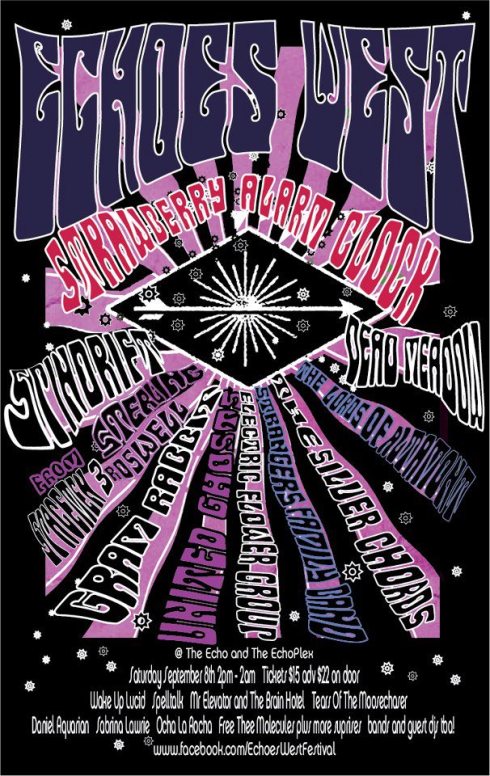
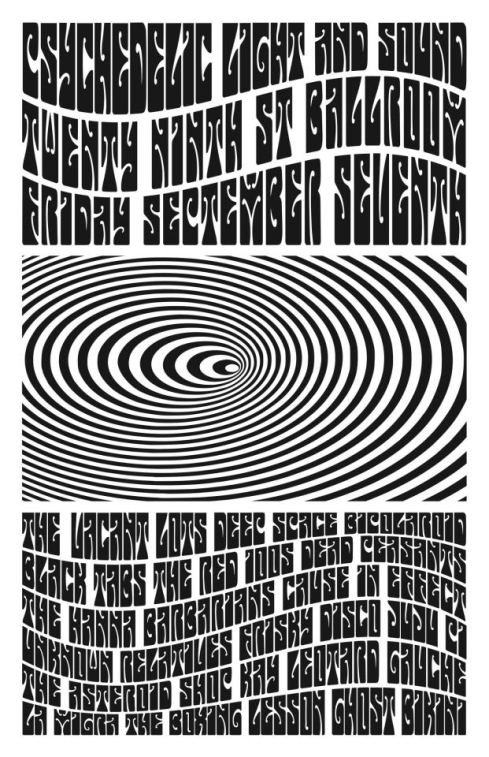
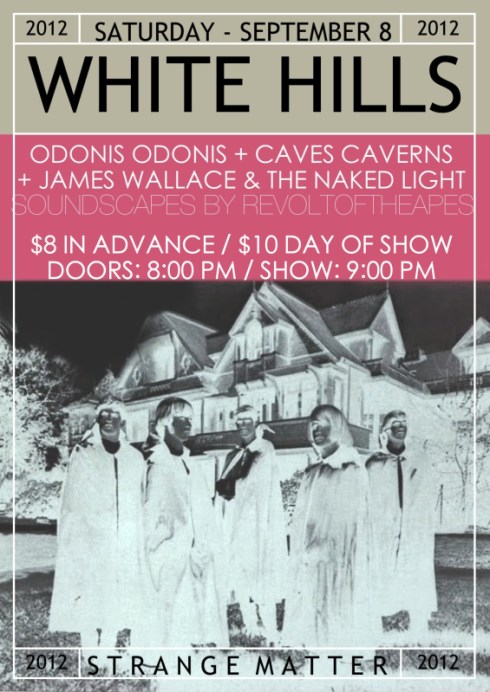


 Revolt of the Apes