PATRICK LUNDBORG (AUTHOR OF “PSYCHEDELIA: AN ANCIENT CULTURE, A MODERN WAY OF LIFE”)

25 Sep

To make an attempt at condensing our reaction to and – pontifical as it may sound – the importance of Patrick Lundborg‘s masterful book, “Psychedelia: An Ancient Culture, A Modern Way of Life,” we can only say that there exists no other book quite like it.

Which may be as much of an understatement as saying The Beatles are pretty well-known. Yet both understatement and overstatement, like all things, exist in the eye of the beholder, and when these eyes beheld the words and scope of Lundborg’s massive, extraordinarily well-researched and highly entertaining testament to all things mind-manifesting, we knew instantly that it would be among our very favorite books of the past year, and also one which we will return to for many, many years to come.

And while “Psychedelia” is the second book of Lundborg’s to rest on our bookshelves – following 2006’s “The Acid Archives,” a collaborative effort overseen by Lundborg – we can’t overstate how much more panoramic in scope this book is. While “The Acid Archives” surely established Lundborg as a bona fide expert on all things musically tangerine tree-esque and marmalade sky-ish, “Psychedelia” is … well, again: it’s a book unlike any other. It spans the entire universe of psychedelic history, from the Eleusinian Mysteries to the Joshua Light Show, and back again, and far beyond that, too. And that it does so with an equal measure of academic integrity, grace and humor … to employ a phrase, “Psychedelia” is a trip.

We recommend no book to the readers of this ridiculous website more highly than Lundborg’s monumental achievement, and we would not feel more fortunate than to have him share his answers to our ridiculous questions below. Enjoy.

If you were forced to do so at gunpoint, which one album would you select as the definitive psychedelic album?  What are the attributes of this album that makes it definitive, in your view? What was your own introduction to this album, and how have your thoughts about it evolved over time? Similarly, can you select one album that you would define as almost purely psychedelic that you feel is often or consistently overlooked, even among fans of psychedelic music? Why do you think that is?

1a.) This question is fairly easy for me to answer—it’s “Easter Everywhere” by the 13th Floor Elevators. On an analytical level it fulfills all the criteria one can set on a rock record: songwriting, arrangements, vocals, creativity, originality, artistic commitment, etc, is all there. By meeting these criteria one has already left 99% of the rock music behind, and moves among the truly classic stuff like the Beatles, Dylan, Neil Young, etc. On top of this are the lyrics by Tommy Hall, which are never less than great, and brilliant poetry in some cases (“Slip Inside This House”, “Dust”). They are more than lyrics however, but statements about a new lifestyle that the band promoted and which they lived themselves. If you put these things together there really isn’t much that can compete, except maybe Velvet Underground and Dylan … neither of which are psychedelic. On a non-analytical level, “Easter Everywhere” is an amazing, hypnotic experience that is surreal, yet somehow still grounded in profound human emotion that demands your attention. Roky’s vocals are a vital piece in this regard. While it deals with a utopian psychedelic way of living, it does not abandon the reality of our everyday lives, but rather shows both places at once, a double positive as I call it in the Psychedelia book… I think I discovered “Easter Everywhere” in 1985—I had bought “Psychedelic Sounds” the year before (a crappy stereo mix reissue) and sort of liked it, but people told me “Easter Everywhere” wasn’t as good (this was the sentiment among punk rock and 60s garage fans) so I didn’t check it out until 1-2 years later. Needless to say I was blown away. I immediately proclaimed it better than “Psychedelic Sounds”. Around 1989 I finally got to hear an original mono mix of “Psychedelic Sounds” and realized how great it actually is, and this was the time I became a hardcore Elevators fan.

1b.) I’ve done my share to turn people on to the great “Square Root Of Two” LP by Nightshadow, aka Little Phil & The Nightshadows, yet for some reason it is hardly ever mentioned. I think it’s better than 95% of the late ‘60s ‘psych’ albums floating around, and more than that, it is one of the very few album-length documents of the acid punk style of psychedelia, a special sub-genre otherwise extant mainly on 45. Side one of “Square Root” is pretty deadly, with fuzz guitar leads, snotty vocals, druggy sound effects, spaced out lyrics but most importantly also very good songwriting. People need to recognize this album as one of the big ones from garage/psych cross-over era, easy on level with something like the Bohemian Vendetta LP.

 photo aed9027a8b4198fd8d075f5ed5cf3ea8_zps7b1c2874.jpg

Your own book aside – and with the same gun pointed at your temple (sorry!) – can you select one book that you feel is definitively psychedelic, either in its content or construction? What are the attributes of this book that makes it so, in your view? What was your own introduction to this book, and how have your thoughts about it evolved over time? And can you select one book that you would define as almost purely psychedelic that you feel is often or consistently overlooked, even among fans of psychedelic literature? Why do you think that is?

Literature is not a very strong field for psychedelic creativity. I think it’s simply a case of the constrictions of language and grammar that interfere with the boundless type of creativity that is unleashed in the psychedelic state. I think poetry, great poetry, can be written in the state, but when it comes to prose texts and whole novels, these are the fruits of long and hard labor that correspond better to amphetamine type drugs, or no drugs at all. That said, it is of course entirely possible to generate ideas for short stories and novels in the psychedelic state, ideas which are then revisited in a baseline state of mind and turned into actual writing. I do believe a lot of modern science fiction has come about this way, although it’s usually easier to tell in the format of a feature movie rather than a printed book. Thomas Pynchon’s “Gravity’s Rainbow” is often cited as a psychedelic novel, but to be honest I didn’t really experience it like that when reading it. There was a lot of inventiveness and strange transitions, but it just seemed like experimental prose without any distinctive psychedelic fingerprints. I think some of Ray Bradbury’s short stories have a definite psychedelic quality in the way he deals with fantasy and strange ideation, and the relationship between the subject’s perception of the world and the “real” world. Ditto for Philip K Dick, whose psychedelic qualities I describe at some length in the Psychedelia book. Somewhat similarly, William Gibson show clear psychedelic inspiration in some of his stories, and there is no doubt that it’s authentic. Looking at the classic prose tradition, Hermann Hesse’s books are given favorites among psychedelicists, and it is very peculiar how they form a trajectory that seems to follow an acidhead’s development, from the despair and awakening in “Steppenwolf” through the mystic insights of “Siddhartha” and the bonding of psychedelic friends in “Journey To The East” and the ultimate formation of a utopian state of learning and imagination in “Glass Bead Game”. It’s all there. Of all the fiction works I’ve mentioned here, I think “Journey To The East” is one that psychedelicists may want to pick up, not least since it’s much lesser known than Hesse’s major novels. In total though, the most rewarding psychedelic books can be found in the fact section, rather than fiction—Huxley’s “Doors Of Perception”, Watts’ “Joyous Cosmology”, etc.

The amount of research, the breadth and depth of “Psychedelia,” is nothing short of staggering. Do you feel that, by some definition, you had been doing this research for years, unconsciously, and this book is the end result? Was there a single event that convinced you to engage in a more disciplined approach to your research, with the book as a goal? What information did you find most difficult to uncover, that you wish you could have incorporated more of into the book?

The way this began was that I was part of a psychedelic artist collective here in Stockholm called the Lumber Island Acid Crew (I named it—”Lumber Island” is a literal translation of Stockholm), which had formed in the late 1980s. It was primarily a music scene, but there were all kinds of artists and scenemakers. As a member of this group my natural activity would be writing, which I enjoyed and often received appreciative comments upon. I managed to get some of my psychedelic poetry published in Sweden’s largest literary magazine in the mid-90s, but ultimately I realized that poetry wasn’t the ideal channel for me, and public interest in contemporary poetry was shrinking fast anyway. I discussed my situation with a friend who was a successful author, and he suggested that I could try writing in English. So I began writing reviews and articles for various magazines, gradually developing English into my primary language for writing. The Acid Archives book I published in 2006 was a big success, and after that I felt that the time had come to do something with all the psychedelic information I had gathered over the years via newspaper clippings, notes, rare books, trip reports and so on. The problem was that I couldn’t find the proper angle on the material, and I knew that I needed to find a perspective that was both new and strong enough to carry a book. So I kept doing my music writing, publishing the second edition of Acid Archives (2010) which again did very well, and waiting for the last piece of my psychedelic writing puzzle to appear. And finally the angle for my next book did present itself, back in 2010, a process which I describe in the foreword to the Psychedelia book.

When re-reading some texts on modern philosophy I realized that the question of a true psychedelic culture had never been properly studied or even identified, and that became my mission with the book—approaching psychedelia as its own culture and way of life. This new perspective helped me discern patterns, both ancient and contemporary, that hadn’t been dealt with before, and it also encouraged me to re-examine the modern history of psychedelics, which began with peyote experiments in the 1890s and grew massively important after Albert Hofmann discovered LSD. Writing the Psychedelia book took about 2 years of intense work, but I had actually prepared myself for it for 20 years or more. As to what was most difficult to research, I think the chapter on Communes and modern spiritual churches would have been much weaker if I hadn’t been fortunate to connect with a fellow Swede who specialized in the topic of modern communal living, and in fact lived at a self-contained rural farm himself. He’s quoted and credited repeatedly in that chapter, and I think there is a lot of info in there that has never appeared in a printed book before. He observed that no one had written about the commune phenomenon from a psychedelic perspective before, and found it an interesting angle. That chapter turned out very well, but beforehand it was the one where I had the least knowledge myself.

The chapter in “Psychedelia” that compares and contrasts the psychedelic experience to Eastern religions – or perhaps more specifically, the modern West’s relationship and interpretation of Eastern religions – was an absolute mind-blower, and perhaps begs to spun off into a book-length narrative of its own. Can you tell us a bit more about your own experience with Eastern religion and how that experience has evolved over the years? Is it attributed to the somewhat ham-fisted early efforts of Leary, Metzner and Alpert to tie the psychedelic experience – or maybe more accurately, their psychedelic experience – to “The Tibetan Book of the Dead”? What is it about the book that makes it so cringe-inducing to you today, and did you always feel that way about it?

This is a vital topic, and I’m happy to hear that you enjoyed that chapter. The field is still today surrounded by a lot of myths and self-deception, which is probably inevitable when you deal with something as fundamental as people’s spiritual beliefs. I wouldn’t have been able to write it in such a straightforward tone unless I had had some experience with the Eastern schools myself, and this is something I’ve built up over a long period of time. Initially I was interested in Hinduism as I found their idea about the ultimate metaphysics—the joining of the human ‘atman’ soul with the universal ‘brahman’ soul—to correspond well to my own ideas. But with time I gravitated towards Buddhism, which of course rejects the Hindu metaphysics and states that there is no human soul, only the deluded idea of one. This no-soul rejection, ‘an-atman’, is in fact a fundamental idea within the philosophical side of Buddhism. Parallel to these spiritual studies I had taken up meditation in the classic styles of single-point concentration and witness-‘watching’ one’s mindstream. I was not a diligent meditator, but went through periods when I did it every day, and the rewards were obvious. Due to my psychedelic inclinations I would at times have these visionary experiences when meditating, which kind of goes against the idea of a purified mind, but I was never that religious (ha-ha) about following a strict path. While I left the Christian Protestant Church long ago, I have never done a formal conversion to another religion, as I prefer to keep the doors open. What I observed, as mentioned in the book, is that the supposed overlap or similarity between visionary psychedelic experiences and the spiritual development from following a formal Eastern school of meditation and insight, didn’t really exist. It bothered me somewhat, since so many people (particularly in the late ‘60s and ‘70s) had talked about how they didn’t need to get high on drugs anymore, they replaced it with meditation practice and various yogas, etc. This didn’t ring true to me—I didn’t find the Eastern methods to replace or surpass the psychedelic experiences at all. In fact, I found them so different that I didn’t understand why they were compared in the first place.

I came across a lecture by Terence McKenna where he expressed much the same thing and basically dismissed the idea that the traditional Eastern schools offered any competition for the experience of psilocybin or DMT. His idea was that people in the 70s were simply burnt out and fled from the psychedelic realm into anything that was less demanding and less unprecedented. I think he was basically right, but want to add that Hinduism, Buddhism and Taoism are paths that offer enormous rewards for those who follow them diligently and are able to progess higher with the help of a teacher or guru. What is wrong is this bizarre idea that it’s an “either or”, because there is so little resemblance between the psychedelic innerspace and the meditative realm. As for myself, in recent years I have deepened my practice to include Tibetan tantrics, which are special tools and techniques to push you closer to liberation without all the rebirths and begging for alms and so on. These tantric methods are typically secret and not revealed for the student until after several years, but Western-oriented lamas have begun to share some of the methods, which include very detailed instructions on combinations of breathing, visualizations, and mantra. One tantra I tried was so powerful that I had to put the whole thing on ice, because I could see that the stability of my ego and personality would loosen up so much that it might freak out my two young sons and the rest of the family! So, much like high-dose psychedelics, this will be picked up later on, when I have better opportunity to explore higher states.

Regarding The Psychedelic Experience book, the whole thing is built on an almost random assumption that the LSD trip somehow corresponds to a certain ritual for dying people within Tibetan Buddhism. I’m sure they felt strongly about the similarity at the time, but it didn’t take many years for Leary & co to abandon the idea—already in 1966 they were trying out other ‘metaphors’ for the psychedelic trip. To understand how absurd the supposed connection is, try following the instructions and read the book to a friend who is on a psychedelic trip. He or she will probably crack up, or maybe get annoyed. The Tibetan death ritual is a metaphor, but not for the ego-loss of a psychedelic trip—it is used (in addition to actual deathbed situations, of course) for very advanced students who go through a ‘dark cave’ retreat, which is what it sounds like. After some weeks in complete darkness, an experience parallel to that of dying is to come over the student, who will then go through the stages of the Book of the Dead, and following its instructions arrange a rewarding rebirth for himself or herself. The psychedelic trip can, at higher doses, trigger a death-rebirth experience, but it’s far from a mandatory event, and there are other ways to go through ego-loss than entering something close to dying. So, in short, it was simply a poorly chosen metaphor for a psychedelic peak experience. As I point out in the book, the error runs even deeper, as it’s the whole idea of looking for a metaphor for the events in psychedelic Innerspace that is wrong from the start. It is an experience in and of itself, it does not need metaphors, but needs to be studied with a phenomenological approach, so that we can finally begin to understand what does on in the higher realms of the trip.

Don’t you wish there was an alternate universe where The Third Bardo recorded a handful of really, really extraordinary albums?

That sounds like one of those rhetorical questions you hear about!

One of our favorite books of the recent past is Peter Bebergal’s memoir, “Too Much To Dream: A Psychedelic American Boyhood,” and when we had the good fortune to interview Mr. Bebergal ourselves, he had this to say:

“I think we often ask too much of these chemicals. I know people who use these drugs regularly and while they have profound experiences, not much happens, except that they have these profound experiences over and over again. They are after some perfect awareness that will set them free, but I’m not sure that exists. For myself, any lasting spiritual experience is going to come from the long haul. Psychedelics might reveal the path, but for me they could never get me to the top of mountain.”

Your thoughts?

That is sort of the standard view that came out as a result of the second wave of modern psychedelia, meaning the counterculture wave with all those acidhead hippies. I could agree with this in the sense that the psychedelic drugs will not bring you to some sort of lasting state of religious revelation like that of a saint. But at the same time, the whole perspective is wrong, as it is based on the idea that the purpose of taking psychedelic drugs is to attain nirvana or satori or whatever perfect end-state you imagine.

As we covered in an earlier question, and I make clear in my book, it is a largely meaningless conflation of two different schools; one which is the Eastern religious path, and one which is the path of psychedelic drugs. What people need to do is to forget that whole idea and stop confusing these two paths. Nirvana is the specific end-state of a specific spiritual advancement that has been developed within a certain culture, a culture moreover which does not seem to have dealt much with psychedelic drugs. People who take psychedelic drugs need to imagine quests and states within their spiritual path that are specific to the psychedelic experience, and stop meddling with buddhism and hinduism as though there was some shortcut between the two. There isn’t. You can save yourself some time on the Eastern path by taking psychedelic drugs, but after that your work towards Nirvana will have to be done within the realm of Hinayana, Mahayana and Vajrayana, as the psychedelics drop off from the buddhist path at a fairly early stage and set course for their own goals, which are full of colours and visions and very strange experiences. So, in short, the kind of “conclusions” that a lot of baby-boomers reached concerning their psychedelic trips were merely the natural outcome of an incorrectly defined path. What is needed now and for the future is a Western Shamanism that draws on the spiritual wisdom of several schools to develop techniques, paths and end-states that are unique to the psychedelic compounds.

Despite having been perhaps overly fascinated by his lectures for some time, we had never heard of the Alan Watts album, “This Is It,” until reading your excellent article about the album some years ago. How did you first become introduced to this album? Have you ever been able to substantiate that the album was, in fact, recorded on LSD? Which band should release a cover of “The Onion Chant”?

Like so many other underground albums from the 1960s-70s that have become famous in recent years, I first learned of the Alan Watts LP through a small group of collectors of rare psychedelic records that had been digging up obscurities since the late ‘70s. I remember first hearing about it in the legendary Paul Major’s mailorder list, where he had another Alan Watts LP and commented that it “wasn’t the mindblower that ‘This Is It’ is…”. And so obviously I became interested in “This Is It” from that. This was all back in the 1990s when the LP was unknown to exist among most, it wasn’t even included in Watts’ bibliography. A friend of mine located a copy of the LP, which sold for $500+, and after hearing it via him I felt that it was a necessary item for my psychedelic record collection. A little later I came across a copy which I bought. In the early 2000s I launched a website about the album and published an article in a music magazine, calling it “the first psychedelic LP”, and over time people have come to accept this view. Today it’s become fairly well-known through such publicity, recently reissued and clearly recognized as an important piece, but more significant is that people enjoy listening to it, crazy freakout that it is. I don’t think anyone ever asked Watts if the LP was recorded on acid, but everything points to this being the case, so the burden of proof is on anyone who wants to deny it. I have more to say about this and the LP in the Psychedelia book. The bottom line is that “This Is It” stands shoulder to shoulder with Eden Ahbez’ “Eden’s Island” and together they form a terrific prototypical foundation for the psychedelic recordings of the acid rock era. Between Watts and Ahbez you have covered almost every aspect of the psychedelic explosion, and this already in 1960-62.

What music have you been listening to lately? If push comes to shove, what is the best album to have emerged out of “The Lumber Island Acid Crew”? What is it about this album that makes it a stand-out in your mind? Please show your work.

I listen to all kinds of music all the time, but I do go through these phases where there is a certain theme or orientation. I guess 2013 has been a lot about finding the right kind of hippie music—music that embraces the positive, free-spirited, independent drive of the hippies, but at the same time does not degenerate into empty-headed flower-power clichés or naïve, childlike sentiments. It’s sort of what the San Francisco scene was originally about, before media distorted the image with all the silly “flower children” nonsense. The real, original hippies were like the Diggers – adults who had been around a bit and whose estrangement from society was both mature, serious and intelligent. You can find some of this in the big SF ballroom band’s music, but it’s not so easy to find 2nd and 3rd tier bands that have the mature westcoast style on record. Bob Smith’s LP is an example, also Spirit’s best albums, and Kak. Stalk-Forrest Group is another one. In England you had Mighty Baby. So this is something I’m interested in right now, and well-known groups are as welcome as obscure ones. I’ve also been listening to ‘70s punk rock quite a bit!

The best album from the Lumber Island Acid Crew is an easy pick for me: it’s the Entheogens’ “Gnostic Mass.” Not only does it feature great acid jams with almost all the people from the Crew involved, but it continues a classic Nordic tradition of droning semi-acoustic psychedelia, from early 1970s bands like Handgjort, Furekaaben and Trad Gras & Stenar. To me, everything that our psychedelic Stockholm scene was about at its peak around 1990, can be found on the Entheogens LP. Too bad it’s so rare, but there may be a reissue.

Huston Smith said the following in a 1995 interview:

“One the dangers of our time is that we are inundated with information. We’re aware of a lot more things but it also has a danger. The danger I think comes out clearly in T.S. Elliot’s couplet where he wrote, ‘Where is the knowledge that is lost in information, where is the wisdom that is lost in knowledge?’ We’re in danger of being swamped, deluged by information, but how does it fit together? Synthesis, that’s the question. Rebecca West was asked, ‘What do you sense as the dominant mood of our time?’ She became reflective for a moment and then answered, ‘A desperate search for a pattern.’ That search is still in place because the fragmentation and the deluge of information and the sound bites get shorter and shorter until it becomes a kind of chaos. So the need for synthesis, or a pattern, in Rebecca West’s words, is the dominant issue of our time.”

Your thoughts?

Well, we lost the pattern of the state founded upon religion, and we’ve lost the pattern of the good state serving the needs of the people, and we’ve lost the pattern of man’s innate stability and natural drive to do good … so I would agree that patterns, structures, anything that is both steady and supportive, is sorely lacking. Each generation responds to this modern vacuum its own way, although an exaggerated reliance upon romantic love and sexual fulfillment seems to be a recurring theme over the past 50 years. I can’t comment much about those younger and older than me, but for us ‘Generation X’ children, the solution has been a fundamental skepticism that is expressed along a sliding axis between cynicism and irony. Actual beliefs have often been directed towards things untouched by older  generations, such as pop and underground culture phenomena, which are examined for undiscovered values, enjoyed, analyzed, contextualized, turned into art, and so on. It is a fruitful enterprise in the sense that something novel is achieved and a vast gallery of artefacts is available to discuss, but of course there is no fundamental pattern in this quest that can offer any deeper sense of satisfaction. The other alternative, which is shared with the so-called Silent Generation that preceded the Baby Boomers, is to turn one’s profession into the axis around which one’s entire life spins. This is very common, but hardly a working solution, unless one is among the lucky few who can find an occupation that meets all of one’s creative desires while still offering a paying career. As for myself, I do believe that the path opened by the psychedelic drugs opens up doors towards a lifestyle whose structural nodes are steady enough to carry a person through one’s entire life. The problem is that this pattern is not yet in place, because the psychedelic researchers of the past have spent their time on everything except the issue of how a psychedelic lifestyle might look. In my book Psychedelia I take steps towards defining this, but this must be a broad, consensual development that is tried and tested around the Western world. The psychedelic experience will provide spiritual and intellectual rewards that supports the everyday life, and the energy released can be directed towards finding ways to put bread on the table without suffering the boredom of a 9-to-6 job. It can be done, but no one said it was going to be easy!

What’s next for Patrick Lundborg?

Writing and more writing. I took stock of all outstanding assignments I have, and it was 7-8 projects that are to be completed before year-end 2013. It’s mostly essays, liner notes and short pieces. For major undertakings I have plans for two future books, one which will deal with anti-drug propaganda on record and in print. I have what I believe to be the world’s largest collection of anti-drug LPs, and the topic seems perfect for a coffee table type book, with plenty of images and an essay or two. The other book project is a kind of trip journal, where I offer my contributions to the mapping out of psychedelic Innerspace in the form of analyzed trip reports, commented paintings of drug visions, trip poetry and also a couple of essays that discuss the subject. In the Psychedelia book I urge people to contribute to our discovery and mapping out of the space where our consciousness goes on psychedelic drugs, and this planned book would be one of my contributions. Many people believe that Innerspace is wholly subjective, but our experiences with psychedelics, the tryptamine drugs (mushrooms, ayahuasca) in particular, clearly indicate that the experience not only follows a recognizable trajectory, but that a solid chunk of the visionary content is, in fact, also recognizable and recurring. While neuroscientists work on solving the mystery of consciousness via their hi tech tools, psychedelicists should work from the other side through phenomenological study of psychedelic states so that ultimately, in 50-100 years, the two parties can meet at some halfway point.

Patrick Lundborg’s “Psychedelia: An Ancient Culture, A Modern Way of Life” is available from many fine sources. You can spend hours exploring the multiverse Patrick presents on his essential and robust home on the Web, Lysergia

BAND OF THE WEEK: SHANA FALANA

22 Sep

“In the Light” by Shana Falana shines with an unmistakable autumnal brightness, not illuminating dark corners of the mind so much as showing them not to be corners at all, but rather rounded, intersecting circles, eternally connected, reflected and repeating, repeating, repeating.

 photo e0e06de1471b9419d80a5ac8c4b4ad76_zpse98b04c3.jpg

That being said, it doesn’t mean we know anything at all about Shana Falana, the person nor the music, nor whether or not there’s exists any space in between those two entities.

We don’t know when it was that we first heard Shana Falana (and we don’t know that it matters – though, speaking of not-knowing, the first time we recall making a point to remember the name was upon reading the liner notes to “Bowing Not Knowing to What,” last year’s extraordinary and enduring debut from It’s Not Night: It’s Space, to which Falana lent vocal ambience).

We don’t know exactly what was on Falana’s mind when she recorded the six musical mantras that make up “In the Light.” We don’t know the significance of the cover art, with it’s skyclad animal totem, somehow linked to fuzzy, faux-fur hats. We don’t know if Falana ever spent teenage hours alone in her bedroom, drifting toward deep space while contemplating the metaphysics of graffiti in general, and the heaviness of “In the Light” in particular, overwhelmed with the melancholy of never being invited to sit cross-legged on the shag carpet of the Starship. We don’t know if that’s just us (though we suspect it was).

We don’t know what it is about the opening moments of opening song “Dizzy Chant” that delivers to us a delirious delight, making us feel dizzyingly content and centered, a certain sense of nocturnal nourishment, where our failures are found to be just fine.

We don’t know what it is about the balance of the sounds that follow that has us driving our personal plays of “In the Light” toward triple digits. But we know we don’t know, and we know it doesn’t matter, because we know there’s nothing like not knowing. And we’re happy to have gotten to know Shana Falana.

“In the Light” is available as a pay-what-you-will download at Shana Falana’s Bandcamp page.

“A mantra like this points directly at the mind. Because it is neither moving nor still, you can’t use the mind to find the mind. Because the mind has no beginning or end, you can’t use the mind to put an end to the mind. Because there’s no inside, outside, or in between, if you look for the mind, there’s no place to find it. If there’s no place to find it, then you can’t find it. Therefore, you should realize there’s no mind at all. And because there’s no mind at all, demon realms can’t affect you. And because you can’t be affected, you subdue all demons.” – Master Hui-Chung, “Supplement to the Triptaka

BAND OF THE WEEK: KDH

15 Sep

KDH cram at least a hundred-thousand connections – musical, geographical, psychological – together into one single, throbbing, electric orb of blast-forward, boogie-down reduction rock on the thirty minutes that make up their somewhat-scarily flawless debut album, “Kill Devil Hills.”

 photo c4ec04130bf5414f2807cd1605efe0bb_zpsd7a523df.jpg

We won’t attempt to untangle all of those connections. We’ll just continue to delight in them.

Given the band’s chemical composition – a group of North Carolina natives who came together in New York City – there’s a certain psychological symmetry to the music that they term “boogie doom.” And in those few facts, you have a distillation of the hundred-thousand connections mentioned above.

In much the same way, album opener “White Snow” serves as a incomplete, if deadly distillation of the KDH boogie-down aesthetic – a dynamic riff-rocket of streamlined, southern sincerity, exploding into comic-book color. And we say incomplete only with the knowledge of what follows after the instrumental opener: the KDH secret weapon of hook-heavy, harmony vocals.

And so it goes throughout the album, a collection of two-and-a-half and three-minute stunners, as compact as they are colossal, encouraging you to come along and sing along, too. It’s fun and it’s fierce, as carefree as drinking cheap beer in the back seat of a tricked-out muscle car. But by the time we arrive at the album’s midpoint – the extraordinarily appropriately named “Barnburner,” a rock and roll Frankenstein’s monster assembled in a laboratory co-owned by Diamond Head and The Flying Burrito Brothers – we realize there’s more to “Kill Devil Hills” than just a boozy, moonlight drive to the dunes. This rumbling ride is a custom-designed, high-performance vehicle, assembled with care and pride.

“Kill Devil Hills” by KDH is available now at their Bandcamp page. Find the band on Facebook here

“What is chiefly needed is skill rather than machinery. The flight of the buzzard and similar sailors is a convincing demonstration of the value of skill and the partial needlessness of motors. It is possible to fly without motors, but not without knowledge and skill. This I conceive to be fortunate, for man, by reason of his greater intellect, can more reasonably hope to equal birds in knowledge than to equal nature in the perfection of her machinery.” – Wilbur Wright 

BAND OF THE WEEK: THE OSCILLATION

8 Sep

Though their third album carries the title “From Tomorrow,” we’re confident that today truly belongs to The Oscillation.

 photo ebcb60c58bacc3da6ba90116fec11650_zpsa03dd6c5.jpg

Our confidence in granting the day to The Oscillation stems from the mesmerizing effect of “From Tomorrow,” the U.K. band’s third full-length overall and the first that has coursed through our neural passageways with such force that we do not need but rather must listen to it on a daily basis, for several weeks on end.

As true as it is that we’re shamelessly enamored of “From Tomorrow” and its ultimately timeless appeal, answering the question of why the album’s perfectly balanced, forty-minute trip has achieved the mythical level of masterpiece in our heads is somewhat more difficult. Of course, it always is. And certainly these mere words alone will be unable to uncover the audio alchemy constructed by The Oscillation.

Still, we’ll give it a shot.

The most immediate strength of “From Tomorrow” is simply in the very sound of the album – and while we have the audio engineering experience of a tin can, we’re prepared to call this a very, very, very good sound. It’s in the snap of the drums, the space-serpent slither of the bass lines, the sonic sturm und drung of the guitar and synths (plus the interplay between the two), and the otherworldly authority of the vocals. All elements are skillfully layered together in a way that’s both tight and loose, centered with plenty of breathing room – form is emptiness, emptiness is form.

Also contributing to the compelling nature of “From Tomorrow” is what we referred to earlier as the album’s timelessness. Thoroughly modern as the album is, even futuristic enough to ably carry the title “From Tomorrow,” The Oscillation equally express the attributes of their futuristic forbears. Album opener “Corridor (Part One)” recalls the dark, descending flicker-flicker-flam of Pink Floyd circa “Astronomy Domine,”  while the album as a whole feels cut from the same eternally excellent cloth as “A Gilded Eternity,” “Tago Mago,” – even occasionally echoes of “Heaven Up Here.” True to the band’s name, The Oscillation at times seem to sonically split the difference between oscillations both Silver and Aqua.

Comparisons, however, tell very little of the story – undoubtedly existing only in the ear of the beholder. And perhaps the most notable thing our ears behold throughout “From Tomorrow” is something we don’t normally associate with albums so kosmische in scope and style: hooks. For all the intergalactic mind-expansion delivered by The Oscillation (and there’s plenty) they’re equally able to deliver many memorable moments that – gasp! – you may wish to sing along with. Nowhere is this skill on display more clearly than on album highlight, “No Place to Go.”

There’s no place for “From Tomorrow” to go except further into our heads, hearts and minds. In full voice, we’ll continue to sing the praises of The Oscillation – in the past, today and from tomorrow as well.

“From Tomorrow” will be available from Hands in the Dark Records and All Time Low Productions on September 30. Hear more by The Oscillation at their Bandcamp page.

“Who can say that he will definitely see tomorrow’s sunrise? Who can even be sure that he will draw his next breath? … We were born alone and we will die alone. Yet even while alone we still have our shadow with us; and alone after death, our consciousness will still have with it the shadow of our actions, good and bad.” – H. H. Dilgo Khyentse Rinpoche, “The Heart Treasure of the Enlightened Ones

BAND OF THE WEEK: THE AQUADOLLS

1 Sep

It’s unclear if we’ll ever go another summer without listening to The Aquadolls. All signs point to “no.” Certainly, for the current, nearly-over summer, our ears unquestionably belonged to The Aquadolls. You might even say we’re stoked on The Aquadolls and their criminally-catchy EP, “Stoked On You.”

 photo 1da19287e7173bb439089009f7a3fe98_zps2f71aa2f.jpg

Sometimes we’ve wondered what the Ramones would have sounded like if they formed forty years later, on the West Coast instead of Queens, if half of them had gender-reassignment surgery, and if they never, ever sniffed glue but always, always smoked pot. After living in The Aquadolls’ world this summer, we don’t wonder any more.

Summer’s almost gone. Ain’t no cure for the summertime blues. It’s a cruel, cruel summer. Summer lovin’ – happened so fast.

Summer breeze makes me feel fine. Summer turns me upside down. And when the rain beats against my window pane, I’ll think of summer days again. And babe, don’t you know it’s a pity that the days can’t be like the nights in the summer, in the city. The sun is my disgrace – boiling heat, summer stench. Helter Skelter in a summer swelter. I see the girls walk by dressed in their summer clothes. My Shangri-La beneath the summer moon, I will return again, sure as the dust that floats high in June, when movin’ through Kashmir. Throw roses in the rain, waste your summer praying in vain.

Spending warm summer days indoors, writing frightening verse to a buck-toothed girl in Luxembourg. It is the summer of my smiles – flee from me, Keepers of the Gloom. Madman drummers, bummers and Indians in the summer with a teenage diplomat. I’ll leave you when the summertime, leave you when the summer comes a-rollin’, leave you when the summer comes along. A four of fish and finger pies in summer. 1989, the number, another summer – get down.

She’s a summer love in the spring, fall and winter. Floating in the summer sky, ninety nine red balloons go by. Blood in my love in the terrible summer. On a warm summer’s evening, on a train bound for nowhere. Your voice is soft like summer rain. Won’t be long till the summer comes, now that the boys are here again. No summer’s high, no warm July, no harvest moon to light one tender August night. If the summer changed to winter, yours is no disgrace.

Summer’s going fast, nights growing colder, children growing up – old friends growing older. Sailing on a summer breeze and skipping over the ocean like a stone. We’ll all be gone for the summer – we’re on surfari to stay. I slink down the alley lookin’ for a fight, howlin’ to the moonlight on a hot summer night. Cause summer’s here, and the time is right for fighting in the street, oh boy. We’ll find happiness together in the summer skies of love.

The “Stoked On You” EP by The Aquadolls is available at their Bandcamp site.

“Summer night–
even the stars
are whispering to each other.”
Kobayashi Issa

BAND OF THE WEEK: WHITE HILLS

19 Aug

White Hills are the greatest band currently walking the earth. Deal with it.

– OR –

White Hills are more than a band – they’re a way to liberation.

Were it that we believed in ranking and ordering artistic expression, we’d have no problem with prematurely declaring their just-released album, “So You Are … So You’ll Be,” to be our absolute favorite album of the year – the most awe-inspiring, the most intergalactic, the most monolithic, and certainly our favorite.

 photo bb238e9bff1c3230d40662303315f6c5_zps91c26df7.jpg

It’s not simply the consistency of White Hills’ output over the past few years – since 2009 at least, a full-length album each year (and counting), along with an ever-expanding universe of mind-blowing miscellanea – that’s so remarkable.

Rather, it’s the absolute purity of vision demonstrated by the band’s twin-engines of Dave W. (guitar) and Ego Sensation (bass), and whoever else is caught in their orbit at the time of recording. It’s a vision based on limitless possibilities, stern resolve and – no two ways about it – absolutely magickal, molten guitar playing.

It’s a vision demonstrated right there in the title of their latest, and in every second of its fifty-seven and one-half minutes of snarling space sonics. White Hills simply are what they aspire to be. They are a band like absolutely no other, and here’s to their continuing to be.

“So You Are … So You’ll Be” is out now on Thrill Jockey Records

“Life with a narrow view is suppressed and constricted; it is a struggle. There is always tension involved in it, because it takes an enormous amount of energy to keep everything in order all the time. If you have a narrow view of life, the disorder of life has to be ordered for you, so you are always busy manipulating the mind and rejecting things or holding on to them …

The spacious mind has room for everything. It is like the space in a room, which is never harmed by what goes in and out of it. In fact, we say ‘the space in this room,’ but actually, the room is in the space, the whole building is in the space. When the building has gone, the space will still be there. The space surrounds the building, and right now we are containing space in a room. With this view we can develop a new perspective. We can see that there are walls creating the shape of the room, and there is the space. Looking at it one way, the walls limit the space in the room. But looking at it another way, we see that space is limitless.”

Ajahn Sumedho, “Noticing Space”

STRANGE FORCES

7 Aug

Perhaps the strangest thing about Strange Forces – a band for whom strangeness has never been a stranger – is our absolute inability to recall when we first heard the band’s massive, mind-melting sonic missives.

Strictly speaking, there aren’t too many choices. It was either the band’s self-titled EP or last year’s monster full-length LP, “I’d Rather Listen to the Bloody Birds.” What’s contained on that release in particular – and in the music of Strange Forces in general – is an utterly compelling sense of familiarity, a kind of cosmic, stereo-driven déjà-vu that we rarely encounter.

Familiarity here can be a dangerous word. We ask that you strike down any thoughts bubbling up that make you infer that Strange Forces are a sound-alike band. They are not. The band may orbit in the same general space that a band like Hawkwind once set out in search of and, perhaps somewhat closer to home, may share similarly glorified, amplified exploration equipment that serves to propel favorites of ours like Electric Moon or Hills, let there be no mistake – Strange Forces sound like Strange Forces.

The familiarity we speak of in regard to Strange Forces is a downright Faulknerian familiarity; in the author’s words, familiar “as things are familiar in dreams, like the dreams of falling to one who has never climbed.” This familiarity comes closest to describing why we’d rather listen to “I’d Rather Listen to the Bloody Birds” – a record where inner and outer space merge, a record both comforting and challenging, a record both serious and flashing a sly smile.

We couldn’t feel more fortunate to have the band kindly respond to our ridiculous questions below, and to share the resulting dialogue with you, here, on this ridiculous website. Enjoy. 

What do you believe is the strangest experience ever to happen in your life that you failed to fully comprehend at the time, but later had significant impact on yourself, personally? How do you feel about this event today? In what ways – if any – has this experience influenced the way you think about music? 

Eli: Hard to say. There are strange things happening everyday. Once I saw a ghost, once I saw a UFO, once we really put our heads together, once I went out of my body. Naturally these sort of experiences impact me greatly and are the kind of things that one doesn’t really forget. They’re hard to describe, but I’m glad they’re happening. I think if anything, these sort of experiences make us aware of the vibrations that exist everywhere. I think the strange days are not over yet.

Matt: I was flying home in 2009 on QF72 and the plane dropped out of the air twice in a row. I thought I was going to die. The pilot had to perform an emergency landing at a secret air force base at Exmouth, WA. The night before in Singapore I had purchased a lot of special crystals from a man with a red toupée. I had them with me at the time and while people in front of me had broken their necks, my girlfriend and I were unharmed. A few days after the flight in Perth I won second division in the state lottery and when I got back to Berlin I used that money to rent Strange Forces first studio and buy gear.

After the flight, a journalist told me that the secret base was to blame as it has the southern hemisphere equivalent of HAARP and they have back-engineered alien technology to create both that and the componentry in modern airplanes; thus the interference in that area. All commercial aircraft now have to fly around this airspace. If we all took the time to travel on horses and whales from one place to another I think we would be better off.

 photo 7264faabb7757dff653c8103f71c3531_zpse874789e.jpg

What are the forces that have most defined your own relationship with music throughout your life? Can you think of a single event that forced you to look at music in a way that you never had before? What are the forces that make you feel connected to music and encourage you to continue to pursue a relationship with music?

Nick: I’d say the forces between us as individuals and as a band have been pretty intense and no doubt have forced us to think outside our own musical agendas. Some kind of resonance between the three of us has always played a part in the spontaneity of our jams, which develop into our songs. This resonance was the only way of communication while we practiced during most of the band’s life. The same forces are probably guilty of bringing us together as friends twenty years ago, which is probably the event which later in life has forced us to think differently about music.

Eli: I can’t think of any one thing that has defined my relationship with music but definitely being exposed to other cultures and traditional music as I was growing up. Another thing would be experiences I’ve had during altered states. But really it’s just a damn good time.

What were your very first attempts to create music like? How do you feel about these experiences now and how do they continue to influence the perspective you have on music today?

Nick: Well, I learned piano and played guitar as a kid and that no doubt has some subconscious influence on on me. When Matt and I moved to London in 2006 we set up some random instruments in a crowded flat in Hackney. We would spend nights lying on the floor in a drug-haze, thumping and dreaming at our instruments. I think in those days we just wanted to smash out weird sounds with any means possible and experience lots of fucked up shit. Those strange jams were probably the genesis of Strange Forces and no doubt still influence our music.

Matt:  One of our first purchases in London was an old PA and then I bought a Moogerfooger pedal for my guitar. I remember just experimenting a lot in our living room with this PA and various pedals. We would just make noises with a whole bunch of feedback and melodies thrown in. Then we convinced Eli to learn the drums before he came over to Europe. Much of the spirit hasn’t changed since then – our main focus or angle on music is still experimental.

What can you tell us about the formation of Strange Forces? In what ways had the three of you interacted prior to starting the band? How do you think your relationships have evolved since you starting playing together at very, very, very high volumes (we’re assuming)?

Eli: We’ve all been friends since primary school, so we all grew up together, and have done a lot of stuff together over that time. Sometimes that helps when you’re making music together, but sometimes not.

Matt: In the end I think we’ve probably stuck it out due to this one type of crystal called Mundaba which is an Aboriginal word. Since we started playing at very, very, very high volumes we have all had tinnitus for some time now.

Nick: We were smoking weed and listening to Radiohead and Chemical Brothers when we were teenagers. Being in a band together has probably made us closer. Shit, for a while we were playing music together, drinking together, eating together and sleeping pretty much side-by-side. That, with the huge number of psychedelic experiences we’ve had together, means there is no more hiding. Not to mention the fucking telepathy. And the volume means it goes deep, like right into your skull and sits there like a horse.

The Strange Forces EP closes with a spectacular song called “Hungry Ghost Nation.” Can you tell us anything about the inspiration for this song? Who (or what) are the vocals addressing in the repeated address, “I will walk with you”? What relevancy does the concept of hungry ghosts – traditionally, creatures “not fully capable of living and appreciating what the moment has to offer” – have in your life today?

Matt: The name is taken from a cracker of an article I read on Reality Sandwich quite a while ago. I’m half Korean and naturally inclined to some Eastern perspectives. I can really relate to this clash of Eastern and Western ideas in the article and the various definitions of hungry ghosts. The vocals are pretty simple repetitive lyrics that I made up on the spot one day. Most of our lyrics are done like that but I guess there’s a possibility then that a hungry fella could be in the studio with us at times.

Eli:  I think there are spirits, ghosts, goblins and ghouls all around us. And we should give them some bloody respect!

Please tell us something about “Maybe We Could Mediate Together or Something,” our favorite song on your tremendous album, “I’d Rather Listen to the Bloody Birds,” and perhaps our single favorite song title of all-time, period. Is that a guitar we’re hearing, or a UFO? 

Eli:  It’s a guitar playing a UFO … would you believe?

Matt: Ha, yea, actually we should try and sample some UFO’s sometime. I found some recordings once on Earthfiles but it was just an ominous buzz. We often joke about meditating together, burying our feet into the earth and eating some mushies; I think we will do that this summer. The sound is a guitar and envelope filter.

Would you care to comment on the rumor (the rumor that we are attempting to start right now) that your next release will be a mash-up of the music by Patti Smith and ZZ Top, entitled “La Grange Horses”?

Nick: Well, that’s meant to be a secret. So I’m guessing you have been using spies. It’s not something we appreciate, the use of spies, but at the same time I think we have nothing to hide. In this day and age if you’re hiding your mash-ups then you really should think about your goals in life, and what type of world you want to leave behind for your children. Ginsberg once said to Patti Smith, or vica versa, “Let the spirits of the departed leave you, and then continue in life’s celebration!”

Matt: It will be released under our Strange Horses moniker.

Eli:  Also working on a mash-up of Slim Dusty and Jim Morrison and calling it, “Slim and Jim’s Range of Sauces.”

What music have you been listening to lately? If push comes to shove, what is your favorite Can song of all-time and why? Please show your work.

Eli: Lately I’ve been listening to some OM, Boards of Canada, Ceephax, White Hills, Andy Stott, and some good old world music.

So many great songs of the Can, but I do always enjoy “Mother Sky.” It’s a good old-fashioned trance out, everything flows in and out perfectly. When you think it’s gonna stop, there’s more and more. It’s like the song that keeps on giving. and it sounds like a snippet from a much longer jam. Maybe they were just in the zone that day jamming away on “Mother Sky” for over an hour! And of course the drum breakdown with the bongos really hits the spot for me.

Nick: Haha, do you mean show your work, like to prove your not cheating? I’ve been listening to everything. I can’t remember it – it just passes through. Doesn’t hang around like it used to. If push really came to shove I would listen to “She Brings the Rain.” But I don’t think I’ve listened to all Can songs. There’s a shit load.

Matt: “Tomorrow’s Harvest” has been on repeat. Latest Lumerians, James Holden and Wraetlic is good, too. On our recent tour with High Wolf we did a cosmic cover of “Vitamin C” as our last song. I think we pulled it off.

Norman Vincent Peale – the author of “The Power of Positive Thinking” and a one-time roadie for Paul Revere and The Raiders, we’re certain – wrote the following:

“This is a dynamic and mysterious universe and human life is, no doubt, conditioned by imponderables of which we are only dimly aware. People sometimes say, ‘the strangest coincidence happened.’ Coincidences may seem strange, but they are never a result of caprice. They are orderly laws in the spiritual life of man. They affect and influence our lives profoundly. These so-called imponderables are so important that you should become spiritually sensitized to them. Indeed, the more spiritually minded you become the more acute your contact will be with these behind-the-scenes forces. By being alive to them through insight, instruction, and illumination, you can make your way past errors and mistakes on which, were you less spiritually sensitive, you might often stumble.”

Your thoughts?

Eli: Coincidently, I think this is spot on.

Nick: Um, well … I reckon you could go into a cave and meditate for ten years while fasting, then read libraries on spiritualism from all the cultures of the world, take part in one-hundred ayahuasca ceremonies with the Don of all Don shamans, lock yourself in a cupboard and take heroic doses while doing yoga and reading all the works of Dostoevsky. Then after spending your whole life working as an alchemist on The Great Work, achieving individuation through therapy with Jung and turning iron to gold, you’ll still come out and have absolutely no control of coincidence or the imponderables that condition them.

Positive thinking is great stuff. But its hard to do if you’re depressed. I think you should just trust the forces. And don’t resist shit. I think it was a buddha who said all problems come from resistance to something. But it might have been the barman.

Matt: Maybe we could meditate on it together or something.

What’s next for Strange Forces?

Matt: Remixes of the LP, plus some other new jams will be released on cassette very soon. I think some guy in Russia is going to release a single for us, too. Also have a few recording sessions worth of stuff to mix. Euro shows in the next few months and then hopefully hit the States next year.

ELi: Tape release to go triple-platinum. Play a gig in space … before Jared Leto’s band. And then the “Resurrection Tour.”

Nick: Probably get real famous soon and then get assassinated.

Strange Forces‘ “I’d Rather Listen to the Bloody Birds” is available from the band’s Bandcamp page.

BAND OF THE WEEK: GOLDEN VOID + PONTIAK

6 Aug

It doesn’t seem right, somehow, that the debut full-length from Golden Void is only now celebrating its one-year anniversary of release.

 photo e9b67b4bd97d7e71d289a64e6b12c400_zps9d1bfa35.jpg

Perhaps that owes to the timeless nature of the music contained therein, which somehow managed to condense what seems like a lifetime of riffs and melodies into a single album. Or perhaps it’s due to a certain sense of familiarity baked in to the core of Golden Void’s make-up – a make-up that contains members of such longtime, fuzzed-out left-coast luminaries as Earthless and the extraordinary Assemble Head in Sunburst Sound.

Or could it be that Golden Void exist outside of linear time itself? Could it be that the answer to what makes Golden Void so awesome is that there is no answer at all? Considering that a highlight of the Golden Void debut was a track entitled “Jetsun Dolma,” it seems somehow appropriate to consider the words of the great and revered Father of Uma, who once wrote …

“… Voidness does not mean nothingness, but rather that all things lack intrinsic reality, intrinsic objectivity, intrinsic identity, or intrinsic referentiality. Once they are so thoroughly relative, there is no limit to their being creatively reshaped by enlightened beings.”

And when it comes to things being creatively reshaped, we simply couldn’t be more stoked than to share with you  the sound of Golden Void reshaping “Sickle Clowns,” originally by The Pretty Things. Enjoy.

Speaking of timelessness and creativity, it’s been far too long since we checked in with the brothers of Pontiak, whose most recent full-length album – the peerless “Echo Ono” – topped our best-of-the-year list of 2012 (a high honor, even though we officially don’t believe in such lists).

 photo f4239d353bef673aefa246a32b8ff36c_zps3e2f6924.jpg

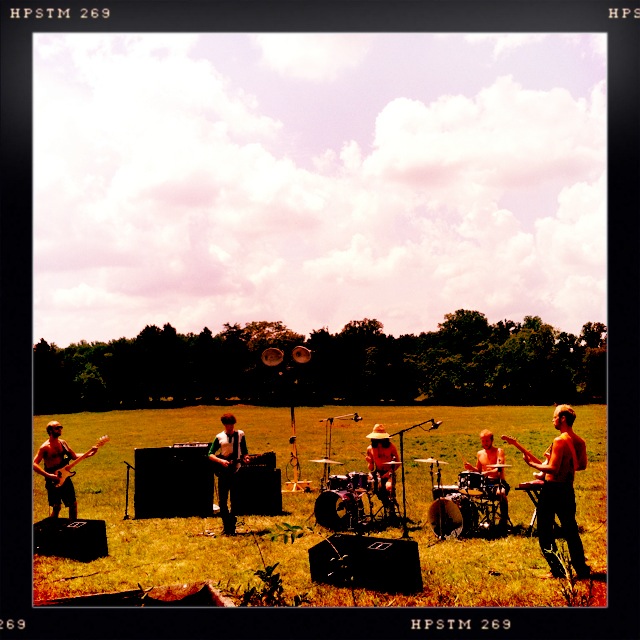
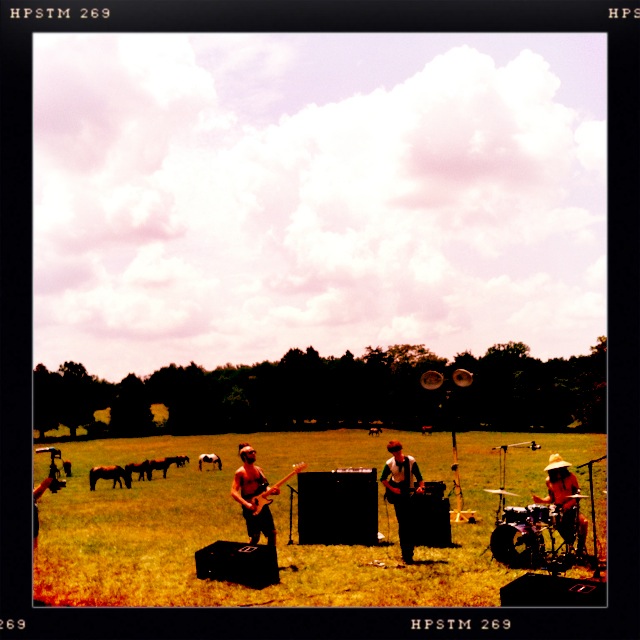
While the Golden Void debut feels like it has lived in our skull for years, a recent endeavor of Pontiak feels like it happened only yesterday, while it’s been a full year. This past summer, Pontiak set out to record a live version of their forthcoming EP, “Heat Leisure,” filming performances in the quite literally breathtaking beauty, heat and humidity of their native Virginia, with their friends Greg Fox (Guardian Alien, Liturgy) and Steve Strohmeier (Arbourteum, Beach House) joining them. The results were mind-blowing … and now available for your viewing pleasure. Enjoy.

Golden Void and Pontiak will soon hit the open road together for a string of dates listed below, culminating in Golden Void’s appearance at the ever-growing Hopscotch Music Festival.

9/1/2013 – Asheville, NC – Blackout Effectors – Pontiak, Golden Void, Nate Hall (from U.S. Christmas)
9/2/2013 – Charlotte, NC – Snug Harbor – Pontiak, Golden Void
9/3/2013 – Columbia, SC – New Brookland Tavern – Pontiak, Golden Void
9/4/2013 – Athens, GA – Caledonia Lounge – Pontiak, Golden Void, Coltron, Freak in the Fire

9/5/2013 – Richmond, VA – Strange Matter – Pontiak w/ The Diamond Center, Snacktruck
9/5/2013 – Raleigh, NC – Deep South Bar – Golden Void w/ ASG, Wichita Falls, Bitter Resolve (Hopscotch Music Festival)

PONTIAK PONTIAK 2

IAN ASTBURY

24 Jul

Whatever we could say by way of introduction about Ian Astbury – and by extension, the band he has fronted for the past several decades, The Cult – would be noticeably incomplete and underwhelming, in the same way that a conversation with the man seems incapable of being either of those things. 

Should we mention our distinct memories of hearing “Electric” as a teenager, and the hole drilled in to our head via that utterly perfect – and perfectly named – album?

Should we mention that the band is now embarking on a tour entitled “Electric 13,” in celebration of that album’s past and, notably, its continued presence? Should we mention that The Cult has brought our old friends and constant obsessions, the hypnotic space-rock warriors White Hills, along with them on this tour?

Should we mention the absolutely accidental, unplanned unfolding of a day this past weekend that ultimately ended with the opportunity to spend a fair amount of time on the phone with Mr. Astbury? 

We should – and could – mention all of this and more. But we’d rather just let Ian speak for himself.

We feel tremendously fortunate to have had the chance to chat with Ian Astbury, a friendly and fascinating man by any definition, and to share that conversation with you here, on this ridiculous website. May all your weeds be wildflowers – enjoy.

Was there ever a book that you’ve read – not necessarily about music – that changed the way you think about music, or interact with music?

Let me think … I think one the first lightning bolts of the printed page that really hit me was “Black Elk Speaks,” the story of the Lakota medicine man. That was given to me when I used to follow the band Crass. I was in their house one day and I think it may have been Eve [Libertine]– she gave me the book and said, “Read this.” I was about seventeen, eighteen. I sat and read the book and it really kind of gave me a map to what I was picking up on at a certain frequency.

I moved around a lot as a kid and I constantly had to navigate new environments. And there’s a certain order to things. For example, the bullies – you met them very quickly. And then the kids that were in to music, or the kids that were in to sports or whatever. So I very quickly had to read these environments. And that always made me feel like a bit of an outsider – I went to twelve different schools, y’know? When I came to Canada when I was a kid, I was around age eleven and I was introduced to indigenous cultures, primarily by going to school with some Mohawk kids from the reservations, living in the city of Hamilton. And they just had a different attitude toward everything, and they dressed a little differently. They kept their hair long and wore denim jackets and just did what they wanted, really. They didn’t pay much attention to the teachers and just seemed to do what they wanted. And I ended up with these kids because to the other kids, to the other white kids, I was just another immigrant, it didn’t matter where I was from. So I ended up with these kids. And I had another friend from Jamaica, another kid who was from Turkey – that was my crew. So I’m beginning to be exposed to different cultures and beginning to be drawn toward material, as young as twelve or thirteen, reading books about Native American culture. But I hadn’t made the spiritual connection to it yet – it was much more aesthetically based, and reading about their histories, the history of the Indian wars. But then as I started to get a little bit older, other questions came up. And then when it came to music … I guess I first saw David Bowie when I was ten or eleven years old, and the first single I ever bought was “Life on Mars.” And all of the sudden, I found myself in a completely different zone – I had pierced the veil in some way. And music became a way of identifying with other people. You know, you used to get the “do you like” questions – “Do you like music? What kind of music do you like?” And then you could pretty much determine if you were going to hook up a friendship or hang out. So around that time, I became a devotee of David Bowie. I went to school with blue food coloring in my hair – I was a Ziggy kid. My friend and I dyed our hair with this blue food coloring – we did it in the bathroom at school, just before class started. He brought food coloring. It washes out and you could barely see it, but the teacher said, “What is that? What are you guys doing?” And we got sent home, straight away. But that drew a boundary between the authoritarians and having a sense of making your own choices and having your own internal compass guide you, your own sense of conduct. And I guess I’ve been in it ever since.

So to answer your question, it wasn’t so much a book, but the books kind of reinforced vibrations and sentiments that were already present. I read biographies – I was a voracious reader of music biographies. Everything from Victor’s book on Patti Smith to you know, obviously “No One Here Gets Out Alive” by Danny Sugarman and things like Brian Jones biographies. I went through a very big Brian Jones obsession, pre the “Love” album. And things like “Hammer of the Gods.” You know, recently I’ve been picking up the 33 and 1/3 books, which I really like immensely.

Those are great. There’s one by Erik Davis about Led Zeppelin IV

Yes, I’ve read that one. And you know, “Touching From a Distance,” the Ian Curtis biography … I’m stuck now, but I’ve probably read thirty different music biographies on different artists. But now, I don’t think I’ve read a music biography in quite awhile. I’m much more likely to pick up a 33 1/3 … I got Marc Spitz’s book on David Bowie, and I just finished “Bowie in Berlin,” which is amazing; I really enjoyed that. I’ve just cracked in to “Just Kids” but I’ve not gotten the time to really read it. I read a book called “Sway” which is really interesting, a great novel. I read an unofficial Kenneth Anger biography which I really enjoyed. So books in many ways just kind of give, maybe, some kind of focus to these sentiments, to these feelings. In many ways, we seem to be living in a time when the acquisition of knowledge is a badge of honor. Like, “How much do you know about communes in Cologne in 1974 and what’s your knowledge of krautrock?” And this acquisition of knowledge is seen as a badge of honor and there seems to be a lot of one-upmanship, like, “Oh you don’t know about this? Well, let me tell you …” And for the most part, the exchange is somebody giving you their perspective on a period of time that they were never a part of, of musicians they were never around, of artists they were never around, and it seems to be lorded over sort of the great unwashed, or people who haven’t read these things, and people are made to feel less than, somehow. And it’s done in kind of an intellectual bullying way, and I find that to be a bore. Because, really, the higher knowledge transcends. I mean, there are these tributaries, things like “Black Elk Speaks,” or discovering that Bowie has an interest in Zen Buddhism or Tibetan Buddhism, or Crowley, that led in to exploring more esoteric realms. I mean, going all the way from Glasgow to Tibet, when I went to Tibet – I followed the experience. I didn’t want to just read about it. You know, we were on the Tibetan Freedom Concert in 1999 and we had to fight to get on. The quote at the time was, “The Cult is not an appropriate band for this concert.” And yet Thom Yorke was appropriate, Eddie Vedder was appropriate, Bjork was appropriate, R.E.M. was appropriate – and not one of them had been to Tibet. Not a single one of those artists had been to Tibet.

What a horrible word – “appropriate.”

Yeah. So I sat on that panel as the only artist that had been to Tibet. And I just had to stop people and say, “I’m sorry, but you’re wrong.” One thing that was being thrown around was this idea that you shouldn’t go to Tibet, you shouldn’t support the Chinese, you shouldn’t go there. And in fact, the exact opposite was true. When I got there, people were coming up and grabbing me, with tears in their eyes saying, “Thank you so much for being here. You are our benefactors in the West. Please don’t forget about us. Tell people what you see here. Tell more people to come, because when you come, you can see, you can report – we want you to be here.” And I saw that and heard all of these pious, self-absorbed savants, absorbed with their own importance. The spiritual materialism of it all – it’s pretty disgusting. And we still seem to celebrate that. I’ve always felt that if you’re the position to be a conduit, to have an opinion … I would much rather give someone a book, or indicate that there is an airport in their city where you can travel and find out for yourself. People think it must cost a fortune to get there – not at all. And once you get there, it’s pretty cheap. And that’s the cradle of a lot of our philosophies, a lot of our religious and spiritual identities come from the Middle East, come from India, come from Africa. I mean, right now we have Martin Luther King wearing a hoodie, because of Trayvon Martin. And they’ll use quotes from Martin Luther King. And Martin Luther King was inspired by Gandhi, and Gandhi was inspired by Madame Blavatsky, and she was inspired by the Tibetans. And you follow that lineage and you find yourself in the middle of a culture with a high knowledge, a high spiritual experience, an expansive culture. And in many ways that’s inspired revolutionary culture throughout the twentieth century and in to the twenty-first century.

So, bringing it all the way around,  psychedelic music is probably one of the only really authentic forms of music that actually has a direct connection to that school of thought, to that experience. I mean, I’m actually a pop-culture whore. I pick up on everything and I’m fascinated by Kanye West and I’m fascinated by Jay-Z and the idea that he’s called his album “The Magna Carta and The Holy Grail,” without any real knowledge of what these objects are, what these documents are, other than just using them as symbols of power to authenticate their positions as cultural icons. When you come out and say, “I am a God, I am Jim Morrison, I am Kurt Cobain, I am Axl Rose,” you’re stepping in to territory that is a different realm.  You’ve gone right off the map. You’re in a very different place. When Morrison would talk about Blake or Aldous Huxley or “Journey to the End of Night” by Celine – these aren’t just things you can throw around and try to lord over people. We live in a time when we’ve gone as far as we can. Man’s law over nature? It ain’t working. It’s evident. The proof is all around us. So this idea of trying to get in touch with more natural rhythms and the laws of nature … if the sun went out tomorrow, we’d all be dead. We forget these things. But we worship actors and idols and objects over this. It’d be amazing if everyone could get up at six o-clock in the morning, even cities of ten million people, and all pay homage to the sun. That would be a very interesting culture to be a part of.

Yes. Anyway – that was a very long-winded answer to your question.

I love it. We could go in so many directions.

Yeah!

 photo b99a143d9c63d9653ee9a39df95fa5f3_zpsc303474b.jpg

One of the terms you use is an important one – “spiritual materialism” …

That’s from Chogyam Trungpa Rinpoche. I was exposed to him in the 80s. I was very interested in the nomadic cultures of Eastern Tibet, the horse cultures, the area where the Dalai Lama is from.  There’s a lot of similarities between them and the Plains Indians and I was fascinated by these nomadic tribes who had shamanism and mysticism as part of their culture. So through that I developed an interest in Tibetan Buddhism and was exposed to the works of Chogyam Trungpa Rincpoche, “Cutting Through Spiritual Materialsm” and “Meditation In Action,” etc.

“Spiritual Materialsm” is such a powerful phrase, and one we probably haven’t yet come to terms with.

Well, I think it’s up to the individual. Everyone’s different. There’s no critiquing an individual who’s on the path, who’s seeking and hasn’t attained a certain breakthrough point. The only position I take umbrage with is those who put themselves in the position of self-imposed power and then begin to proselytize about how wonderful they are or how much they know. That’s knowledge – wisdom comes through experience and is a completely different thing. That’s what I’m interested in. I mean, when Patti Smith speaks, she speaks from experience and a real wisdom. Just an incredible woman and one of our most important poets and our most important spiritual icons. I’d much rather listen to hear proselytize about anything – it could be the telephone book [laughs].

Anyone who has the good sense to marry a guitarist from The MC-5 is worth listening to.

Yeah, Fred “Sonic.” And it’s interesting now, because it seems like so much of the culture is saying, “You know what I mean? You know what I’m saying?” And actually, most of the time I’m saying, “No, I don’t. Do you know what you mean? Do you know what you’re saying? Because this may be OK in a certain environment, but everything you do has an effect. Everything.” So, to have that kind of wisdom – I feel that’s where we’re at right now. It’s amazing, you know – housewives everywhere will run out and buy self-help books at all different levels. It’s like a crack has appeared and everyone is rushing for something. You have designers like Givenchy and they use imagery of things like Renaissance paintings of the Madonna with the Christ child and it’s almost like this haute couture that’s luxuriant and maybe connected to the heavens and to God, and when you wear these clothes you feel like royalty, like a king or a queen. But Crowley came out with, “Every man and woman is a star,” and “Nothing is true, everything is permitted.” It’s the same mantra in a contemporary package. That’s the material that fascinates me more than anything.

Are you familiar with what they call “mind trainings” in Mahayana Buddhism?

Well, in Mayahana … you know, various schools have various techniques and all have their particular nuances. But once you get in to the minutiae of all the different schools, it’s all leading to the same source, to achieve the same result. Which is being present, being conscious, being in a certain state of mindlessness. So – take your pick. Take your pick. I have people come up to me and ask me about different schools of Buddhism – “Have you heard of this? Have you heard of this?” And a lot of times, it’s like, “No, I haven’t.” I mean, I have my interests and I sort of stay with what I know. I love Shambhala and the teachings of Chogyam Trungpa Rinpoche – that’s kind of my crew and where I sit. That’s me, but there are other schools that work for different people. However you get there – John Lennon said, “Whatever gets you through the night.” You could be doing Ayahuasca in the jungle with a shaman. Whatever gets you there. We’re seeing more and more of that and it may just be people choking on the rampant materialism, and that’s not just buying things. I mean, I love sneakers – I’ve been wearing Nikes sense I was a kid. And in some ways, that’s worse than drugs.

You know, I gravitate toward Zen Buddhism, but I tend to read everything I can get my hands on …

That seems evident from your blog. It’s very … it’s fucking …

It’s a little all over the place.

It’s like the Library of Alexandria! And that’s what we’re talking about – everything is connected.

And that’s one of the pleasures for me of living in the time we’re in now, where the Internet makes it possible to make those connections, directly.

I love what you’ve got on here. You’ve got Maja D’Aoust – she’s wonderful. Women like her, women like Aimee from The Black Ryder – these very powerful women are coming through who really are not compromising themselves to be a part of the misogynistic, passive culture, not having to use their sexuality to sell something. They’re just powerful. They’re fierce. I’d go in to battle with Maja and Aimee anytime over loads of guys, because I know they’d be there until the end. Because that’s why they’re committed to their craft, to their art.

I hope that’s the next step in our evolution as a race, y’know?

It’s happening – we’re in it.

Getting away from this patriarchy. Flipping it on its head somehow.

We are in it. We are in it. It’s happening. It’s the phenomenon of – you can’t stop the laws of nature. She’s balancing. It’s the death of the old, middle-age white guy – the old white father. He’s gone. He’s done. And he ain’t coming back. And that’s good.

I agree. The reason I asked about the Mahayana mind-trainings is that there’s one that I’m particularly fond of called “The Wheel of Sharp Weapons” …

Interesting.

I just wondered if that had any bearing at all on the title “Choice of Weapon”?

No, but it could definitely be connected like that. When I was thinking of weapon as a metaphor, I was thinking of a dorje. Like a lightning bolt, cutting through at the moment of enlightenment. I was thinking of that as a spiritual weapon, as a tantric weapon. Perhaps the – what did you call it, “The Wheel of Sharp Weapons”?

Yeah, “The Wheel of Sharp Weapons.”

That’s a wonderful illustration. They’re all visualizations, these teachings. You can visualize what it is you’re connecting with. But I was also interested in the idea of … everybody has their camera on their phone and in their hand. That’s become like the AK-47 for non-violence. It’s an amazing tool. People can use these cameras and instantaneously capture a moment to be shared around the world. So much of the Arab Spring phenomenon was captured with cameras and with social networking. That’s a weapon. There’s literal weapons – guns, knives – but it also means you have the choice of arming yourself with metaphoric weapons, to do what you’ve got to do, to take care of the task at hand. Malcolm X said, “By any means necessary.” And I don’t subscribe to the violent schools. I wouldn’t consider myself a pacifist, but I don’t think of violence as a first choice. That’s the last choice. And if you’ve gotten to that choice, then it’s not much of a choice at all. Everyone says, “We won World War II,” or, “We won Vietnam” – but at what cost?

Yeah – define “win.”

Look at the cost. The cost is hundreds of thousands of lives, if not millions. Look at the genocides of just the twentieth century. It’s fucking … insane. It’s insane – it’s beyond comprehension. I mean, we can go down to the 7-11 and get a Slurpee, or to boot around the mall and get a pair of sneakers at the Pac-Sun store, go to Barnes and Noble, go see a C-grade movie – and it’s all built on the blood and bones of pioneers, of men and women who believed in something higher than themselves. And when you find yourself in a situation where there’s a crisis in the family, all of the sudden you’re scrambling for something to hold on to. You’re clutching to something, like a drowning person with no life preserver. It’s not woven in to the culture. So I think music – music can be a conduit. To get you through the doorway. To get you in to realms where you start to grow and develop yourself. Ultimately, self-empowerment is the real mission. Everyone is different. Everyone has a unique perspective – there’s no right way, no wrong way. There are definitely paths you can follow, to say “That seems to work. I’m gonna give that a shot.” I mean, I was going to Sunday school, you know, you get thrown in to Sunday school when you’re eight or nine, and then the next thing you know I’m on the other team. I’m with all the pagan kids, going, “Whoo!” [laughs]. You know? I’ve got my rock and roll, I’ve got all my shamanistic totems around me.

Considering all that you’ve done and experienced in your life up to this point, how has your own personal translation of the name “The Cult” evolved over time?

Ummm … it’s strange. I mean, the name came from Southern Death Cult, and Southern Death Cult came from a situation where the drummer’s brother at the time was a local promoter, and he was approached by a local documentary team who wanted to do something about youth cultures. And they said, “We want to film some bands, some young kids.” And he said, “Oh, I know a great band!” And they say, “Who’s that?” And he says, “Oh, I can’t tell you – it’s a secret.” So he came to the drummer – and at this point, we only had three songs – and he says, “Oh, I can get you on this documentary, it’ll be amazing, it’s gonna be on television.” So we’ve got to come up with a name fast. So I was reading this book on indigenous cultures and the term “southern death cult” came up where they we’re talking about this place – I think it’s called the Hopewell Valley in Mississippi, where they have these burial mounds. They still exist today. And the anthropologists were calling this the “southern death cult.” And I just thought it had this beautiful ring to it, and it rolled off the tongue beautifully, and the imagery was beautiful as well. You know, we had just gone through the Falklands War, the government was in the south, while we were living in northwestern, impoverished England – it just fit very well with the zeitgeist. So that became the band’s name, which was eventually shortened to The Cult. Because I wanted to keep the momentum of the band, but I was sort of looking at Billy [Duffy] going, “Death Cult – it’s a dope name, but it’s very limited. It kind of limits our ability to communicate much beyond a certain niche group of people, and it’s also very one-sided, it’s very one dimensional.” So we shortened it to The Cult. And that just became, for me, synonymous with “culture,” really. I just thought of it as culture, which has always been the epicenter of what we do, what The Cult does, anyway. I mean, we’ve done everything from – we’ve had our MTV moment with big hair, to psychedelic rock to punk rock, to going back to the indie ghetto in the early 90s … we’ve had so many different periods, but all of those periods have come out of the environment we found ourselves in, the relationships in the band. But I found that as the band went on, I had to do so much more outside of the band – the band didn’t fulfill me. It became like a runaway train. It’s like a child that you’ve been nurturing and then all of the sudden has a life of its own. But it became this vehicle that’s allowed me to do so many other things with my life. There are so many aspects of The Cult that I am really proud of, and there’s some of it that I wouldn’t piss on if it were on fire. But that’s how you learn, right? Trial and error.

Do you feel like you’ve become more of a conductor of that train over the years?

Yeah. I’ve gotten a hold of the reigns a bit more, but it’s a collaboration. There are other personalities involved. It’s not just mine and I don’t railroad Billy in to my vision. If anything, I try to incorporate his – I mean, he’s like the archetypal guitar hero. He loves his guitars and he loves his amplifiers and he wants to play them all the time. And that can be somewhat obtrusive at times, to the song. Because I tend to lean a little more toward the songwriting process, what is the song going to convey and then let the song dictate what instrumentation will go along with it, the sentiment, the textures and everything. The Cult has its strengths and it has its weaknesses, its limitations. But I think one thing The Cult is very good at is being a live rock and roll band, for want of a better term. It’s a certain discipline that not too many people can actually do very well. People talk about being rock stars and I don’t always know what that means, but it usually doesn’t come off very well. But it’s something I’ve been doing since I was nineteen, so I’ve gotten good at that. It’s something I know I can do. And it actually gets the adrenals going when you get to perform songs that you’re invested in and the audience is connected. We’re connected to that moment and we’re deep inside something and it’s definitely something transcendent and there’s a … a different consciousness going on.

You know, The Cult started in 1984. When we first came to New York, Basquait was still running around, Hell’s Kitchen was a no-go zone, the Lower East Side was a no-go zone, Brooklyn was a no-go zone, the Bronx was a no-go zone – the city was wild. The city was just lawless. It was incredibly exciting, an exciting place. “Taxi Driver” was still fresh in my skull and that vision of Scorcese’s New York was what I wanted to find.

Where I grew up, in Hamilton, Ontario, it was about three-hundred miles from New York, and there was all this music at the time coming out of New York. It was the epicenter. Like, the radio tower of The Empire State Building or the World Trade Center – it was almost like they were broadcasting music from this central location. It was like everything that was sophisticated rock and roll, from The Stooges – of course, they were from Detroit, but we seemed to identify them as from New York, and The New York Dolls, Patti Smith, The Ramones – all coming from New York. The “Electric” album is a very New York record. It was made in New York at the ElectricLady Studios with Rick Rubin, right in the middle of Def Jam’s genesis. We were around all of it. There were hookers on either end of the street, shootings around the corner. Some of our crew guys went out one day to get some ice cream at the Baskin Robbins and they got held up. Washington Square Park was where the drug deals went down – it was intense. You never went through Washington Square Park after a certain hour. It was definitely an amazing time. But it is what it is – the city’s evolved.

It’s interesting now having spent so much time in Los Angeles – where we live is right next to the Besant Lodge. The Theosophists were here, the Vedanta Society was and is here, and Christopher Isherwood, who translated the Bahgavad Gita, was here, and he wrote “The Berlin Stories,” which inspired “Cabaret,” and “Cabaret” influenced David Bowie and Ziggy Stardust, and then that influenced punk rock – “Cabaret” influenced punk rock. The look for punk rock came from “Cabaret.” And that all happened right here in this canyon where we live, in L.A. There’s an amazing energy here and an amazing energy happening here right now, with people like Maja who I mentioned. She’s a very, very important priestess. It seems like there’s more people flocking to the West Coast than to New York. It definitely feels like there’s a spiritual shift happening in the West right now, which is pretty exciting.

Well, one thing that’s come out of New York that I love that seems appropriate to mention is a band called White Hills, who you’re bringing out on tour.

Of course. Yeah, absolutely.

You guys have a history of, I guess, just bringing whoever the hell you want on tour.

Pretty much. I always fight to get artists who I respect and admire. I really don’t care about what the perception is, whether it was Guns ‘N Roses back in the day, or for this tour. For this tour, I had a decent sized list – White Hills were on that list, Psychic Ills were on that list, Black Bananas was on that list, all sorts of artists. And sometimes people have other tours, or occasionally they’re not interested. But then I see Black Bananas is on tour was MGMT and I think, “Oh, OK. Not very rock and roll, but there you go.” But I love them – I love Black Bananas, a brilliant band.

But White Hills were introduced to me by Shazzula, when she was with Aqua Nebula Oscillator, a band we took through Europe a few years ago. She was kind of hanging out with them and she introduced me to them and their music. And they just struck me as something really kind of anarchic and highly ritualistic – almost like a high mass going on and the music’s, I don’t know … almost like something really urban, like Sonic Youth, mixed with something really transcendent, like Hawkwind. And I heard that and I thought, “That sounds like it should have a mantra to it.” It’s transcendent music, it’s ritual music, it’s about space and if you allow yourself to go on their journey, you’re gonna have some of the benefits that go along with breaking through to the other side. And it’s a similar thing with Psychic Ills, although Psychic Ills remind me of something more like psychedelia, almost like … I don’t know, maybe like The Doors. I don’t want to throw comparisons around because they’re not really adequate. But I do know that I connected to their music very strongly. People always ask me, “Have you heard this song? Do you know this band?” and it’s like, I don’t spend my time reviewing sleeve notes. I’m actually spending my time reading and writing my own things, and doing things to enhance my own psychic weapons, y’know?

It’s kind of a form of what you said about “intellectual bullying,” where it’s like, you have to know everything.

How can you?

You can’t!

It’s impossible. And if you don’t, it’s like you’re shamed.

Right.

“You don’t KNOW?!?”

And then doesn’t it go back to what you said – about having to actually have an experience with these things?

Yeah, that’s the thing – it’s a point of entry and the point of entry could be anything. Right now, the point of entry could be The Black Ryder or it could be Savages, it could be Boris, it could be Dirty Beaches, it could be Kanye West – it doesn’t matter. If it’s your music and you’re connecting with it, that’s incredible. It’s a point of entry. You’re in. Now you’re in a place of awareness – let the guides take you wherever. Because there’s definitely a sell-by date to this body.

I remember Keith Richards being asked about some young bands, y’know, what do you think of these bands, around the time of stuff like Britpop, like Oasis and Blur, et cetera, and his response was, “They’ll find out.” Which to me was just like … fucking hell, that’s heavy. “They’ll find out.” And when you get a little bit older, and you’ve had a bit of experience, you realize that all those young boys and those young girls, with their Auschwitz pallor, the anemic look – they’re basically being used to fill somebody else’s coffers, to perpetuate something, to be used. Because as soon as they’re done, they’ll be discarded and somebody else will replace them. And that’s the cosmic joke. So I think celebrating our elders and celebrating – not the knowledge, but the wisdom. And vulnerability. Vulnerability is wonderful in people. You know, you see some people who are incredibly earnest and incredibly vulnerable – I would much rather listen to that than somebody’s endorsement’s for … the new hair product, or whatever [laughs].

Vulnerability, at its core, is really a form of being open, right?

Totally, totally. Being an open channel. It’s tough to get. Or not get, from another perspective. I’m not very good at doing Zen practice, or darshan or whatever. Staring at the wall for three hours, while all the blood drains out of your legs.

You do tend to wobble a bit when you stand up.

And you get the occasional whack on the shoulder.

Yeah, there’s that.

But to what end? To me, the mantra is really, “To what end?” To what end is this activity? To what end is this collection of knowledge? To what end? Because it doesn’t matter how much you knew, when outside, nature is raging. And nature doesn’t care about how much you know about krautrock, or Detroit underground, or No Wave, or whatever it is you’re in to. Because ultimately, you’ll be worm food, or food for the carrion. All that’s left will be your skull and your bones, and you’ll be transformed in to something else.

Dead Skeletons have a bit of that going on, too.

Oh, man – I love Dead Skeletons.

Totally. So dope.

Can I ask you about a specific lyric?

Yeah!

It’s from a song on “Choice of Weapon” – the way I read the title is “Life Greater Than Death.”

Yeah.

There’s a line in there that says, “We’ll weave a golden noose / and hang you from the stars.”

Uh-huh.

Can you just … maybe … explain to me where that came from, how that came to you? And if you can’t or don’t want to, that’s OK.

I think it’s symbolic for me. The cosmic truth is the golden noose. And once you’ve crossed over in to an expanded consciousness, it’s like … again, you could put all of your value in materialism, but essentially, that is a cul-de-sac. It’s not really going to lead anywhere. And if you ignore the natural laws that are, in essence, all around us, you will end up choking on that. There will be a moment where the epiphany will hit, and it’ll be too late. And it’s also like … y’know, I throw a lot of these things out as barbs, as a counter-balance to bigger-better-faster-stronger-deeper-pockets-have-five-Maybachs. Go for it. That’ll be your undoing. Whereas transcendence, symbolized by … y’know, it’s amazing. Where we live, we look up at the sky every night and usually we can see stars and it’s pretty powerful to connect with that. We go out to the desert a lot, to the high desert. And you get out there and the cinematic vista is just awe inspiring. It’s amazing. It’s interesting. We’ve sung that song – well, I … it … we, The Cult – we’ve done that song a few times and it really goes off. And that’s the kind of space I’m interested in for The Cult, pushing The Cult in that direction. Doing basic rock and roll is one thing, but I’m much more interested in the transcendent material.

I think it’s an absolutely stunning song.

Thank you.

And I can’t believe I have the good fortune to just take a second to ask you about it, directly.

Cool. I don’t think anyone has ever asked me about that one. Most interviews aren’t interested in asking about stuff like that. Which is fine.

I think that’s about the only stuff I’m interested in asking about, to some degree.

Well, that’s evident from your blog.

You know better than me that it can get tiresome to hear, “What was the tour like? What was the recording like?”

Well, not really. I mean, every personality is different, and you can always get a sense of the humanity behind it. Sometimes you get somebody who is really closed off, but just by answering the question in a way that is honest, it tends to flip over. You can say, “What do you mean by that?” And once you get in to that, then you have a conversation. I like to hand it back to them – “I don’t know, how do you feel about this? Do you think it really has any value? What are your feelings on this – never mind your thoughts, what are your feelings? How does it make you feel?”

You’ve probably managed to liberate some people’s feelings just by doing that.

Yeah, precisely.

It’s kind of like that jumping-off point you were talking about.

Point of entry.

Yeah, point of entry.

Anything can be the point of entry. It can be dropping acid – [adopts perfect Spicoli voice] “Hey, dude, check this out. It makes everything, like, Mickey Mouse [laughs].” That’ll flip the switch.

That’ll flip the switch quick.

But then you find yourself in a car moving very fast with absolutely no driving instructions. And you haven’t got a fucking clue where you are.

Have you ever thought about writing a book?

No.

Why not?

I don’t have time. I’m too busy doing things.

The Cult is on tour now. 


Revolt circle sticker (IAN)

WHITE MANNA

28 Jun

It’s not the first time the obvious has eluded us – and it certainly won’t be the last – but we now believe we’ve been listening to White Manna with the wrong optics for close to a year.

You see, when we awarded White Manna the dubious honor of “Band of the Week” in October of this past year – on the strength of their massively realized self-titled debut album on Holy Mountain records – we had taken the band’s sound to be that of invigorating, intrepid, interstellar travelers.

As confirmed in the interview below with guitarist/vocalist David Johnson, the truth is that the White Manna trip is one somewhat more earthbound in its origin. The clue was right there on the album cover itself, a scene of beautiful evergreens at dawn doing what they do best, the very activity that White Manna praise during what we described as the “ritual space-throb” of the song, “Keep Your Lanterns Burning” – “harvest the sun.”

Then again, we’re of the belief that whether looking towards the earth or towards the most distant star, what we’re really seeing is the “oneness of the duality. Not two, not one. This is the most important teaching.” And this discovery of our cosmic error does nothing to hamper our enjoyment of the all-natural riff-machine that is White Manna – in fact, it only serves to enhance that enjoyment.

We await the second album from White Manna with great anticipation – and we couldn’t be more pleased to share these answers to our ridiculous questions below. Enjoy.

In what ways – if it all – do you think your physical surroundings influence your creative approach? Have you ever actively sought out new or different areas to spend time, with the express purpose of stoking your creative fires, so to speak? What is the most surprising location in which you’ve ever uncovered some inspiration? What was the end result?

I think one’s physical surroundings are a major and virtually unavoidable influence on one’s creativity and imagination. Everything we see and hear daily in our lives as a whole can only affect our ideas and aesthetics toward various mediums of art. For White Manna, the trees, beaches, and open spaces where we live are all integral parts of our approach to music. Our natural surroundings are very humbling. If you had to drink a beer every time you heard something about the “sun” or “moon” or “trees” or “sea” in one of our songs, you’d get drunk real quick …

I’m really never surprised to find inspiration in strange places. I’ve found inspiration during a short stay in jail, and debating with Mormons has been enlightening, too … I’ve driven across the US many times, and have lived a few different places. I knew at the time and know now that these experiences were crucial for my current imagination …

 photo efd7c7d2249c007d42bf2ba7edc73db6_zps45763640.jpg

In a similar but perhaps opposite vein, can you recall a specific time in which you were musically inspired by a completely imaginary, unreal or at least not physically manifested environment? How did that inspiration reveal itself to you and what was the final result?

I’m sure I’ve been inspired or influenced by dreams, drugs, and meditation, which all have taken me out of what I think of as reality, but I’m not sure I can pinpoint a specific example for you.

What were your creative outlets – musical or otherwise – before your involvement with White Manna? How do you think those experiences – either positive or negative – influenced what you’ve done with White Manna? What has been the most surprising aspect of the band thus far for you?

I didn’t pick up the guitar until I was in my late 20’s. Before that, I wrote poetry a lot, and surfing was and is an expressive outlet for me. I painted and drew as well. I’m not quite certain how these experiences have influenced White Manna, but they definitely have … I think because I picked up an instrument later than all of my band-mates, that has had a large affect on our approach. If I was a really good guitar player we’d suck … I don’t think I’m surprised by any aspect of the band …

While we’ll never be accused of being audiophiles and we know as much about recording techniques as we know about … something we know nothing about … one of the many things that keeps us returning to your self-titled debut album is that is just sounds transcendentally L-O-U-D to these ears, yet somehow retains its form, if that makes any sense. Are we projecting our own impressions on to the recording, or was it in fact recorded at extremely high volumes? Is there a certain magic, a certain trance-state that can be achieved with the aid of extraordinarily loud amplification? Who do you think is the loudest band you’ve ever experienced live?

Our self-titled album was recorded live in a warehouse, with the exception of the vocals being overdubbed. It was recorded at our usual volume levels – which are pretty loud. I think high volume can create a much more powerfully sonic landscape, for a listener and for ourselves, too. Also, fuzz and distortion can sound very dull if they’re not at certain decibels. Tavan Anderson, our drummer, plays very loud, too – so it just makes sense to crank the amps. It’s a lot fun …

We rarely ask directly about any personal experience with psychedelic substances for a variety of reasons, but we think it’s probably fair game when the opening track on an album is the seemingly unambiguously named “Acid Head”? What can you tell us about the inspiration for this song? Are we hearing the lyrics correctly when we hear the refrain, “Rise, rise, won’t you rise”? How, if at all, do these words relate to your personal psychedelic experiences? Have you ever heard the 1967 song “Acid Head” by The Velvet Illusions? Were you aware that the singer/organist for The Velvet Illusions was named Steve Weed? WEED! GET IT?!?

I really am not certain how the lyrics to this song came about. I just wrote it down and didn’t think about it much. I often like the rhythm and sounds that words make rather than putting weight on their meanings. Often it’s a little of both meaning and sound that comprise the lyrics, and there are always happy accidents involved in this process. “Acid Head” by The Velvet Illusions is a really great song. I was not aware his name was Steve Weed …

Another aspect of the album that keeps us coming back is the fact that, alongside the immediate appeal of the pedal-to-the-medal amplification and riff-o-rama, the album also seems to have a core of a somewhat yearning, exploratory spirituality – which perhaps begins with the album cover itself. Again, are we projecting our own impressions upon the album, or was this something you were consciously trying to express or address through the music of White Manna? Can you think of an album or artist who has very directly impacted or expanded your own personal spirituality? In what way?

I would say that just being surrounded by such untamed natural beauty and endless, untainted landscapes are humbling and spiritual in themselves. I don’t think any of this was a conscious effort to convey a message or messages – it’s just the way in which we approach the music and play together.

I think all music can have spiritual aspects, probably most often dependent upon each listener …

Most of my favorite albums have changed me spiritually – the list is very long. My first copy of the Lungfish album, “Rainbows from Atoms,” is the first one that comes to mind, though there were many before. I was eighteen years old and the album became a rite of passage for me spiritually and mentally. The lyrics are still some of my favorites.

Would you care to comment on the rumor – the rumor that we are attempting to start right now – that you’ll soon release a three-way split live album recorded alongside guitarist extraordinaire Carlos Santana and pop sensation Miley Cyrus, entitled, “WHITE-MANNA-HANNAH-MONTANA-SANTANA”?

Maybe we’ll get paid …

What music have you been listening to lately? If push comes to shove, what’s your favorite MC5 song of all-time and why? Please show your work.

Lately: Terry Riley, The Misunderstood, Tjutjuna, Chrome, Alice Coltrane, Can, Skip Spence, Carlton Melton, Death, Erkin Koray, Sun Ra, Cosmic Jokers, Rocket From the Tombs, Eternal Tapestry …

“Head Sounds (Part Two)” would be my favorite MC5 song. It’s a twelve-minute freak out and could have gone longer. It has a lot of energy and a lot of free jazz in that song, too. “Future Now” would be a close second….

In his book “The Mission of Art,” Alex Grey writes the following:

“The apparently solid phenomenal world is really a world of subtle energetic vibration. Each material object has its own vibrational frequency. In physics this corresponds to the electron shells of the atom, the atomic vibration. Likewise there is a pranic or subtle conscious force linked with all objects. If all objects are truly vibratory force fields, then attuning to the vibrational frequency of a work of art does not seem odd. The viewer becomes a psychometrist, a psychic who ‘reads’ objects, getting a ‘vibe’ from a work of art.”

Your thoughts?

Exactly.

What’s next for White Manna?

Our second album, “Dune Worship,” is coming out August 26, 2013, on Holy Mountain Records. We will be traveling most of the month of September. First, we’re going to play a few shows in New Jersey, Philadelphia and New York City, and then we will be flying to Berlin to begin a twenty-one city tour in Europe and England.

Connect with White Manna on Facebook.
Their self-titled debut LP is still available from Holy Mountain Records.