DEAD SEA APES

23 May

We will hear no album heavier than “Lupus” – the recently unleashed effort of the UK’s Dead Sea Apes – all year. We may not hear one heavier, ever.

It’s not something we declare flippantly. In fact, it’s something we would prefer to not have mentioned at all. We take care to avoid the temptation of quantifying musical enjoyment, endeavoring to pull focus on the qualitative rather than the quantitative elements of music.

Further, our nature is to seek to soften the declaration above about the utter strength and majesty of “Lupus” – we’re not saying that it’s the heaviest album of the year, but we are saying we are confident that we will not hear one any heavier.

For background, please know that these words are written shortly after recent retrospectives from both Swans and Sleep – indisputable twin pillars for the foundation of what we might (and do) call “heavy” – have arrived at the Temple of the Apes.

Also, please know that “Lupus”- while certainly somewhat directly (and somewhat indirectly) influenced by the aesthetic experiences of Swans and Sleep – will not necessarily remind the listener of those twin pillars upon initial listen. The heaviness of “Lupus” is appropriate to its title – elusive, cunning, and equipped with both great endurance and unmistakable, interlocking teeth that allow for their poor, poor prey to be caught and held, their bones crushed.

What we mean to express in our mock-canonization of “Lupus” is simply our completely blown mind, our total admiration of and gratitude for the gift of this unique expression of third-eye ophthalmology, for the pure identity – universal and personal in one – expressed so brilliantly on this album.

 Again – we say none of this lightly. Ape shall not bullshit Ape.

Yet we find it at least curious that our first impression of Dead Sea Apes made note of “the slow-build and the careful, nearly telepathic manner in which the band determines when to preserve their power while setting forth with a shimmering, reptilian slither, and when the exact moment arrives to replicate total consciousness-exploding, multi-dimensional rocketry.”

And now, with the release of Lupus, we hear below from Brett Savage – only one element of the three-man pyramid that is Dead Sea Apes – who notes, “It isn’t so much that any one of us writes the songs individually – there seems to be a ‘third mind’ at work when we come together as a band.”

We cannot recommend the procurement of “Lupus” any more emphatically, nor could we feel any more fortunate to have Mr. Savage answer our ridiculous questions below. Enjoy.

How would you describe your own personal musical evolution? Were you the type who demonstrated a distinct interest in music from a very young age? Or was music something you came to be obsessed with later in life? What other interests vied for your attention, apart from music, during your adolescence?  What interests apart from music vie for your attention today?

I’ve always been the type of person who has gone through manic stages of obsessions with music. My ma always had music around the house, so I had a broad education in that sense. I remember a time in my early teens where I was so turned off with pop music that all I would listen to was soundtracks. I remember having a picture disc of the “E.T.” soundtrack, which got an undue amount of spins. I was introduced to heavy metal music when I was in my early teens, and it really appealed to me at the time. Although I listened to a lot of serious crap at the time (and I really can’t overstate how serious that crap was), I did start listening to some bands that had a lasting effect at the time, such as Black Sabbath or AC/DC, and at the time stuff like that seemed out of time to most metal fans (my peers, at least) – but the cheapness, weathered record sleeves and ultimately timeless quality really spoke to me. At the time, I seriously got into “Abbey Road,” and used to play “She’s So Heavy” constantly. I kinda migrated on to a lot of late 60’s bands after that. I guess Led Zeppelin, Love and The 13th Floor Elevators took hold after that. I’ve always tried to be broad with my listening, but it used to be if I hated something, I HATED it. I think I’ve learned my lesson on that score now, as I often end up eating my words. Others may disagree. I think the only other interests whilst I was growing up was in comic books or science fiction with any kind of “cosmic” element to them, and I have had an enduring interest in the occult and mysticism ever since my early teens.

I cant really speak for Nick and Chris, but they seem to have equally eclectic tastes.

Uploaded from the Photobucket iPad App

We’re always fascinated not necessarily by the logistic details of a particular bands formation, but rather by the “cosmic” details, for lack of a better term. The music of Dead Sea Apes isn’t music that we find easily describable – how did the band come to decide on the approach you would take musically? What conversations do you recall having about what you wished to pursue, sonically speaking, as a band? What has been the biggest surprise regarding how you work and create together as a band, since your formation? How do you think your relationships – both as musicians and as artistic partners – have evolved since the band’s formation?

Hard to say, really. We all met on one of those internet “musicians dating” sites.  Influences that were bandied around at the time were things like Neu!, Can, Beefheart, Shellac, Autechre, 13th Floor Elevators, Julian Cope and Kyuss, amongst others. We had an initial meet-up and just improvised in the practice room. It’s strange because as individuals, we all probably have a very different worldview but there was some instant, intuitive musical relationship between us – so all of our preconceived ideas of what we wanted the band to be started to become irrelevant as it really started to dictate itself in quite a spooky way. It isn’t so much that any one of us writes the songs individually – there seems to be a “third mind” at work when we come together as a band.

We first became introduced to Dead Sea Apes after hearing the “Soy Dios” release, prompting us to name Dead Sea Apes the “Band of the Week” in the summer of 2011. A two-part question: First, is there any honor higher than being named “Band of the Week” by an obscure, odd and ape-obsessed website run solely by an obscure, odd and ape-obsessed weirdo from central Virginia? Second, how did the influence of the film “El Topo” originally manifest itself in the music of Dead Sea Apes?

Have you seen Jodorowsky’s other big film, “Holy Mountain”? The act of climbing the mountain as a metaphor for reaching some kind of spiritual ascension? Well, that is an equivalent peak (excuse the pun) experience to being “Band of the Week” on Revolt Of The Apes.

As for “El Topo,” it was pretty much an after-the-fact influence. I’d say Neil Young’s “Dead Man” score was more of an initial influence, but the psych elements led it directly to “El Topo.” It wasn’t really an attempt to provide an alternative soundtrack to “El Topo”; it was more or less the kind of that mystical, “desert as a place of initiation”-feeling that put us in mind of it.

What can you tell us about the EP, “Astral House”? From where does the title “Bikini Atoll” stem? We find the song “Dead Fingers Talk” to be nothing short of hypnotic – what is the inspiration for the title of this track? What is the inspiration for the title “Astral House” as a whole? What do you know of astrology, if anything at all, and how, again, if at all, did the concept of heavenly bodies in ascension influence the construction of this unique “Astral House”?

I have a real big thing about titles. I remember reading somewhere that Brian Eno felt that titles were incredibly important to instrumental music, as they give an extra context to them. They are the “lyrics.”  If its good enough for Eno … I honestly feel that a title is very much part of a song’s identity, and perhaps can exert some amount of influence as much as the music can. There can be a feeling of “working title” with the titles of some instrumental music, almost like an afterthought, which to me lessens what music can be about.

Across the road from the school I went to, there was a huge Brutalist block of social housing “apartments” (to use the American vernacular), which was called Astral House, and I always thought it suggested something more cosmic and monumental than some concrete eyesore.

“Bikini Atoll” was inspired by the nuclear testing that took place in the years following WWII. I could always hear Geiger counters in the quieter bits. “Dead Fingers Talk” was named after William Burroughs’s attempt at remixing his own books.

I’d love to hold forth on astrology, but according to my horoscope, I’m due a meeting with a tall, dark stranger.

Dead Sea Apes is – at times – dead heavy. Like, makes-our-teeth-rattle heavy. Where does this impulse stem from in your view? What are the bands that you consider to be undeniably heavy, and related, what bands do you find to be “heavy,” while recognizing you may be in the minority-view of this opinion? What is special about the power of great volume, and in what ways to consider its potential for overuse in the music you create? 

“Heaviness” is a strange thing to quantify. The Beatles song I mentioned before, “She’s So Heavy” – especially the ending – is incredibly heavy. I know it says as much in the title. That sort of monotonous spiraling guitar riff sounds like the world is about to come to an end. Don’t expect the bugle of the four horsemen at the end of the world, expect George Harrison.

I think a lot of Demdike Stare’s stuff is pretty heavy. But heavy in the sense of being oppressive, rather than some palm muted, down tuned guitar riff. I’d also say stuff like “Planet Caravan” off “Paranoid” always struck me as being far “heavier” than most of Black Sabbath’s stuff, just because it felt so isolated and out there to me. I’d imagine most people would consider that to be one of their more mellow moments. Maybe, its something I associate with my angsty teenage years.  That’s not to say Sabbath are in anyway lacking in “heaviness” (in the traditional sense) on their other songs.

As far as I’m concerned, and it is probably my favorite piece of music ever, Funkadelic’s “Maggot Brain” is super heavy. I believe George Clinton told Eddie Hazel to play “like you’ve just heard that your Momma has died.” or words to that effect. And you can tell. It gets me every time. It’s in the same realm as “Planet Caravan.” It feels so out there – not in terms of, say,  free jazz, but emotionally speaking, it is untouchable. Godlike.

I know exactly what I don’t find “heavy”-  Metallica! It just sounds like the impotent rage of four boy-children (to be fair – I’d only aim that at Lars Ulrich and James Hetfield as they are both morons of the first water). Also, pretty much all the Nu-Metal bands. It sounds like they had to be prompted to be angry, negative and aggressive whilst in the studio. As far as I’m concerned, one note of anything from Sleep’s back catalog is a ton heavier than, say, the whole output of Korn condensed.

As for how we use heaviness in Dead Sea Apes music … I think it is almost entirely down to Nick and Chris.  They have a natural sense of dynamic and drama. We have always had a lot of space in our music and that ratchets up the tension somewhat.

What music have you been listening to lately? If push comes to shove, what is your favorite Kraftwerk song and why? If push continues to come to shove, what is your favorite of the five original “Planet of the Apes” films and why? Please show your work.

I’ve been listening to lots recently. I absolutely adored both of those Sylvester Anfang II albums. I really, really dig Bong’s new one too. I really like a cosmically folky guitarist called Dean McPhee. I managed to get my mitts on that Date Palms album finally, which is divine. Ive also been listening to Sandy Bull, Earth’s last album, Arbouretum, Carlton Melton, Sun Araw & The Congos and Barn Owl. There’s always anything by GNOD that you should just immediately snap up as soon as it comes out. There’s really just so much great music out there at the minute, it makes your head spin.

My favourite Kraftwerk track is “Hall of Mirrors,”  and my favourite Planet of the Apes film would have to be one where there is that weird underground kangaroo court who worship an atom bomb (or did I dream that one?). [Note: No dream – in our astral house, we call that one “Beneath the Planet of the Apes.”]

Your full-length album, “Lupus,” has been in constant rotation in our truck and in our headphones at night since it was received at the headquarters of the Apes. What are your overall thoughts on this album now that you have some distance from its creation? Was there an overarching theme to the songs contained therein? What can you tell us about the origin of the album title? The album begins with the ominous drone of “Pharmakon,” which itself begins with a single tone – a tone that to us represents patience and persistence even while being within the eye of the storm. What does this song – and the opening tone – mean to you?

“Pharmakon” reminds me of that weird, destabilizing feeling you get when something unaccountably strange is happening and the mind has a little panic and tries to reassert itself. Almost like a change in consciousness. I think you could call it cognitive dissonance.

“Lupus” was written from jamming along to drones and loops we assembled over time. I think we had a certain feel in mind when we set out, but a lot of the musical narrative was sort of pulled together afterwards. When we listened back to the original jams, certain things suggested themselves. Again, were big fans of Can, and that process of re-editing and re-interpreting things is really inspiring. It opened a lot of doors for us in terms of how we would go about writing music in the future.

Never mind Dead Sea Apes – let’s talk about GNOD. Tell us everything. Do they really exist? What makes their music do irresistible to you?

I’m not sure if they really do exist or not, to be honest. Every time I see them on stage, I notice a slight flicker, which suggests to me that they might well be some kind of intense thought projection.

It’s funny because Manchester really sees itself as being some kind of creative hotbed of innovation and musical invention, yet the majority of people seem to be still addicted (20 years after the fact) to the unfulfilled promise of The Stone Roses.  I think it’s ironic that so many Mancunians have failed to notice that a band so incredibly brilliant as GNOD are carrying on right under their noses. But to be fair, that’s a blessing. As much I wish GNOD every success in the world, I can’t tell you how amazing it is to see them in small venues. I saw them play in a pub basement a few weeks ago, and they were incredible – fully improvised and even better than all the other times I’ve seen them.

English romantic poet – and massive CAN fan – Lord Byron once wrote the following:

“But Life will suit Itself to Sorrow’s most detested fruit, Like to the apples on the Dead Sea’s shore, All ashes to the taste.”

Your thoughts?

Do apes swim? Are apes coastal by nature? Did Lord Byron really prefer Mooney to Suzuki, or did he secretly go against the grain and prefer the later stuff?

What’s next for Dead Sea Apes?

Vinyl, hopefully. And untold riches. Were doing a collaboration with Black Tempest which is sounding A-OK. We’re also ruminating on our next recordings, which I can’t wait to get on with. Maybe we could borrow Carlton Melton’s geodesic dome to record in?

Dead Sea Apes

Dead Sea Apes at Bandcamp

APRIL IN THE ORANGE

17 May

“This ‘British country music’ tapped indigenous roots, while fashioning the sound of modern tailoring. It tends to play up the atmospheric effects that the countryside seen most transcendent – offering an organic experience as far removed as possible from the urban. Time runs slower in the country; magic, myth and murder  intertwine and have not yet been swept out of its mysterious corners. If some of it verged on easily satirized tweeness … at it’s best it retained the tumbledown hardiness of a drystone wall. Running away from the city can bring ecstatic highs and inner peace, but it can also bring the refugee face to face with nature at its most forbidding and alien. The poet Edward Thomas, reviewing his ‘Georgian’ contemporaries verse in 1913, could well have been describing British country music half a century in the future: ‘It shows much beauty, strength and mystery, and some magic – much aspiration, less defiance, no revolt – and it brings out with great cleverness many sides of the modern love of the simple and primitive, as seen in children, peasants, savages, early men, animals and nature in general.” – Rob Young, excerpt from the chapter “A Collection of Antiques and Curious,” from his singular book, “Electric Eden: Unearthing Britain’s Visionary Music.”

The words above were written about an entire musical form, and (to our knowledge) not written with any knowledge of the music made by April in the Orange.

Yet Mr. Young’s words – with the exception of some slight differences in detail, like the fact that April in the Orange hail from upstate New York, and not the mythical Albion of yore, and that discerning minds may wish to replace the word “country” with “folk” – seem to be precisely on target when communicating why we’ve fallen so hard for their music.

Certainly, these words are better than the few words of praise we were able to conjure when we applied the dubious distinction of “Band of the Week” to the duo back in January of this year. Certainly, these words have more meat on their bones than our meager – yet heartfelt – non-explanation that April in the Orange’s music “fills us with a complex combination of comfort, longing and awe … as much energy in the chiming, charge of guitar that opens [their] song[s] as we would in more than a million metallic marches … [and] it feels – just at the moment the song drifts toward domineering drone – like all the mysteries of the universe are just seconds away from being answered.”

The mysterious of the universe are not answered by April in the Orange, of course (excepting for the fact that … maybe they are), but our questions about their mind and their music were answered, in this case by guitarist and vocalist Andrew Barrett.

Can you pinpoint one or two specific moments in your adolescence wherein you realized that music would be a large and important part of your life? What was it about those experiences that have kept them in your mind year after year? What impact did your family life have on your musical development?

I have been turning my mind over in the eerie warmth of this mid-March sun, but I don’t believe there are any epiphanies of a future musical vocation to be found in my adolescence. The adolescent initiation into music was more a process shrouded in fog. The true epiphanies lie further back in time – memories of pre-adolescent listening which hinted at a future passion for music and sonic texture. There were several times during my early childhood when I happened to hear the first movement of Beethoven’s Moonlight Sonata…perhaps at my grandmother’s home during time-solid Saturday afternoons…the impact of that music was so complete yet so elusive and seemingly outside of the emotional ken of my young mind that I still can’t really understand the essence of what I hearing – or thought I was hearing. I suppose all that matters is the wordless profundity of the sensation. I later found out that my grandfather – who was an amateur classical pianist and passed away some years before I was born – spent many hours perfecting Moonlight Sonata and I have often wondered if my rapturous and dislocating response to Beethoven’s arpeggios can be attributed to some form of creative, genetic memory. As for the second memory, my mother was a great fan of the first wave of British folk-rock from the late 60’s and was in the habit of playing a number of LPs from the era when I was a child. Whenever “Cam Ye O’er Frae France” from Steeleye Span’s Parcel Of Rouges came out of our small, grey, circa 1985 speakers, I was instantly transfixed. The sheer sonic presence of that track’s arrangement (that thoroughly corroded electric guitar, snare, mandolin, harmonium and Maddy Prior singing in a Scots dialect so thick as to be incomprehensible) appealed to the aesthetic awareness I was developing through my interest in drawing and visual art and I am fairly certain that is when I first realized that sound/music was a medium lush with creative possibilities.

Uploaded from the Photobucket iPad App

When did you make the leap from (presumably) being a fan of music to making your own, and by extension, when did you start playing guitar? Can you think of one thing you know about your sensibilities in regard to creating music that might have served you during the infancy of your writing? What has been the most challenging part of developing your style of guitar playing, either from a technical or perhaps a mental/spiritual perspective?

Somewhere around the age of 14, amidst the fog-swathed transformation, I became hounded (it was a feeling almost external) by the need to create through the guitar and songforms-cum-aural shapes. I even remember writing songs for the guitar before I had a guitar – impossible, most likely laughable howls scrawled out in an illegible, personal notation. Visual art was proving insufficient for the inchoate tumult of the fogged years and my evolving awareness of music’s emotional tactility was beginning to fill the void. I soon realized that not only did I need an instrument, but I needed a way to record, because I was more interested in recordings, sonic textures, and the plastic possibilities of tape than I was in performance. I still am. So I got a Tascam 4-track on a payment plan from the local music store and set to slowly writing songs through the process of recording them. Songwriting for me is still a reason to layer and to sculpt the guitar, to shade timbres and notes via the recording process – which I do now on what is a somewhat rickety 7 year old laptop and a two track tape machine from the 70’s (ghost of grandfather again) instead of the Tascam 4-track of my adolescence.

The first few months of learning guitar were the most difficult chapter in my musical education. Once I made it atop that initial plateau, the whole endeavor became a lot less frustrating and a lot more fun. I was interested in developing a wide range of styles – finger-picking, solos, de-tuning, riffing, beating at the thing with lengths of pipe – and ever since I mastered the rudiments, it has been a fairly steady course of progression, of trying to develop the unique voice. 2008 was an exception. Another plateau. I spent several hard months grappling with a double thumbing technique. Once I got a hold of it, a whole dimension of mutant finger-picking patterns opened up for me and greatly enriched my technique. I didn’t really leave my house for months and played my strings till their sound went dead – a first for me. “Siva Casting Dice” and “Vale Of Fire” come from this stage of development. As for spirituality, it is always something of a struggle to reach the flow-state, that luminous space where the demons of thought remove themselves from the equation. The ability to arrive there a little more peacefully is something that I want to work on.

We ask about the guitar not only because of our errant forays into the six-string forest (the less said about, the better), but also for the compelling way in which the music of April in the Orange makes use of a variety of guitar sounds and styles within its songs. Was this an important element in the formation of April in the Orange, or was it more driven by your sound evolving naturally? Which guitarists still make your jaw drop a bit? What guitarists do you appreciate who utilize a style or approach far, far different from your own?

My first instrument is an acoustic guitar, an electric guitar and some kind of recording setup. So yes, that aspect of our sound has been there (courtesy of my proclivities) since the very beginning – and of course in the beginning it was just me anyway. As for guitarists who cause jaw to meet linoleum…I still can’t get a handle on Davy Graham, Skip James, Django Rheinhardt, Richard Thompson, Robert Fripp. It would seem all of those guys have/had secret brain lobes which light into existence and flash about, Simon Says style, whenever they pick/picked up a guitar. Their respective techniques are almost magical or non-human to me. The more proximate influences (to my mind) are less mysterious but they still have the ability to astound – a Tom Verlaine solo or Bert Jansch lick, or those savory guitar parts Paul McCartney scattered throughout the back half of the Beatles catalogue, can still flutter my mind. And there are a number of guitar players whose work I appreciate even though their approaches to the instrument can’t readily be traced in my own playing. I can’t ever imagine playing quite like Johnny Smith, Jeff Cotton, Baden Powell, or Arto Lindsay, but I love what they do.

Where do you think your (presumed) love of the mystical side of folk rock (for lack of a better term) stems from? What continues to fascinate you about this music as you create your own? And from what part of your being does the desire to make absolutely loud and wild electric guitar sounds spring, and how did it come to be that you integrated this approach into the sound of April in the Orange? We’re thinking specifically of the song “Green Glass” from “The Glittering Fish Were Stars” as an example of this sound – perhaps we’re being a bit dilettantish in our description of “quiet guitars meet loud guitars”?

I have an admittedly natural inclination towards the mystical, a natural drive to describe that pre-religious intuition for a divine that hums beneath the mundane, ripples through the natural world and illuminates humanity’s faculties for creation and compassion. Strains of folk music tend to harmonize with such a disposition. Folk musics can be satirical but they are hardly ever cynical. Folk musics have the ability to announce the texture of our preternatural consciousness whilst dodging the excessive self-awareness found in more deliberate genres of expression, if that makes any sense. Hmmm. Or: it is as if folk musics still offer one the chance to circumvent the fractured, fast-moving complexity that is the industrial and post-industrial endowment of post-Western life and strive for some kind of radiant connection between self and the perceived world, the worlds of the senses. That can be very appealing. Hence, this slow-burning, myriad revival in folk musics, pre-articulate Noise and ethnomusicology? Hmm. Also, more personally and simply, British/Celtic strains of folk constitute a kind of first music for me, a roots music. As I mentioned, my mother was a fan, so I have lived with that music for a long time and revisit it often for nourishment.

The contemplative, quiet, mystical – whatever one wants to call it – dimension to our songs springs from the same place, creatively, as the loud electric guitars. It is a unified sound that we are after, which is nevertheless given a palpable sense of texture via a conscious manipulation of dynamics and the contrasting of sonorities. For “Green Glass”, I was trying to achieve something almost raga-like in the arrangement and execution of the song: a long, subtly formed electric guitar solo under-girded by an acoustic guitar rhythm rich with harmonic information…much like the fundamental rhythms of a raga seem to lie within the slow-pulsing harmonics of the tanpura and the vibrant overtones of the tabla. It could also be said that I am asking one to look at the electric guitar solo as an exercise that need not be bolstered by electric bass and a trap drum kit…

On the topic of meeting, what can you tell us about the relationship between you are your co-conspirator in April in the Orange, Samantha Linn? Was making music together a decision arrived at mutually, or did one bring the initial idea to the other? What has been the most pleasantly surprising thing about your musical collaboration up to this point? How, if at all, do you think that spirit of collaboration has benefitted you outside of your work with April in the Orange?

Since both Samantha and myself each dedicated our individual creative consciousnesses to music long before our meeting, the decision to meld our musical inclinations was most certainly a natural one…at least that is how I remember it. A “why don’t you try singing harmony on this song of mine?”, “why don’t you come up with a guitar lick for this song I’ve been working on?” weekend afternoon at home kind of situation. I think our differing approaches to songwriting and the construction of melody are the most wonderfully serendipitous elements of our musical collaboration. Samantha writes songs to write songs in the purest sense and has a innate gift for lyrical melody. I write songs in order to have material to record and then rather torturously extract melody from my harmonic and rhythmic tendencies…I think our musical relationship…lends extra layers of meaning to the life of day to day.

What are the differences in your mind – musically or thematically – between “The Glittering Fish Were Stars” and the “When A River Meets the Sea” LP? How, if at all, would you compare these works to the upcoming “The Song of Green That Echoes Through the Ice”? How do you think your immediate surroundings impact the music you make?

It can be rather difficult to discuss the musical and thematic qualities of our records – only because we don’t sit down and record an album, per se. We are constantly recording and, when the time feels right, we cull from the material that has accumulated and sequence a record. And that process is very mysterious and more visceral than cerebral. A “feel” for a record will emerge and then we will doggedly pursue the further expression of that “feel” through the subtle art of sequencing and editing. I suppose I can say that each side of The Glittering Fish Were Stars is meant to reflect its twin in an image of failed perfection…a reality whose verity is enforced by the reflection of its own finely graded falsity, as it were. An organization that is easy to recognize but harder to understand. Back to the folk rock mysticism again. When A River Meets The Sea is more of a woven song, continuous. We were interested in creating a long record where drones and vocal-based songs would twine around one another, dependant on your point of hearing, in a manner more or less seamless – kind of like Another Green World or Wish You Were Here. With the Song Of Green That Echoes Through The Ice we have tried to pack the maximalist textures of our longer songs into songs that are generally only two, three, four minutes long. An exercise in the polished, concise expanse. As for surroundings having an impact on our music, Detroit’s metal-fed bucolic noir definitely shaped – positively and negatively – The Glittering Fish Were Stars. However, I think as time sambas on, our music responds more and more to inner landscapes.

Would you care to comment on the rumor (the rumor that we are attempting to start right now) that you once began recording a self-referential, Monkees-esque introductory song specifically for the benefit of new listeners, but had to abandon the project when you couldn’t find a word to rhyme with “orange”?

Oh, it is all true. It was Michael Nesmith’s idea. I tried to resist but his perfectly perched wool hat was too persuasive and the laugh-track kept offering me carrots just out of reach. Finally, we watched Head in Betamax res and landed on the totally “now” concept of eye rhymes. Turns out the masses weren’t into the silent cream of “orange” and “flange.” Bummer…

Where do your music and your avocation intersect? Do you find that one can influence the other on a regular basis? What we know about Greek literature could fit into a thimble with room to spare – what do we chance missing out on due to our ignorance? Do you find specific parallels between ancient times and (in your wonderfully appropriate words) “these grey, rampant plutocrat times”?

Translation and music are both creative acts. The translation process and the making of music are both filled with timeless hours of peace (or frustration) punctuated by the illuminating moment, the ecstatic rush of creative recognition. In each case you start with a vague idealization of the to-be-realized-creation, a statue hewn from fog seen at dawn on some distant or neighboring hill, and it is only through the process, the work, that the true contours of the translation or the song come into focus and you find that it wasn’t a fog-statue at all, but a chimney carved out of soap or a wooden hedgehog and that the hill was really a lake…and lest we forget, all creation is an act of translation…

Ancient Greek literature, despite the paucity of surviving manuscripts, is exceedingly rich – full of humor and humanism, lyrical poetry and narrative sophistication. If nothing else, everyone should be familiar with the Odyssey. It boasts the fragmented storytelling of Faulkner or Pulp Fiction, a cast of characters as complex and realized as anything in Shakespeare, flashes of pure poetry, and a playful self-awareness concerning the nexus of  authorship, narrative and audience, which we tend to associate with modern and not ancient literature. The curious should then seek out Heraclitus, world history’s finest rational mystic, and, of course, the man I have been translating, Nonnus. Nonnus’ Dionysiaca with all of its imagery, ritual cadences and insanity is sure to please the eccentric who likes an April in the Orange cut now and again.

The parallels between the Roman Empire in decline and USA’s current state of moral and political decrepitude are now so obvious that to enumerate them is to puke garum and corn syrup into a barrel, as it were. Know that in essence we are the same and that we would do better to take note of elements of archaic Greek culture. Gently build our theaters into the natural slopes of a hill, cultivate an intuitive sense for the sun as powerful hallucinogenic, heed with a certain fear the nymph that lives in a tree and Pan who giggles under the shoots, understand that the whole thing quivers, is alive, and you are of it and that it is not your choice.

From Anne Michael’s 1996 novel “Fugitive Pieces” – which, coincidentally, won Britain’s Orange Prize for Fiction that year – comes the following:

“’Reading a poem in translation … is like kissing a woman through a veil,’ and reading Greek poems, with a mixture of Katharevousa and the Demotic, is like kissing two women. Translation is a kind of transubstantiation; one poem becomes another. You choose your philosophy of translation just as you choose how to live: the free adaptation that sacrifices detail to meaning, the strict crib that sacrifices meaning to exactitude. The poet moves from life to language, the translator moves from language to life; both like the immigrant, try to identify the invisible, what’s between the lines, the mysterious implications.”

Your thoughts?

Perfectly stated.

What’s next for April in the Orange?

Nebulous live shows, the release of Song Of Green That Echoes Through The Ice (details to follow) the possible inclusion of more hands to make said nebulous live shows more rich, more writing and recording from the song-hoard. Also, the //cae-sur-a// label is soonly putting out a tape, entitled In The Mirror Under The Mirror (the original, possibly secret antecedent to The Glittering Fish Were Stars — sometimes this band is a kabalistic game of appellations) of some of our earliest (circa 2007) and, I think, best songs.

April in the Orange

BAND OF THE WEEK: NAAM

14 May

Naam has been on our mind for the past few years, ever since we first heard their “Kingdom” EP. So immediately, so utterly did the band’s sound, the band’s swadharma stomp the fuzzbox in our brain, however, we tend to believe that Naam has not just been on our mind but absolutely in our mind always, and it was only upon hearing them that we discovered the kingdom is inside of us … and everyone.

Uploaded from the Photobucket iPad App

If it sounds like we came not to review Naam but to praise them, we did. If it sounds like we may go overboard, effusive in our praise of what we overhear when we over-listen to Naam, we will. If it sounds like Naam is inside of you, inside of me, and inside of a group of astral-planing amplifier-addicts from New York, because we’re all one … we are.

The Ballad of the Starchild” is the recently unleashed EP from Naam, a five-song suite of everything we like to hear in our late-night/early-morning rock and/or roll musical meditations. Heavy, hopeful, haunted, distorted, disgusted, divine, vast, microscopic, personal, relatable, intergalactic, inner-self-aware and awesomely (in the words we oft-quote from “Visionary State” author Erik Davis) “surrounded by the spent fuel rockets of the spiritual counterculture.”  These words start to describe the journey, but necessarily fall short.

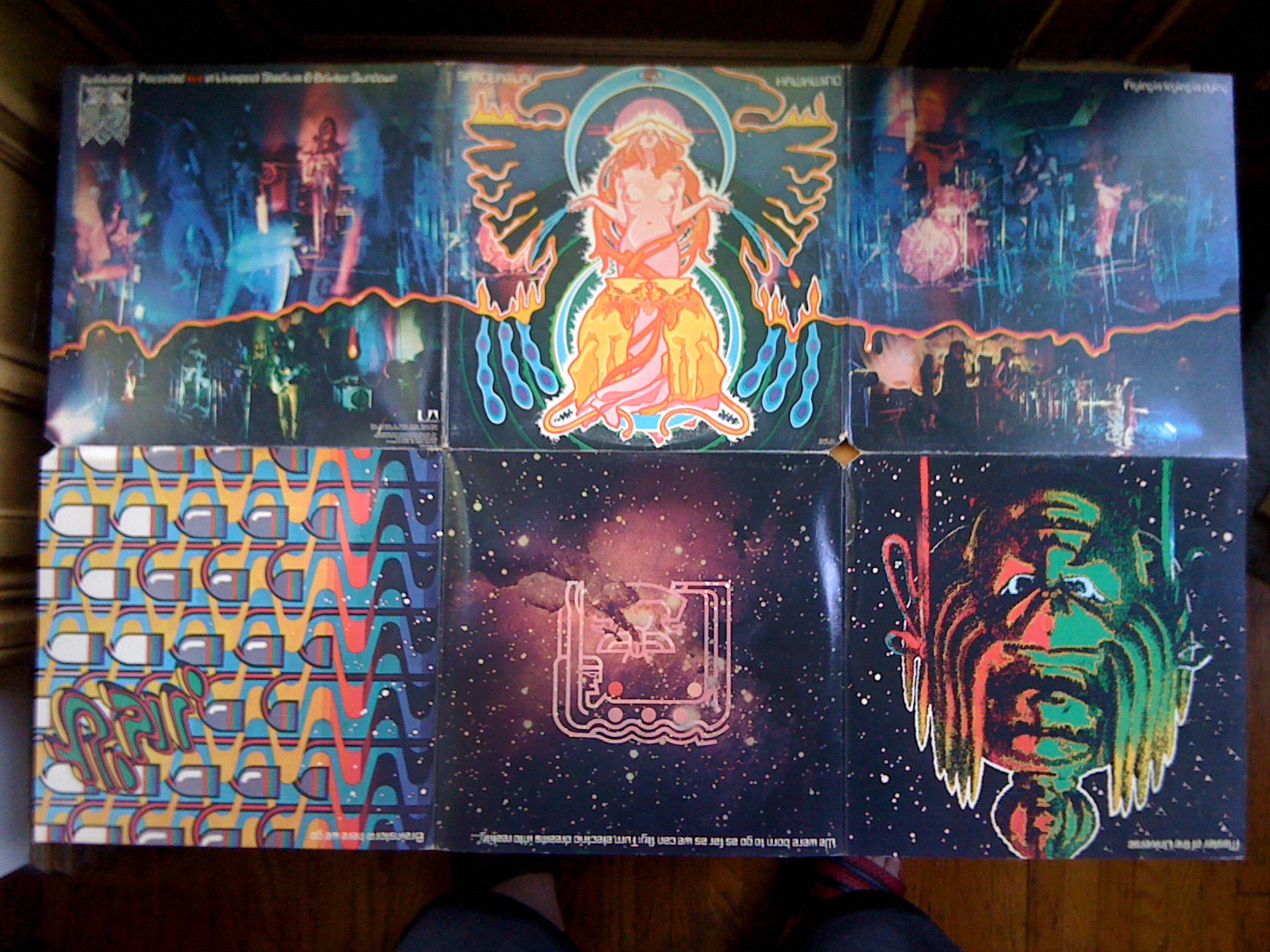
On “The Ballad of the Starchild,” Naam still sound like Naam, but they sound like an evolved Naam. The EP sounds like the Silver Surfer and Leigh Stephens and Jon Lord and Augustus Stanley Owlsey III and Twink and Russell from White Hills discovered a massive, life-sized copy of “Space Ritual” at the center of the universe, each sat lotus-position on one of the six Barney Bubbles-designed panels, crushed up and rolled a scratched-up copy of “Demons and Wizards,” lit it, passed it and exhaled deeply, rinse and repeat. Then someone hit the record button and thankfully, TeePee Records released the exhalation, the good, good, good vibrations.

We’d love to tell you more about it – and we’d love to give you a song from it. But we can’t – or we can, but we won’t. Because you have to hear it yourself and we’re not quite sure how you can make sense of the songs as individual tenets of the Naam faith. They belong together. They are all one and so are we. Or something. So let’s start back at the beginning and get the “Kingdom” inside of everyone.

Download “Kingdom” from the “Kingdom” EP by Naam

Just get “The Ballad of the Starchild” yesterday, get gone and get down. We’ll meet you there. And we’ll get there without ever once mentioning the Paul Stanley solo album.

Naam

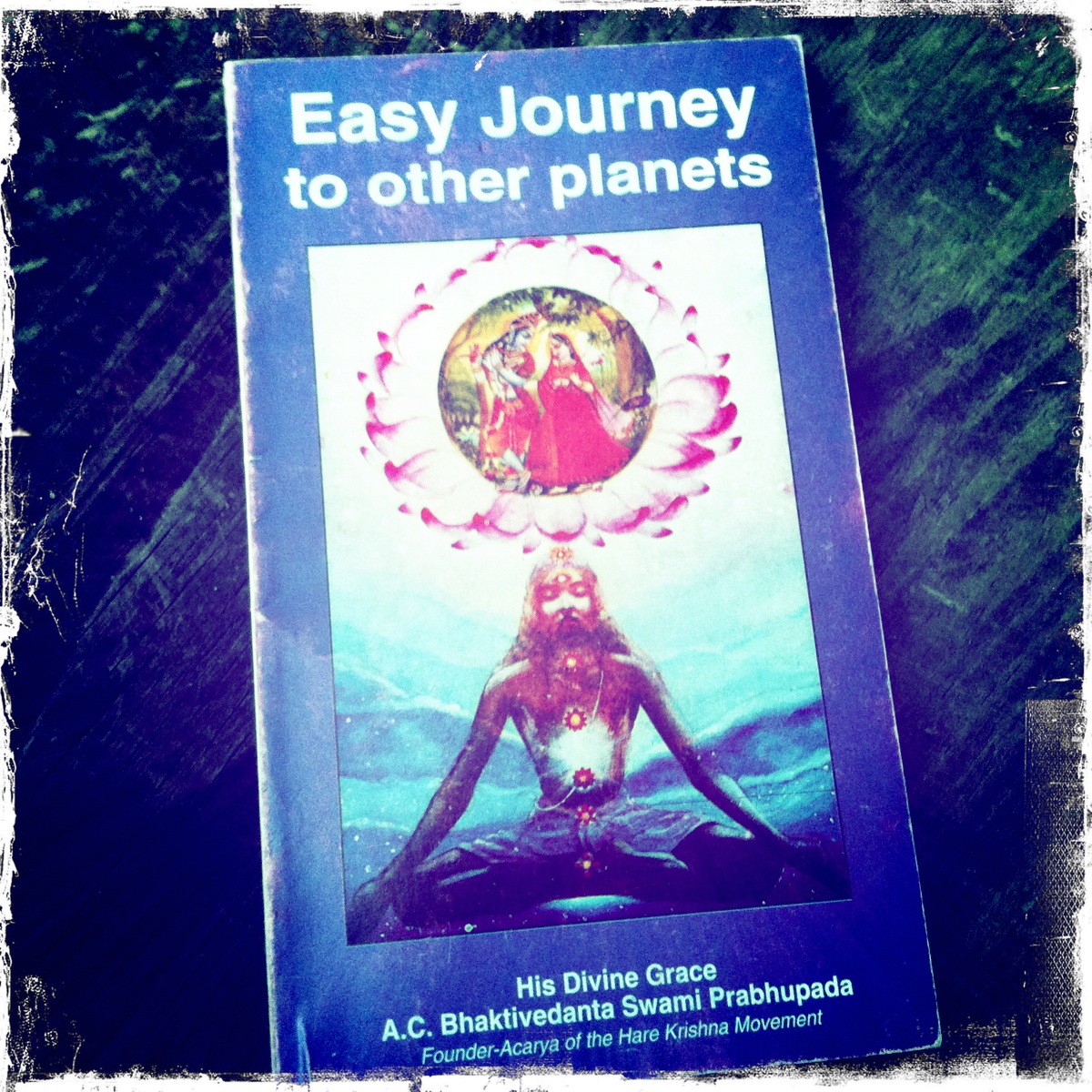
“The cosmic manifestation is called ‘nature,’ but there is another nature, which is superior. The cosmic manifestation is is inferior nature, but beyond this nature, which is manifested and unmanifested, there is another nature, which is called sanatana, eternal. It is easy to understand that everything manifested here in temporary, The obvious example is our body. If one is thirty years old, thirty years ago this body was not manifested, and in another fifty years it will again be unmanifested. That is a factual law of nature. It is manifested and again annihilated, just as waves in the sea rise frequently and then recede. The materialist, however, is simply concerned with this mortal life, which can be finished at any moment. Furthermore, as this body will die, so the entire universe, this gigantic material body, will be annihilated, and whether we are fortunate or unfortunate, on this planet or another, everything will be finished. Why then are we wasting our time trying to go to a planet where everything will be finished?” – “Easy Journey to Other Planets,” by His Divine Grace and massive Ash Ra Tempel fan, A.C. Bhaktivedanta Swami Prabhupada

GEORGE KINNEY / THE GOLDEN DAWN

9 May

We would never be able to say who the “best” band was at Austin Psych Fest (whether this year or any other). First of all, like all art, music is personal and subjective – who can quantify such enjoyment? Second, the answer is Brooklyn Raga Association.

Yet the most personally meaningful performance of the entire weekend – and one that will no doubt rank in our rapidly filling memory bank as among those we feel most fortunate to have witnessed – for us was that of The Golden Dawn.

We’ll make no attempt here to tell the story or the long history of The Golden Dawn, who they were, or who they are now. Both of those things have been done previously, and more ably, elsewhere. Nor can we find the words to describe exactly what made their performance so compelling – it has something to do with time and the persistence thereof, and it has something to do with evolution (the tagline of this ridiculous website is, after all, “Evolved As One”).

“Evolution”? Maybe. Or was it “Starvation,” the brilliant “Power Plant” number that for years has sated our hunger with the line, “You’ve got to be in love if you want to see / It’s a gift to you, it was given to me.”

Or maybe it was the absolute affection and gratitude contained in singer George Kinney’s voice as he surveyed the response of those assembled for The Golden Dawn, noting, “They say it’s better to give than to receive, but I have to tell you – it feels pretty good to receive.”

Or maybe it was just the perfect near-end of three days of music and communion – three days that saw gifts of all varieties given, received, appreciated and reciprocated (a special tip of the ape-mask to Ancient River, who started the last day of the festival as the first act on the same stage in which The Golden Dawn would be the finale, announcing that they had much music to give away for free – the spirit of which was noted by the Brooklyn Raga Association as solidifying the mettle of their set).

Or maybe it was that our trip in Austin was punctuated by reading the occasional passage from Lewis Hyde’s enduring book “The Gift,” which ends with the following words from poet Pablo Neruda, reflecting on the meaning of gifts in our lives and art:

“This exchange of gifts – mysterious – settled deep inside me like a sedimentary deposit. I have been a lucky man. To feel the intimacy of brothers is a marvelous thing. To feel the love of people whom we love is a fire that feeds our life. But to feel the affection that comes from those unknown to us, who are watching over our sleep and solitude, over our dangers and our weaknesses – that is something greater and more beautiful it widens out the boundaries of our being, and unites all living things.

That exchange brought home to me for the first time a precious idea: that all humanity is somehow together … it won’t surprise you that I have attempted to give something resiny, earth-like, and fragrant in exchange for human brotherhood.”

We absolutely could not feel more fortunate that George Kinney and The Golden Dawn assembled – then and now – to give the gift of their music, nor could we feel more fortunate to have the opportunity to share this interview with Mr. Kinney himself. Enjoy.

What is the earliest musical memory you have within yourself that still resonates with you on a personal level? What was it about that experience that makes the feeling still accessible now, years later? How – if at all – does that experience impact you today?

My first musical experience is easy to remember. I was four years old and my mother was the director of the Austin Civic Theater (now called the Zack Scott Theater). She arranged for me and my sister, Ginny, and older brother, Gerry, to form a singing group, The Kinney Kids. We dressed up in cowboy costumes and sang popular western songs between acts at the theater. I performed two songs solo, “Old Chisolm Trail” and “Big Rock Candy Mountain.” I had to stand on a bar stool to reach the mic. So, I guess you could say I started pretty young.

I loved the attention and the feeling of being the center of attention. Perhaps solipsistic, but true. I never lost that thirst for admiration from others.

Uploaded from the Photobucket iPad App

By contrast, can you think of the most recent time in which you were truly moved, inspired or otherwise compelled by a new piece of music (or a piece of music that was “new to you”)? What made this music stand-out in your mind? Broadly speaking, how do you think your relationship with music has evolved over the years? In what ways has it remained a constant?

To be perfectly honest, and at risk of sounding snobby and close-minded, I really haven’t felt that “WOW” feeling that accompanies the experience of hearing a new artist or song that really, really hits home … hard and deep … in a long time. I really can’t remember when. I came up amidst the incredible music of Dylan, The Beatles, The Stones, Donovan, The Elevators, Townes Van Zandt, and unknown greats like Jerry Lightfoot. So I was severely spoiled from the beginning by being close to such music, perhaps the best since the classical greats Bach, Beethoven, Mozart, and Chopin.

The thing about the music back then was that the lyrics meant something that ushered in a complete innovation of new genres of music. Although  I can appreciate many of the new artist today, and there are many very good examples … Adele comes to mind … I just don’t think the originality, depth of feeling, intellect, and genuine force has been captured in most modern music. I do not meant to slight the fine attempts that are being made to do so today. I have good friends in modern bands and I enjoy their music and the courage they express in their performances. But “truly moved”? … not really.

So I guess my tastes may not have evolved as much as perhaps they should. It is through no fault of current performers that such high standards have not been achieved … it is what it is. I better leave it at that.

Certainly, it’s difficult for us to speak with any authority about a time and place where we simply didn’t exist, but we are curious about your perspective on the time just before and just after you formed The Golden Dawn. One of the things we’ve heard mentioned by more than one of your contemporaries is the fact that it’s hard to realize today that joining a rock and roll band was something most people simply did not do (and did not even consider!) in 1965-1966. Was that your experience as well? Did you have a sense that listening to and performing this music cemented your status as an “outsider” to the world at large? How did that feeling manifest itself in both the music and the behavior of you and your band-mates?

I’d like to compliment you on your selection of questions for this interview. It is not often that journalists approach an interview with such honesty and desire for meaningful answers and information.

You are entirely correct in your assessment that joining a rock and roll band in the mid sixties was a rebellious act that propelled the participants in to and on to an uncharted path, with totally unpredictable outcomes. The police were openly hostile  to rock bands, as were the local rednecks, of which there were many in Austin,Texas, back then.

I definitely felt I was an outsider, but I enjoyed the feeling, because I had always had that image in my social circles anyway. I was always seen as a rebel, a teachers nightmare, and one who resisted authority of any kind.

So rock and roll was perfect for me. Romance and its prime reward, sex, was always my prime objective and the girls loved rockers, especially lead singers.  I learned early on, however, that there was much, much more to the genre than just getting laid. When I figured out the profound connection between music and the expansion of awareness that was possible for us humans, I was committed for life to the exploration and expression of the concepts that I believed were highly beneficial for the betterment and perhaps even the salvation of my species. Some of my band-mates shared these feelings to some extent and some of my contemporaries shared them. However, it is true that to embrace such far-reaching and evolutionary ideas is a lonely task and those who follow this path are essentially alone much of the time, even among loved ones.

The fog of memory makes it hard to recall for sure, but we’re relatively certain that the still-astounding and energetic “My Time” was the song that first introduced us to The Golden Dawn, and it remains one of our very favorite rock numbers of all time. What can you tell us about the origin of this song? In our mind, we’ve always viewed the song as somewhat of a direct celebration of the “outsider” status that we mentioned above. Can you tell us a little more about these lines is particular? “I haven’t seen the light shining from your eyes/That signifies that your disguise/Has not been lifted from your face.” Do you think you were addressing a particular person, or the world at large in those lyrics?

Again, you are asking just the right questions. “My Time” is perhaps the most time-resistant song I’ve written. Ironic in a way that the title speaks so directly to the profound idea of time itself and our relationship to such a broad and mysterious idea.

All of  my songs have multiple levels of potential understanding. Often a song is written about a specific person or event or sequence of events and turns out to have parallel meanings that transcend the specific and embrace the universal.

“My Time” started out as a song to my father, who was intolerant of my decisions to pursue the path I chose, justifiably worried about the perils of such a life. He was an actor and knew the powerful allure of show business and the tragic disappointments and downfalls of such endeavors. He was very disappointed in me and thought I was wasting my life in trivial, non-productive activities. He had been a powerful influence in my life and, all-in-all, was a good father. He taught me how to fish, fight, and shoot birds on the wing. He was a ladies man and this caused serous difficulties with his marriage.

I suffered from that same malady most of my life. Anyway, the song was meant to identify that relationship and ended up being a statement to most of society in general regarding the outsiders, specifically those who chose to rock the boat, so to speak, and follow a path that led away from the status quo. It is all about the “metanoia” (wrongly translated as repentance in the bible) that must be experienced in order for mankind to evolve into a more aware, majestic and honorable creature.

What music have you been listening to lately? If push comes to shove, what’s your favorite Buddy Holly song of all-time and why?

I love Buddy Holly. Though his music is not profound in some of the ways I mention above, it is surely profound in its simplicity and clarity. “Not Fade Away” is my favorite. Love is the one eternal emotion. Hate and other negative emotions fade with time, but love remains. It is not subject to time. It is transcendent by nature. Even after a breakup, the love remains. I still love the young 14-year old girl with whom I enjoyed my first serious kiss. And this in no way detracts from the love and commitment I have with my dear wife, Nancy. See?

We were fortunate enough to see you perform at the second Austin Psych Fest in 2009, a performance memorable to us for a variety of reasons, not least of which being that, A) your voice sounded absolutely remarkable (no reduction in power from the Horseman of Time that we could hear!) and B) the more recently written songs fit snugly sitting next to the “Power Plant” classics. Is there anything in particular that you credit with keeping yourself in fine voice?

I thought the performance at the Psyche Fest this year was one of our best performances ever. The crowd was really great. My voice has benefited from me not smoking cigarettes all these years. Roky once told me that it helped to think one note above the note you were singing. Somehow, I understood that and it does help. I heard that he lost his voice during a recent performance and the crowd helped him out by singing the  lyrics to “You’re Gonna Miss Me” for him.

That was moving in my view. But I have noticed a little drop in my voice range and I guess it’s just part of the deal after so many years of belting it out. Anyway, I loved this years Psych Fest … it was awesome and  I am glad to have been invited to perform.

Can you tell us some more about the songs you’ve written, recorded and performed in the years since you started with The Golden Dawn? How has your approach to songwriting changed over the years? What can you tell us about the song “Step Down Satan,” another favorite of ours?

Sure. In a way it’s hard to talk about writing. It’s a mystical experience and  I don’t really know how it all happens. But it does and that’s what counts. I can’t seem to quit writing songs, even though I’ve been doing it so long. But no, the process has not changed. I try to stay open to genuine experience, combine that with reading and studying, and then just let it all gel in my mind … then somehow a song emerges.

“Step Down Satan” is one of my favorite all-time songs. And, just for the record, my songs  are my favorite songs, even though I have favorites by other artists, as I mentioned earlier.

The song is a direct admonishment against letting oneself be ruled by evil. And by evil,  I mean anything that doesn’t resonate with the will of God or, in more specific terms, resonate with the ground of all being, universal, all pervading consciousness … the absolute intent of goodness.

A key idea is that we don’t need a concept of “outside” evil, just like we don’t need a concept of “outside” God. Both are false ideas. As good ol’ Jesus always said, the kingdom of heaven is within us. It is false and tragically misleading to think of either God or Satan as some force outside of ourselves. So the song just tries to clarify this error in our thinking about these profound and thoroughly tangible aspects of our experience.

It’s dangerous to assume, but we’re going to go ahead and assume that you never even considered the idea of performing the songs from “Power Plant” in the year 2012. Is that the case and if so, what emotions go along with considering such an occasion?

Well, the answer is now history. We did it. But again, you are right on in asking about the emotional aspects of doing the songs again. I loved it, but I really wish we could have had more time so we could have done some new songs after doing “Power Plant,” like we did three years  ago. As a songwriter, I operate on the assumption that my last song is my best yet. Otherwise, what’s the point? I am working on the material for a new CD. That is what I am excited about. If I ever get past that, then it will be time to hang it up.

George Kinney and The Golden Dawn at Bandcamp

BAND OF THE WEEK: HIGH PRIEST OF SATURN

6 May

Some believe when Saturn ascends, it portends the next stage of life. Some believe when High Priest of Saturn descend, it portends a crushing amplifier assault, a massive monument to the meditative side of metal.

Uploaded from the Photobucket iPad App

The cosmic appeal of the heavy, of the metallic and monolithic, in all of its various, shape-shifting and serpentine forms, should need no explanation, nor will the uninitiated receive one here. We believe in one God, the Father Iommi, maker of “Heaven and Hell,” and of all things visible and invisible.

As such, we say with great approval that this High Priest of Saturn descends from the High Priest of Sabbath, but – of course – there’s more to it than that. The pace of the two songs made available for free download on the band’s Bandcamp page – two songs that combine for nearly 22 minutes of metaphysical menace – allows for much reflection, allows for the listener to find their own celestial bodies amongst the reign of cosmic debris. For us, we bend our knees before the Priest just more than halfway through “The Protean Towers,” when the void-filling vocals give way to a lunatic guitar lead, drenched in delay, and seemingly in collision with the very heart of the song, with the very heart of the band, with the very heart of the known universe. Through the lead, we are led to a moment of calm amongst that chaos, before the Priest joins an intergalactic Lord most high in prayer, with an other-worldly, unexplainably heavy organ coda threatening to unveil the unseen keys to the cosmos.

Either that, or it’s just really, really heavy, dude. As above, so below. Turn it up – let us pray.

Download “The Protean Towers” by High Priest of Saturn

High Priest of Saturn

 “With some cleverly designed electronics, you can transmit specially encoded radio waves that can then be transformed into sound. This ingenious apparatus has come to be known as ‘radio.’ So by virtue of extending our sense of sight, we have also, in effect, managed to extend our sense of hearing. But any source of radio waves, or practically any source of energy at all, can be channeled to vibrate the cone of a speaker, although journalists occasionally misunderstand this simple fact. For example, when radio emission was discovered from Saturn, it was simple enough for astronomers to hook up a radio receiver that was equipped with a speaker. The radio-wave signal was then converted to audible sound waves whereupon one journalist reported that ‘sounds’ were coming from Saturn and that life on Saturn was trying to tell us something … In many ways the task of mapping galaxies is no different from that facing the fifteenth and sixteenth-century cartographers, whose renditions of continents – distorted though they were – represented a noble human attempt to describe worlds beyond one’s physical reach.” – “Cosmic Windows” essay from Death by Black Hole and Other Cosmic Quandaries by Neil DeGrasse Tyson

THE WORST AUSTIN PSYCH FEST 5 (2012) PICS

2 May

“Carrying Pictures of Chairman Mao: The Worst Austin Psych Fest 5 Pics”

Full report coming someday, I swear.

THE ENTRANCE BAND

RHISHI DHIR

ALL IN THE GOLDEN AFTERNOON

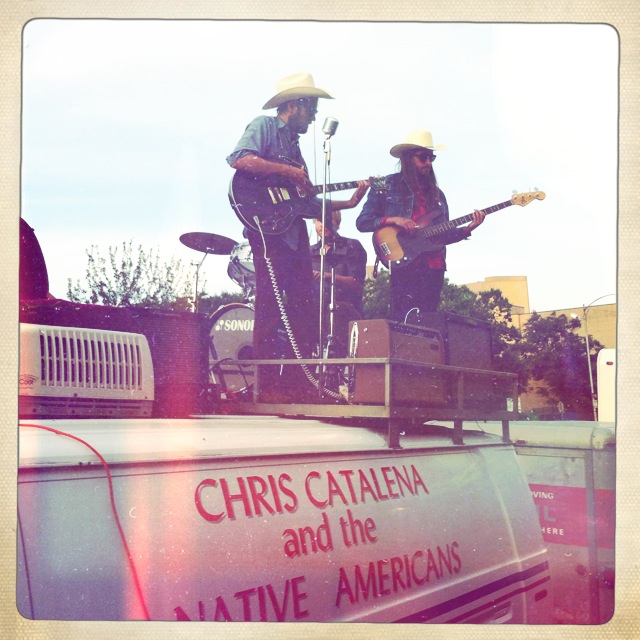
CHRIS CATALENA and the NATIVE AMERICANS

CHRISTIAN BLAND & THE REVELATORS

THE BRIAN JONESTOWN MASSACRE

INDIAN JEWELRY

AL LOVER & THE HATERS

STRANGERS FAMILY BAND

ACID BABY JESUS

FEEDING PEOPLE

COSMONAUTS

ALLAH-LAS

THE MEEK

PSYCHIC ILLS

PSYCHIC ILLS

THE BLACK ANGELS

THE BLACK ANGELS

THE BLACK ANGELS

THE BLACK ANGELS

PEAKING LIGHTS

APE FOOD

THE ENTRANCE BAND

My friend Anton and I were doing some ritual Kundalini rockin’ during The Entrance Band’s cover of “A House Is Not a Motel” by the mighty LOVE… and somehow he showed up being behind the band. See him up there?

THE ASTEROID #4

THE ASTEROID #4

Numerology, dude! Quarter-note animation cell – a thrift-store gift for The Asteroid #4 that Dr. Leary insisted I give to the band. Apes subsequently placed on the band’s permanent personae non gratae list.

MMOSS

QUEST FOR FIRE!!!!!

THE NIGHT BEATS

QUILT

THE VACANT LOTS

AMEN DUNES

TEXAS PLANT LIFE

ANCIENT RIVER

THE BAND IN HEAVEN

THE CUSH

THE BLUE ANGEL LOUNGE!!!!!

FEDERALE

THE UFO CLUB

BROOKLYN RAGA ASSOCIATION

BROOKLYN RAGA ASSOCIATION

BOMBINO

Some dude from some band … The Black something-or-other?!?

Another dude from some band – can’t recall. Black … Black … something.

Now I remember … BLACK SABBATH. We’re all in the same band, dude. We are all one.

THE ALLAH-LAS

25 Apr

It’s entirely possible that one can separate The Allah-Las from their home state of California and the sweet, smirking spirituality summoned by their name. The question is: why would you want to?

“When the United States seized the territory from Mexico in 1848, California became the stage for a strange and steady parade of utopian sects, bohemian mystics, cult leaders, psychospirtual healers, holy poets, sex magicians, fringe Christians, and psychedelic warriors.  Less a place of origins than of mutations, California served as a laboratory of the spirit, a scared playground at the far margins of the West. Here, deities and practices from across space and time became mixed and matched, refracted and refined, packaged and consumed anew … no where else in the modern world has such unruly creativity come as close to becoming the status quo … Many of the paths that cross California are, in the words of religious scholar Robert Fuller, ‘spiritual, but not religious.’ Even that wan word ‘spirituality’ barely helps, since many paths crisscross the sacred and the profane, and look more like diet or arts or crazy fun than sacred pursuits. But that is the point, since the quest for insight, experience and personal growth can take you anywhere: a mountaintop, a computer, a yoga mat, a rock and roll hall.” – Erik Davis, “Visionary State: A Journey Through California’s Spiritual Landscape

Words too lofty, too loony to apply to the upbeat, sun-and-fun rhythms of The Allah-Las? Like all things, it depends on your perspective – and in this case, it also depends on the number of rotations the band’s stellar seven-inch releases – including their most recent, “Tell Me (What’s On Your Mind),” from Innovative Leisure Records – you’ve clocked in recent weeks. As long as we make our home some three-thousand miles away, and as long as bands like The Allah-Las continue to perfectly capture the imagination, odds are the spirit of California will continue as a source of odd inspiration.

What’s on our mind, however, is Austin Psych Fest 2012, and being fortunate enough to see a band like The Allah-Las for the first time. In preview, we feel fortunate to share the interview below. Enjoy – see you soon.

Are the members of the Allah-Las from California originally? How would you characterize growing up in your area of California? How much – or perhaps, how little – do you feel this influenced not only your interest in music but the type of music you became interested in?

Matt, Miles, and Spencer all grew up in Los Angeles, California. Pedrum grew up in SLC, Utah and moved here when he was fifteen. Living here made us “diggers,” searchers of new or lost things that would turn us on. LA is an easy place to write off if you don’t take the time to absorb what makes it good. It has such a rich cultural history and there are endless places to discover and explore if you’re curious enough to find them.

We’ve always shared music we thought was amazing with each other and a large extended group of friends. The music we make has been very much a product of specific records we love, as well as an appreciation for a lot of things this state stands for, especially the rock and roll and electric-folk that came out of California in the mid-late 60’s and beyond. A lot of our artwork and visuals come from our admiration for a lot of non-musical influences. Matt, Spencer and Miles are all avid surfers and a lot of our artwork and visual influence comes from their admiration for old surf culture and vintage surf films and mags. At the end of the day our record collections and the music we make together reflect the things we love about living here. If you do what you like, you’ll like what you’ve done.

Uploaded from the Photobucket iPad App

We ask this in part to learn more about the history of the Allah-Las, but also because California is one of only a few locales that by name alone evokes a certain kind of sound in the minds-eye of many listeners – we’ve described bands from Massachusetts as having a “California vibe,” but we don’t anticipate describing a band from California as having “that Massachusetts thing going on.” What does the phrase “California music” evoke in your mind? What is most exciting or compelling to you about the current state of musical affairs in California?

California is much more than a place, and to many the word alone evokes a certain state of mind, a sound, even a lifestyle.  Since the beginning of the 20th century, and especially from the 1920s to the 1960s, California has represented to the rest of the world an American Eden, a westernmost destination of unlimited opportunity, beauty at once rugged, idyllic and metropolitan, and a healthy balance of old Western American values and sophisticated progressiveness.  The most common associations that people today have with California are blond hair and sunny beaches, but to us, making California music involves a lot more than capturing just those cliche concepts. We move onward into the future with an eye to the past, and we feel that other California artists today are starting to do so as well, recapturing in their own hearts what captured the hearts of generations before them, looking past the cliche, mass-marketed culture that outsiders have used to define California for so long.

Of course, the truth is that the scope of music coming out of California is as varied in depth and breadth as the state itself – it can’t truly be confined to a single genre. Given that, what are some genres of music or bands that you truly admire and enjoy, but don’t really show up in the music of the Allah-Las in any notable way? What is it about that music that captures your attention? Can you think of a particular album whose appeal was utterly lost on you until recently? To what do you attribute this change?
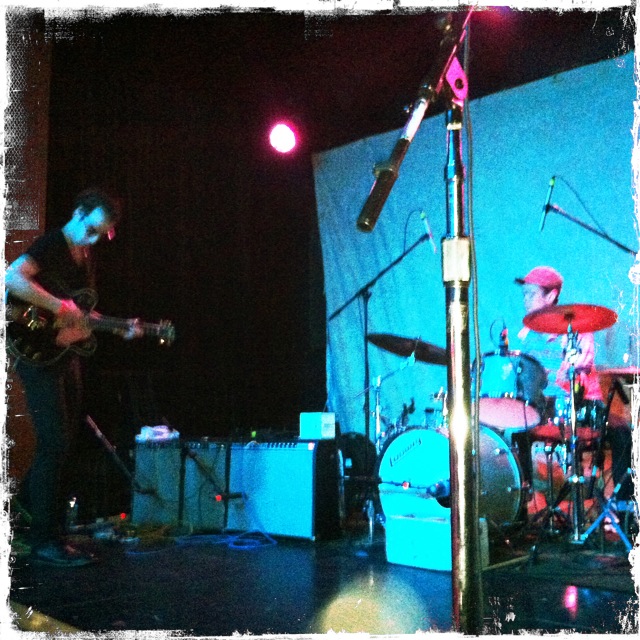
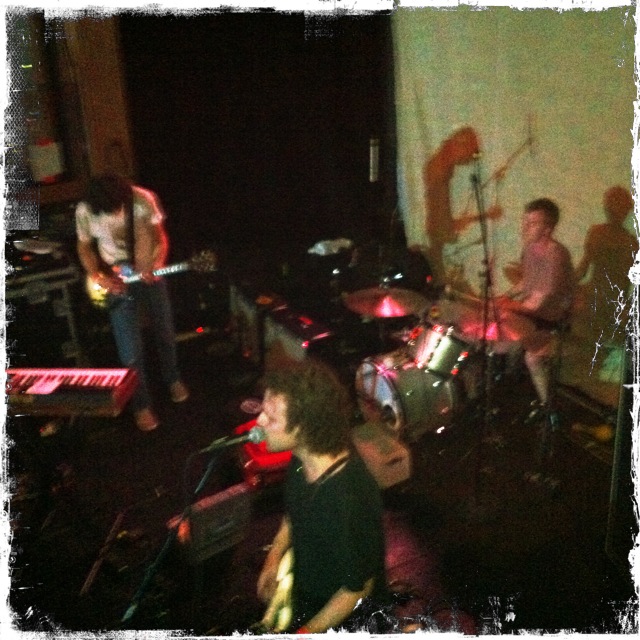
We like organic non-electronic music and recordings. We like artists that have crafted something special from the past into something unique. Honesty and sense of place are also important. There’s not a formula to whether you like music or not, at least we don’t think there should be. You either like it or you don’t. Good live music is a visceral thing that you feel, and if you do feel it, you don’t go outside for a smoke when you’re witnessing it

What can you tell us about how the Allah-Las came together? Did you have any experience playing music with the other members in previous projects? What in particular do you think is unique that each member brings to the Allah La’s as a whole? Was there anything different from previous projects that you wanted to experience with the Allah-Las?

The band came together more or less in Spencer’s parents’ basement which serves as a storage space for his dad’s giant surfboard collection. It started with and Spencer and Pedrum getting together and just riffing around on guitar in there once a week.  Matt was asked to play drums because of working together at Amoeba Music, and Spencer and Matt had been friends since high school. After a week or so, Miles, who Spence and Matt had also been friends with since high school, was asked to sing and play second guitar.

This band is the first “real” band any of us have ever been in. We say real in the sense that it’s the first band where we’re all making the kind of music we want to be.  We each bring a different set of skills, tastes and experiences to the band, and because we don’t have any sort of hierarchy, it results in lots of arguing. In the end, it’s a compromise between our conflicting ideas that helps us make what we want to hear.

Although we’ve yet to experience the Allah-Las live, the songs on your debut have us believing that anyone that resists the urge to move their feet during an Allah-Las set is most likely a person without any feet to move. What reaction has been most surprising to you in the shows you’ve played thus far? What would the ultimate Allah-Las show look like for you if you hand a magic wand?

People react differently to our shows. It’s surprising when fights break out. We think some people expect us to be a raunchy, “Louie Louie” frat rock band. We’re not doin’ windmills and getting crazy up there, but it’s always great to see people react strongly to anything you have made.  Our ultimate show would happen on a boat.

What music have you been listening to lately? If push comes to shove, what’s your favorite song by The Seeds and why?

We’re listening to all kinds of shit all the time. Favorite Seeds song? That’s a tough one. I think it’d be easier to answer the most skip-able Seeds song, which would be “Where is the Entrance Way to Play”. R.I.P., S.S.

Would you care to comment on the rumor (the rumor that we are attempting to start right now) that you are planning to record a split seven-inch with the great band from France, The Dalai Lama Rama Fa Fa Fa’s, consisting only of girl group covers? We hear the tentative title for this release is, “The-Dalai-Allah-Las-Lama-Rama-Fa-Fa-Fa‘s play The Shangra-La’s.”

The rumor is true and the record has already been released but copies are hard to find cause it has blank labels and doesn’t exist.  It was financed and contributed to by French millionaire and playboy Philippe DeBarge.

How did you first hear of Austin Psych Fest? Are there any bands in particular that you hope to have the chance to see perform while you’re in Texas?

Heard it through the grapevine years ago. Most enigmatic and prestigious of psych festivals. Are there many others? Many good headliners this year. All the “B” bands are gonna be great

In the book “Riot on the Sunset Strip: Rock n Roll’s Last Stand in Hollywood,” Jerry Hopkins of the Los Angeles Free Press is quoted as saying the following:

“I have a theory about the Sunset Strip. I say it is not real. It is plastic. I say the Strip is manufactured in Japan and shipped here in small parts. Then it is reassembled by a committee of pot smokers.”

Your thoughts?

The part of the sunset strip Jerry Hopkins was talking about is a lot different now than it seemed to be in the 60’s. East of Doheny and west of Crescent Heights/Laurel Canyon is especially awful. Burnt out Nikki-Six looking dudes and high school alternative rock bands doing pay-to-plays at the Whiskey-A-Go-Go and Rainbow Room and any of the other venues that line that part of the strip. So that part can definitely be called plastic. Nothing reminiscent of the Pandora’s Box and Whiskey scene of the 60’s though, which seemed a lot more tough and less stale.

What’s next for the Allah-Las?

Our newest single, “Tell Me (What’s On Your Mind)” b/w “Sacred Sands” was released on April 17th, and our LP will be out in October. Looking forward to playing Austin Psych Fest on the 27th and Madison Square Garden on the 30th.

The Allah-Las

THE BLUE ANGEL LOUNGE

24 Apr

 If judged only by their name, one might be tempted to associate The Blue Angel Lounge with those poor souls stuck staring only into the prism of the past.

Nothing could be further from the truth, as any of the fortunate souls who have deeply listened to – or heard live – the sounds of The Blue Angel Lounge will surely testify.

Rather, this German band strikes these ears as conscious explorers of sound, using the past only for purposes of orientation and as a launching point for moving forward, for determining what comes next. Some might call that merging of the past and the present in their sound as being the sound of something not old or new, but eternal. Some might also say that their forthcoming EP – “Ewig” – is eternal in both name and deed.

The Blue Angel Lounge have taken flight – both literally and figuratively – toward what comes next in both their sound and their spirit. As they begin their second visit to these United States with the honor of a tour with perhaps the unquestionable masters of that bending of time and space, The Brain Jonestown Massacre, it’s no surprise that both are among the most anticipated artists to perform at this year’s Austin Psych Fest.

We feel more than fortunate to have the chance to see The Blue Angel Lounge perform live again this year at Austin Psych Fest, and more than fortunate to share this interview with keyboardist Theo Berwe. Enjoy.

One of the first things that ever caught our eye in regard to The Blue Angel Lounge your song title, “LSD and The Search for God.” What can you tell us about the origin of this song? Can we be so rude as to ask whether this title was chosen in tribute to the psychedelic pioneers of years past, or from your own personal experiences? How has playing in The Blue Angel Lounge altered your perception of God – if at all, and assumed you have one to begin with?

We were young, naive and searching for a particular direction our music should belong to. In this kind of scene, it’s the unspoken rule that you have to write a song about drugs to become part of it, and so we did. Well, of course we knew the band and it’s where we got the title from.

Today we’re happy to say that this song is the only track dealing with drugs in such an obvious way. Actually, we’re not a drug band – we would rather write about feelings, impressions and several other things that surround us, but a lot of people misinterpret that.

Uploaded from the Photobucket iPad App

The name of the band, as we understand it, is a reference to a long-ago nightclub in Manhattan, one where Nico began her singing career. What was your first introduction to Nico and her music? Do you feel any particular connection to her art given that you share a country of birth, or is it a strictly artistic and aesthetic admiration?

We don’t think of Nico as a typical German artist. She isn’t popular in Germany at all (a fate she has in common with almost every good German band). What fascinates us about her music is its incomparable depth. Listening to Nico is like a trip into the abyss and you never know how (if at all) you’ll come back. She was clearly a lost and driven character. If you have reached a certain point of nihilism, you cross a point of no return and you get caught in a weird state somewhere between (normal) life, which looks like a bad joke from this point of view, and the absolute void. Maybe that’s what happened to Nico. Her music is the manifestation of being lost and blank despair. But if you are really able to accept the darkness and give yourself up for the moment, you may discover unbelievable beauty. In their most radical form, sorrow and happiness boil down to one overwhelming feeling.

How have you seen your own musical palette expand since playing with The Blue Angel Lounge? What are some of the most meaningful bands or albums in your world that you might not have ever been introduced to without being involved with The Blue Angel Lounge? Is there a particular area of musical interest of yours that is decidedly not shared by the other members of the band?

Of course our range has expanded ever since we started the band, even though the main focus and taste is still the same. While working on “Narcotica,” we listened to a lot of 80s music and you can definitely notice the influence on the record. If someone in the band is really confident and enthusiastic about an artist, sooner or later, we will all give it a chance and 90 percent of the time, it will manifest in our music – consciously or unconsciously. The Blue Angel Lounge is the tree trunk and everybody follows his own way like branches. But in the end it certainly belongs together.

Anton Newcombe assisted the band in the recording of the stunning “Narcotica” album. What did you learn from his approach in the studio that still informs how you make music today? How do you think the band has evolved since recording “Narcotica”?

Actually, all songs on Narcotica were written before we went to the studio. So Anton’s direct influence on the songs was limited somehow. He visited us in the studio and participated on two tracks (“Delete My Ideals” and “Darklands”). Apart from songwriting Anton seems to have a similar approach in the way he works. He doesn’t spend a lot of time on setting up microphones or twisting EQs. We recorded “Melloch,” one of the songs off our new ep with him and soundwise, it’s maybe the best compromise so far between spontaneity during the recording process, good studio equipment and additional editing afterwards. In this regard we were not perfectly happy with “Narcotica,” because it lacks the roughness and the lo-fi character of the first record. However, there is at least one big difference between Anton and us: Anton gives a lot weight to drums and beats while we want to have the drums as simple as possible.

Your song “Die Away As One In Time” also delivers some of the most undeniable atmosphere, like the merging of a funeral dirge with a love song from the early days of rock and roll. What can you tell us about this song? Was it written with one particular person in mind, or did you set out to create a more general atmosphere?

The song is on our first album, by the way. And of course it was written with a particular person in mind. The initial triggers for our songs are in almost all cases events and people from our direct environment. However, we don’t try to turn these events into  concrete stories, but rather to create a more general atmosphere which reflects the impressions the events had on us. Therefore, listening to our music can have a highly individual impact, because maybe the specific atmosphere of a song reminds you of a personal event.

“Die Away As One In Time” is exactly about the person you think of when you listen to the song.

What music have you been listening to lately? If push comes to shove, what’s your favorite song by The Black Angels and why?

I doubt anyone of us have been listening to the Black Angels lately. We really loved the older stuff back then, but we don’t like the third record. Some of the recent videos I saw had a more acoustic touch though, which seems to fit pretty well. So, we are curious about their future development.

One of the few contemporary artists that engaged our attention are Amen Dunes. They’re going to play the Psych Fest as well this year, but unfortunately we won’t be able to see their show. Mostly, we’re still trying to catch up with the last six decades of music culture.

We were quite literally awestruck by your performance at Austin Psych Fest in 2011, with a very clear memory of standing entranced in the very back of the room, our jaw making contact with the floor. What was your experience like? What bands made an impression on you live at the Fest? What bands are you looking forward to seeing this year?

The show in Austin was the highlight of a fantastic trip. It was the first time in the U.S. for all of us and especially Austin made a great impression on us. Live bands in every bar and an atmosphere of openness that reminded us of some Mediterranean cities. We really enjoyed hanging out at the festival – the whole weekend in this beautiful scenery with lots of good music. Actually, the waitresses in the backstage room were already whispering, “Oh, the Germans again,” because we intensively explored their alcoholic supplies.

Regarding music: We were blown away by the performance of Indian Jewelry last year. A Place to Bury Strangers did a really powerful performance as well. We are not too much into this classic jam psychedelic stuff, thus some bands sounded somehow redundant to us.

This year we won’t get to Austin until Sunday, so no more whispering waitresses this time. Unfortunately, most bands we would love to see this year are scheduled to play Friday or Saturday – e.g. Psychic Ills, Amen Dunes and Peaking Lights.

What are the necessary elements for a good live performance in your mind? Do you find that playing music can deliver you to a mild (or perhaps not so mild) altered state? Do you think of yourself or the band as feeding off of the reception and energy of the assembled audience, or does your experience on stage feel entirely separate?

A good live performance combines the auditory and the visual experience. Ideally, there is reciprocal feedback between artist and audience. The best shows are those when you completely stop thinking and start doing. You can forget yourself and form something like a supra-individual entity. There are certainly shows where you don’t reach this state and remain self-controlled. Perhaps these shows are musically better in terms of accuracy, but they’re lacking something more important. And it’s pretty obvious that technical perfection is not our main goal anyway.

Altered states? I’m pretty sure we all know that music can do that!

German philosopher Martin Buber said the following in his book, “Ich und Du”:

“Some would deny any legitimate use of the word God because it has been misused so much. Certainly it is the most burdened of all human words. Precisely for that reason it is the most imperishable and unavoidable. And how much weight has all erroneous talk about God’s nature and works (although there never has been nor can be any such talk that is not erroneous) compared with the one truth that all men who have addressed God really meant him? For whoever pronounces the word God and really means Thou, addresses, no matter what his delusion, the true Thou of his life that cannot be restricted by any other and to whom he stands in a relationship that includes all others.”

Your thoughts?

A lot of German philosophers have said a lot of stuff about God. If we had to decide, I think we’d stick to Nietzsche’s: “Gott ist todt! Gott bleibt todt! Und wir haben ihn getödtet!”

And if you argue that Buber doesn’t talk about God at all in this quote, you’re certainly right.

What’s next for The Blue Angel Lounge?

The next big step of course is the West Coast tour with BJM (including Austin Psych Fest) and the release of our new EP, “Ewig,” on May 1st. We will go back into the studio and work on new material for our third album during summer/fall.

The Blue Angel Lounge

THE VACANT LOTS ( … the return … )

23 Apr

It seems like just yesterday that we began 2012 within the confines of The Vacant Lots, praising their evolving, meditative meshing of grey-sky sonic subtlety and kicked-in-the-gut garage-rock gears.

At the time, it was the gift of their “Kingdom Come” re-mix (featuring astral assistance by Spectrum drummer Roger Brogan) that had us eagerly anticipating the band’s next move. That next move – following an upcoming summer-time seven-inch release by the Reverberation Appreciation Society – is a full-length album, currently being recorded in NYC with the able assistance of engineer Ted Young.

It is that very recording session that fell victim to the Interruption of the Apes, as we disrupted the surely rockin’ recording of guitarist/singer Jared Artaud and drummer Brian Macfadyen, in our quest to fill a few vacancies within this lot. In anticipation of the band’s repeat appearance at Austin Psych Fest 2012, we feel fortunate to share our second interview with The Vacant Lots. Enjoy.

What are your memories of traveling to Austin for the Psych Fest in 2011, now nearly a year later? Were there any performances in particular that made a lasting impression on you – and any that you were somewhat surprised that you found so compelling? How, if at all, did the experience shape the past year for The Vacant Lots?

Jared:  It was a standout time.  It was cool to connect with a lot of other bands and meet a lot of new people.  I enjoyed Spectrum’s set and Crystal Stilts, A Place to Bury Strangers, Black Ryder and The Black Angels.  We were introduced to the Reverberation Appreciation Society after our performance there and we were offered a  vinyl release.  So, in that sense the experience led to signing with a new label. And we got to finally meet The Black Angels which was a highlight for us.

Uploaded from the Photobucket iPad App

Speaking of compelling performances, we would put Spectrum’s appearance from this past year in that department, and it would seem that you’ve developed something of a mentoring friendship with the band, for lack of a better term. What has this relationship taught you about being an artist in general? How has this relationship contributed to the evolution of The Vacant Lots’ sound?

Jared:  Yeah, after touring with Spectrum we’ve remained close and they’re some of the best musicians I’ve ever met.  Sonic Boom is an architect of sound.  He’s produced so many powerful records.  I’ve certainly learned a lot from him.   He has been an incredibly insightful and positive influence for us. I think the rigorous discipline and concentration of vision with which he brings to his music has certainly inspired me in many ways for my own work.

Which one artist or album best captures what you love about rock and roll … at least for today? Setting aside for a moment all of the music that has influenced your musical path, which one artist or album best represents what you aspire to accomplish with The Vacant Lots in the near future? As someone who feels a distinct connection with and appreciation for the music of “the past,” what does the concept of evolving with The Vacant Lots mean to you, if anything?

Brian:  The Stooges’ first record has always been a huge source of inspiration for us.  Everything has this very raw yet focused quality to it that we’ve always strived to work into our own sound.

Jared:  I think there is a great deal of continuity and evolution with The Vacant Lots.   It seems like we go through a process of transformation that deals with refining and developing our sound.  Although the elements have always been minimal we strive towards a greater simplicity and accuracy in our sound.  I think balance is key.  A balancing act between madness and order.  I believe in making music that will inspire others to do so.

We understand that the near future for The Vacant Lots includes the recording of an album to be forthcoming on the Reverberation Appreciation Society label. What are your thoughts on the batch of songs you’ll soon begin to record? Is there anything either overt or subtle that ties these songs together in your mind?  What difficulties arise from working with a shadowy cabal bent on world domination, as is the case with the mysterious Reverberation Appreciation Society?

Jared:  Well, we are recording our debut LP right now but it hasn’t been decided yet what label we will put that out on.  However, we are putting out a 7″ on the Reverberation Appreciation Society in the next few months.  The album is coming together.  The new songs correspond with each other in a way that allows them to conceptually take on a lot of the ideas and symbols I have been exploring.  There is a lot of duality within the songs, and ambiguity so the listener can interpret the songs to fit their own life.  I think we have a strong and clear vision for how we want the first record to sound.  We are working with Ted Young, an engineer from NYC.

What images or sounds appear in your minds eye when you think of psychedelic music? What would you suppose is the defining psychedelic experience of your life? What combination of the two would you most wish to experience?

Brian:  Blue-y, green-y colors.

What music have you been listening to lately? If push comes to shove, what’s your favorite Kraftwerk song and why?

Brian:  Susan Christie, Beat Happening and Teenage Filmstars.  I’ve also been getting into some of the artists on this year’s Austin Psych Fest roster like Acid Baby Jesus and The Blue Angel Lounge.  I’d probably say “Radioactivity” for my favorite Kraftwerk tune.  I remember hearing that record for the first time with the “Geiger Counter” that sputters in just before.  It’s so dark and emotional.

Jared:  Lots of Gun Club, Bo Diddley, Television, Joe Meek.  Seeing Kraftwerk perform “Pocket Calculator” live at the MOMA Retrospective was a highlight for me.  That was one of the best shows I’ve ever been to.

What’s next for The Vacant Lots?

Brian:  We’re in the studio for the next week or so working on material for the new LP, then we’re headed down to Austin for Austin Psych Fest next weekend.  Our 7” release with Reverberation Appreciation Society will be dropping in the summer time, and we’ll be headlining the Bug Jar Psych Fest in Rochester at the end of July.  We’re also starting to line up some shows up for a US tour in the Fall.

The Vacant Lots

SEXYWATERSPIDERS

22 Apr

Sometimes, no explanation is necessary. Sometimes, no explanation is possible. With that, we pass the mic to Sexy WaterSpiders

Hello, Fellow Sapiens.

We are SexyWaterSpiders, keepers of t∞e The Book of Holysexyness. Behold! The Holysexyness cannot be seen! Our accompaniment consists of his Sexcellency, The Parsley Phoenix, Sir Mongoose Thompson & China Starshine (Shine, for short).

SexyWaterSpiders have set out on their JESUSAUSAGE 2012 Tour across greater Northern America to share the Neon Gospel and spread the Cheeez throughout this land.

As for your questions…

“Water spiders” are the only spiders that live their entire lives underwater. Do you feel like you live your life in an atmosphere that differs greatly from other humans? How does it differ? Do you, in fact, feel like a water spider? Is it the “spiders” that are sexy, or is the “water” that’s most sexy in the mind of SexyWaterSpiders? Both? Neither?

Wet is sexy, sexy is wet. Light dancing on water is sexy. Like spiders, we are weaving a web of waves and sounds. That is where SexyWaterSpiders play, where the light meets the water. Our world is but a reflection of our own Selves. How you see yourself is how you see the world. We drip from the Nipple Root.

Uploaded from the Photobucket iPad App

Do you feel your preferences in music conflict with the world you see around you? Meaning, do you ever feel out-of-step with what you enjoy and/or want to express musically versus what you largely see enjoyed and expressed? What is the emotion you seek most in music? Can you site an example of a song that transmits that emotion for you?

We are like water in oil. SexyWaterSpiders have the entire universe inside their cloaks. A good example of this feeling would be the song, “99 Cents”: “I’m talkin’ everything, everything, everything is na-na-nonsense.” Healing frequencies and love vibrations.

Alice Cooper spun his web with The Spiders in his younger years, and today remains legendary perhaps primarily for his legendary live performances. Do you think of SexyWaterSpiders primarily as a live band? What makes for a good live performance in your mind? What do you wish to see when you watch other bands perform?

We like buttons. SexyWaterSpiders will sacrifice a sitar in the psychedelic parking lot at this years Psych Fest! Live music will always have an energy that can never fully be captured or properly described. SexyWaterSpiders like to hear some more crunchy, earth-turd guitar tones, Arabic double-reeded midgwidges. Earthworm-charming is a big thing in the back woods of Oregon. We’d like to hear more peanut butter vocals, and throat-singing with a hint of cross-eyed renaissance elderberry winemouth.

What can you tell us about the origin of the song “Spirit of the White Wolf”? How do youth spirit of the white wolf, and is it embodied more by the late Wolfman Jack or by the very alive White Hills, or equally by both? Is the “Spirit of the White Wolf” related to “Vision of the Mayfly”?

Spirit of the White Wolf … Jim, GM, King James, Jimi, Jimmy, James … we are each of us Native American Engines. Nimbus, the white wolf one-eyed wonder of Yachatz, OR. Long story short, the mayfly circles the anus of the white wolf , preparing for the release of the turd. The buzzing of the mayfly wings provides the perfect soundtrack for a successful bowel movement.

We’ve read that your origins extend back to hearing simultaneous godlike voices that proclaimed, “sexy. music. sexy. money.” What compelled you to turn those voices into a band? We adhere to the spirit of The Monkees, whose apartment wall-hang famously read, “Money is the Root of All Evil.” Do you honestly feel spiritually fortified enough to open yourself up to a world where The Monkees were wrong about something? What else were The Monkees wrong about? When they make the slightly fictionalized film version of SexyWaterSpiders, what will it be called and who will star?

First of all: Poop = $$$ = Poop. Second: “Sexy music, sexy money” is an anonymous write-up that we found online. SexyWaterSpiders never claims to have heard any such voices. We are but conduits for the BIG CHEEEZ, which has channeled us through the void. The Monkees are CIA, operatives who steel your poop and feed it back to you. Everyone knows you can wipe your butt with money and still spend it. So, yes, SexyWaterSpiders is well-fortified with many nutrients and multivitamins.

“SexyWaterSpiders From Mars Attack!” Starring Kim Jarey as The Parsley Phoenix, Denicio Tel Boro as Mongoose Thompson, and Tephen Styler as China Starshine.

The song “Spirit Dome” sounds like it was recorded inside a … spirit dome. Or perhaps a planetarium? The spaced-out spirit is intense, but there seems to be a science to it, because it sounds so good. How to your balance the spontaneity of SexyWaterSpiders with the desire to make music that sounds like hours and hours of work and layers and layers of sexy, watery, spidery sounds? Or are we completely off base? Apologies if everything you do is right off the top of your head.

“Spirit Dome” WAS recorded and mixed in a spirit dome whilst receiving a message of Alien Cheeez from the future through ancient, aztext messages. The song was there, the tracks were laid down, but the mix was channeled by multi-dimensional beings. A nine month labor, all of “Black Gold” was recorded in a sort of a sensory enhancement tank from which certain members remained for almost the whole duration. Most everything we do is totally off the top of the head or out the bottom of our butts, but as far as SexyWaterSpiders’ productions and record releases go, we like to put a little more thought into what we are reflecting and projecting.

What music have you been listening to lately? If push comes to shove, what’s your favorite Ziggy Stardust & The Spiders from Mars song and why?

Renaissance music. Marion Belle – “Jean” … Michael Clancy  – “God is Doin’ a Nu Thang” … The Nutty Squirrels – “Uh Oh” … David Liebe Hart “The Best Dad.”

We have just reviewed this “David Bowie/Ziggy Stardust” you speak of and I think we’re all agreed: 1. Moonage Daydream, 2.Starman, 3.Soul Love.

So, uhhhh … you heard about this Austin Psych Fest? It’s so awesome.

Yes, we’ve heard rumors of Psych Fest and how incredibly psychedelic the parking lot is there. We shall soon travel to investigate just how psychedelic it really is … NOT!

Marvin Gaye – a sexy man with the apparent ability to keep on rockin’ all night long – was quoted as saying the following: “Music, not sex, got me aroused.” Your thoughts?

What’s goin’ on? We like to consider our music more tantric than psychedelic. Music has more to do with love than sex. Making love/music is like sex for the soul. But we also have a SexyWaterBed where we have our harem arouse our insights us with sensual delights.

What’s next for SexyWaterSpiders?

What’s next?

  • More delicious cheeez singles
  • Self-titled album
  • 500 labels
  • Earth Tour
  • Back to the Future