Good things come in threes, someone said. That’s why we have recently imbibed three bottles of NyQuil. Expecting good things, we present three links of interest from three of our allies in revolt.
A previous “Band of the Week” victim, the sounds of the Serpentina Satelite certainly originate at the seventh ring of Saturn, with the transmission translated into towering tunes by a collection of astro-acid-nauts from Peru.
In the realm of more earthly matters, the band requests that their music be spread even more widely, establishing their own Mediafire links for two of their monumental releases in their entirety – the EP “Nothing to Say” and the 2010 full-length mindbender, “Mecanica Celeste” – and encouraging all to download, enjoy and spread deliberately throughout the universe, like a slithering, sonic serpent.
Why? To paraphrase the band, they are doing this “in an effort to continue sharing the music for free and say fuck off to all the shit going on nowadays on the net.” But also … because … YOU ARE SERPENTINA SATELITE.
Also back on earth – well, Seattle … but close enough – are our old friends MIDDAY VEIL. We nearly lost our mind when first introduced to the band’s debut album, “Eyes All Around,” late in 2010, and have been dreaming of the existence and appearance of a follow-up ever since. Our tangerine dream has nearly come to citrus fruition, as the band is in the final mix stage of their Randall Dunn produced sophomore seance, entitled “The Current.”
More currently – though likely passed by the time you’re reading this – we see two of the band members take shape as Hair and Space Museum, in order to take to the shape of the Space D’Om. Were we not currently sick and currently 3,000 miles away, we would be inside this dome. In fact, maybe we already are.
While we wait for “The Current” to wash over us in its proper fashion, we recommend taking all 14:51 of “Naxos” to your own dome, repeatedly.
Finally, we want to express our thanks to four fabulous bands from our homebase of Richmond, VA – Sonic Nectar, Palindrone, Peace Beast and Boney Loner and The Scared Teachers – not only for playing the kind of music that makes us proud to have Richmond, VA, as our homebase, but for allowing the Revolt of the Apes “ape-scapes” to fill the air in-between their sets. We’re pretty in love with all of them, for a variety of reasons, but want to point particular attention toward the beautiful new Palindrone t-shirt design – peace be da journey, indeed.
Start your journey by downloading the excellent and most memorable six-song cassette from Palindrone at the link below.
“It is a great misfortune to be alone, my friends; and it must be believed that solitude can quickly destroy reason.” – “Jumpin'” Jules Verne, “The Mysterious Island“
There are those who believe that heaven isn’t too far away, that heaven is the whole of the heart, that heaven is a place on earth, perhaps purchased by a Lady who knows all that glitters is gold. And then there is The Band In Heaven.
How heavenly you find the sounds of The Band in Heaven is directly proportional to your belief in the healing power of hooks both sleazy and sludgy, buried but breathing beneath mountains of steady beats and screaming guitars. As demonstrated on their just released “Sleazy Dreams” seven-inch on HoZac Records (home of Austin Psych Fest 2011 alumni The Fungi Girls, among others), Florida’s fuzziest create a Heaven that’s impossible to ignore, hard to escape and potentially filled with dogs dressed as ghosts. Maybe heaven is a place on earth, after all.
We caught up with singer/songwriter/sludgemaker Ates Isildak to ask him about the afterlife of rock and roll, shortly after it was announced that The Band In Heaven would perform at Austin Psych Fest 2012. Enjoy …
Can the feeling derived from making music approach something that could be fairly described as heavenly, from your perspective? What are the benefits to your everyday life that you credit to being part of a band and having a creative outlet? What is least heavenly to you about being in a band?
Making music – being in a band – is probably the least heavenly experience I can think of. This is a quote from the author Mark Z. Danielewski that most accurately captures the way I feel about art and (our) music: “Passion has little to do with euphoria and everything to do with patience. It is not about feeling good. It is about endurance. Like patience, passion comes from the same Latin root: pati. It does not mean to flow with exuberance. It means to suffer.” The process is hard, constant uphill battles, with little support from friends or family. Someone reading this would ask, “Then why do you bother playing/making music?” Because I like everything else in life less than music. I hate music the least.
What was on your minds when you made the decision to call yourselves The Band In Heaven? Can we take it as a reference to the common conversations that occur whenever a notable musician passes away (“Man, I bet you they’ve got a great band in heaven …”), or does it originate from another place entirely?
The band name comes from the Talking Heads song “Heaven,” and seemed to describe perfectly (at least at the time of dreaming up the band) drone/shoegaze music. From “Heaven is a place where nothing ever happens” to “the band in Heaven plays my favorite song, plays it one more time, plays it all night long.” It resonates with how stark our music is. Black and white, like TV static.
Was there anything in particular that you were seeking to achieve upon the formation of The Band In Heaven – meaning, did you have a certain type of sound that you wanted to explore, perhaps influenced by the inability to do so in previous musical ventures? Were there previous musical ventures of note and if so, what did you take from them that you now apply to The Band In Heaven?
I was in a pretty silly psych rock band that wouldn’t play my songs, would only use expensive, vintage gear, would dress up in costumes every show (I refuse to say their names). I wanted to start a band where I could play my own songs with my shitty gear and wear the shit I was wearing when I rolled out of bed in the morning. In that last band, we had been working on the same concept album for about a year and a half, and never even had a real release the three-plus years we played together. In this band, some stuff I record in the middle of the night and put on the internet. Some of our recordings and (tape) releases are first take kind of stuff. This band was less about “sound” and more about freedom.
We love the video for “Sleazy Dreams,” not only because it helps preempt any questions regarding whether or not The Band In Heaven has anything in common with Stryper (answer: no). What else can you tell us about this video and this song, the crux of which is a fuzzed-out riff approximately eight miles high? How important is the aesthetic aspect of your band to you? What are your own “sleazy” dreams? Do you prefer your dreams to be mostly sleazy or sludgy, and how do you tell the difference between the two?
I just love that Graham Denman (director) and Kyle Stryker (DP) had a dark and sinister vision. Their footage was actually already a work in progress before we had anything to do with it. It was some strange short film that they had never released. I had seen the footage and fell in love with it. It’s filmed on 8mm, and touches on religious imagery and symbolism that I feel like no artists try to tackle anymore. The lyrics to “Sleazy Dreams” touch on the same subjects. I never like music videos that reflect a song word-for-word, scene-for-scene, but I also really abhor that new trend of putting random abstract images that have nothing to do with the song or band in a loop to the band’s music and calling it a music video. As a child, I loved music videos, especially the eerie ones (Marilyn Manson, NIN, Busta Rhymes, Radiohead, Aphex Twin, Bjork, Tool). We want to work alongside artists that aren’t afraid of scaring people, being a little jarring. I can’t talk about my own sleazy dreams here, but if you can figure out the lyrics to “Sleazy Dreams,” you’ll get close. And a “sludgy” dream is one you are stuck in and have to wade through slowly.
Speaking of aesthetic aspects, we’re unable to resist falling in love with the cover art to your Hozac Records seven-inch, featuring those spooky dogs dressed in classic Halloween regalia? Who’s responsible for this idea and its execution?
That’s Matt Lifson’s painting (www.mattlifson.com). I went to high school with him, and he went from good to amazing as a painter. He has such a dark vision for his artwork, but it’s also playful at times. I saw that painting (it’s called “Black Hole”) and immediately wanted it to be mine. He said it was fine for us to use it. I love working with other artists I admire.
Are you from Florida originally? In what ways do you feel that Florida has contributed to your musical evolution and education? Will Florida ever shake its association with being “the death metal capital of the world”? Aside from The Band In Heaven, has there ever been a band from Florida more terrifying than The Rascals?
Born and raised in Florida – we all were. I used to hate it here but I’ve grown to be thankful. It keeps a person far away enough from the “relevant” music world that they can work on their own in music in peace. And it honestly has some of the best bands I’ve ever heard. Every time someone posts about a Florida band being worthwhile, they act so surprised. But check out Cop/City Chill Pillars, Love Handles, The Jameses, Guy Harvey, The Dewars, Snake Hole, Luma Junger, Tumbleweave, Weird Wives, Surfer Blood, etc. … those are all bands just from South Florida, all in the same community, putting out some of the best music in the country. There is something going right here. The only disadvantage we have is that it takes like 7 hours to get to the next closest state. It’s hard for us to tour from here.
How did you first hear of Austin Psych Fest? Are there any bands in particular that you’re excited by the prospect of seeing live while you’re in Texas?
I’ve followed (but never been to) Austin Psych Fest since year one. It usually has the best line-up of bands compared to any other festival, in my opinion. There are many great festivals throughout the country, but they all seem like money-making schemes at the end. Psych Fest seems to exist only to showcase and support modern day psychedelic and garage rock bands. Every year I’ve wished I could go. We were so excited to be invited to play this year. Really excited to see The Brian Jonestown Massacre. But this year’s entire line-up looks amazing. There isn’t a single band I’m not excited to see.
Would you care to comment on the rumor (the rumor that we are attempting to start right now) that your next release will be released on super-limited single-sided cassette, containing sitar-infused, sludge-pop versions of “Heaven” by Warrant and “Just Like Heaven” by The Cure?
No joke that we have already have a “Heaven”-themed concept cover album in mind. It is a wonderful word. Here are the songs it will contain: Talking Heads – “Heaven,” Jens Lekman – “Tram #7 to Heaven,” The Pixies – “Monkey Gone to Heaven,” The Cure – “Just Like Heaven,” The Psychedelic Furs – “Heaven,” David Lynch’s “In Heaven” … there are more but I forget now and I seem to have lost the list (“Stairway to Heaven” is not on the list because we are not good enough musicians to play that song).
Fred “Mr.” Rogers (a huge Boards of Canada fan, by the way) once suggested the following: “The connections we make in the course of a life – maybe that’s what heaven is.” Your thoughts?
It’s probably silly but I still hope heaven to be a final destination. What it could/would be like, I have on idea, but the concept that heaven is something that is happening now, or something that is based on a state of mind or understanding, is terrifying. Our minds are messes. It wouldn’t be fair. I want something to look forward to.
What’s next for The Band In Heaven?
Soon we’ll be releasing the “Sludgy Dreams” music video directed by Alice Cohen (check out her stuff). Then we’ll be playing SXSW (so far, the HoZac showcase, the pre-Psych Fest showcase, the Cherrywood Sustainable showcase, probably the GetBent showcase – maybe some more), then Austin Psych Fest. We have a few other music videos in the works, and we’re slowly working on a full length. We’d like to tour some more but we’re pretty poor. We’ll make our way to New York sometime soon, and after that we’ll make our way to California. What’s next for you?
We’ve long resisted searching for salvation within the confines of a church – but this was before we found The Blondi’s Salvation preaching their electric gospel from inside The French Reverb Church.
We know precious little about the doctrine of this Church, nor of the gospel from which The Blondi’s Salvation are reading. Still, based on the repeated study of the provided hymnal, we remain confident in our conclusion that this Church is more happening, wildly less cracked and corrupt, and certainly in possession of a much, much better record collection than most others offering an avenue toward salvation.
Maybe we’re skeptical of salvation. Maybe there’s nothing more to salvation than our search to find it – maybe being a recusant is its own reward. Maybe we’re too busy trying to tie this “Band of the Week” to the slick salvation we’ve mentioned in recent weeks past.
Maybe. But maybe we’re open to the salvation offered by The Blondi’s Salvation, open to the sonic scripture made real by jeunes prédicateurs français de salut psychédéliques. When salvation comes with guitars, steady beats, far-out Farfisa flourishes and reverb, reverb, reverb, reverb, there’s no maybe about it – we’re willing supplicants. When salvation comes with the call to open our third eye in a manner we can only describe as Hicks-ian, we’re willing to wash our robes in the blood of the sound.
“This is what you shall do; Love the earth and sun and the animals, despise riches, give alms to every one that asks, stand up for the stupid and crazy, devote your income and labor to others, hate tyrants, argue not concerning God, have patience and indulgence toward the people, take off your hat to nothing known or unknown or to any man or number of men, go freely with powerful uneducated persons and with the young and with the mothers of families, read these leaves in the open air every season of every year of your life, re-examine all you have been told at school or church or in any book, dismiss whatever insults your own soul, and your very flesh shall be a great poem and have the richest fluency not only in its words but in the silent lines of its lips and face and between the lashes of your eyes and in every motion and joint of your body.” – Walt “White Hills” Whitman
We come not to explain Al Lover, but to praise him.
This is largely because we have no idea how to explain Al Lover. How do you explain a kid from North Cackalackey, reared on rap and rock in equal measures, eventually moving from one coast to another, arriving in a city that serves as one of the ancestral homes of psychedelic music and culture, only to find that said psychedelic music and culture was served less by staring lovingly, longingly at the past and more by doing applying creative abilities right now, in the current moment?
Change the names and locales, however, and Al Lover’s story actually starts to sound pretty familiar – normal, even. Where the Al Lover story diverges from normality is in his application of those creative abilities right now, in the current moment.
And that’s where the praise comes in.
So seamlessly does Al Lover marry garage rock, psychedelic madness and irresistible, anti-gravitational head-bobbing that seldom does a day go by where we don’t find ourselves listening to at least a portion of his many and varied projects – be it “Distorted Reverberations” (featuring the current sounds of bands like The Night Beats, Shapes Have Fangs and Thee Oh Sees), “Satanic Tambourines” (featuring Al Lover creating his own solar system of skunky, silly satanic sounds), or his “Safe As Milk Replica” (a recreation of one of the greatest albums of all time and undeniable proof of Al Lover’s insanity).
Following the release of his official mixtape preview of Austin Psych Fest 5, and preceding his ultimate appearance at Austin Psych Fest 5, we give a sample of our love and confusion directly to Al Lover, who was kind enough to answer our ridiculous questions. Enjoy.
What is the first song or music that you can recall capturing your interest as a child? What do you think it was about it that drew you to those sounds? How have your feelings about it in the intervening years? More generally, how do you think your relationship with music has evolved over the past ten years? Five? Last week?
I think the first song (and album) that really got my attention me a kid was NWA’s “Straight Outta Compton.” I think I was in 4th or 5th grade. That shit was just so tough – I remember I was over at my buddy Nick’s house and he was like, “You gotta check out this tape my brother has.” So a bunch of us snuck into his brother’s room and listened to it hella quiet on the boom box, trying not to let his mom in the other room hear the tape. In terms of that song and rap in general, it was the rebellious nature of the music. At that time rap was getting a lot of heat with Tipper Gore, C. Delores (delirious) Tucker and all the censorship business. For a little white kid, that shit was so cool and taboo. I still, to this day, will bump that album and love every second of it. As I’ve grown older, it gets better, especially seeing how much went into the production (so many different samples layered in each song) and how positive the album actually is, considering how criticized it was back in the day. As time goes on for me, my appreciation for music just grows and grows, and genres or bands I didn’t like a week ago, I find I’ll gain appreciation for unexpectedly. Especially studying old hip hop beats and sample credits, finding records that were sampled, learning about record labels, seeing producer and musician credits on different records – shit like that is so interesting to me.
My relationship with hip-hop essentially begins and ends with the fact that my wife grew up on Staten Island, where her best friend once smoked a joint with Method Man. That, and I love the first DJ Shadow album. What is it about hip-hop that first allowed it to make its way to a permanent place within your brain? What is most satisfying to you regarding your involvement in the hip-hop scene? What is most disconcerting?
Man, I love Wu-Tang so much. That was on content rotation all of my high school years. So many Phillie’s Blunts smoked to that shit, ha! The RZA is probably one of the main influences on my production style – DJ Shadow, too. I remember there was a time when I wanted all of my drums to sound like the drums on “Organ Donor.” That dude is such a beast. Like I said before, I think initially it was the rebellious nature of the music that drew me to it. It’s also so accessible in terms of loops having an almost hypnotic effect and the fact that rappers are just basically talking to you over a beat in rhyme. I think there’s a reason it’s becoming the main form of pop music in our country. For me, what’s most satisfying about my involvement in hip hop (or any scene) is just making something that I feel no one else has done before or a least just different enough for it to be mine. The most disconcerting thing about it is being a white boy trying to make black music. It makes me feel weird sometimes, but I try not to over-think it too much. I’m sure Elvis probably felt the same way at times, but you just gotta do what moves you, I guess.
Conversely, we’re going to go ahead and assume that you didn’t grow up being obsessed with psychedelic rock. What were the major listening events that eventually turned you on to the sounds of psych? How does your location in San Francisco impact your appreciation of current day psych rock? What is it about this general genre of music that you find so fruitful for your own musical creations?
Well, I grew up with my Pop’s playing all types of classic Rock ‘n Roll – The Stones, The Beatles, The Velvets, Cream, Big Brother and Holding Co., all sorts of shit. In middle school, when drugs started coming around, I was bumping the fuck out of The Beatles’ more psychedelic-era stuff. “Magical Mystery Tour” was my shit, and I would say that was my “introduction” to psych. As the years went on I just explored more and more. Once I got into producing and record collecting in the early 2000’s was when I really started looking for the more weird, off the beaten path stuff. As far as living in SF and the current scene, it was definitely seeing Thee Oh Sees live that really got me turned on to what was happening in this city. I was listening to some of the local stuff and really feeling it, but actually seeing those fools play live … that shit melted my brain! I’m really inspired by the energy of the scene, but I think it’s how these folks really hold on to the traditions of Rock ‘n Roll that impresses me most. There’s a huge influence of the Blues, R&B, and Rockabilly on people like Ty Segall and Thee Oh Sees, and seeing them holding onto those traditions while stepping even further outside of the parameters of what “psych” is, is totally dope to me.
One of the first things that make your creations so compelling to us is the fact that what you’re doing is still, even in 2012, somewhat confounding to a lot of people. What resistance have you encountered from those from a “rock” background? What resistance have you encountered from those with a “rap” background? Do you feel that rock dudes are afraid to dance, and if so, why? Do you feel that rap dudes are afraid to play guitar, and if so, why?
Maybe it is a bit confusing to some people. I mean, most “rap rock” shit has been done by people with no taste whatsoever and it has ruined the idea for a lot of people. For me, I’ve encountered minimal resistance from folks in both realms, though. I think the hip hop crowd that I interact with and reach out to is one that is privy to the influence of blues, r&b and soul on rock ‘n roll and vice-versa, and how all that is an influence to hip hop. On the other side, I think that a good amount of people in the garage/psych scene can make that correlation as well. I’ve met a lot of folks in that scene that are like, “Hell yeah, I love rap music.” I think most of the people that identify with the garage/psych scene have less of that “indie” pretentiousness that you find in some of the other current rock genres. Fool’s are just trying to have a good time, and they respect and appreciate the history of black music. It’s all just perversions of the blues interpreted from different sides of the spectrum. That’s how I see it, anyhow.
Another on the list of things that keep us coming back to Planet Al Lover is the humor that we find in your efforts, demonstrated best by some of the obscure and quizzical spoken word segments (e.g., on “Sonic Stalactites” from “All Over” – “I like to go out at night … it’s pretty OK! I’m a dancing fool!”). Do you pick up on a humorlessness in either the rock or the hip-hop worlds you explore, especially considering the presumed progressive and adventurous spirits that one would presume populate both genres?
For me the comedy aspect is making fun of myself more than anything. I try not to take myself or art too seriously. That shit is silly to me. Not to say that I don’t fall victim to thinking I’m way cooler than I really am, because I do, a lot. For me it’s a way to try and keep myself grounded and humbled, I guess. I think there is a tough guy ego approach to rock ‘n roll and hip hop. Most of the people I’ve met in both scenes are chill as hell, down to earth people, but there’s always that guise of having to be “cool” or whatever when you’re in the spotlight. For me making fun of that aspect in myself and others is just a way of saying, “It doesn’t have to be so serious – let’s just have a good time.”
Your music strikes us as a very inspiring example of the need for active creativity in music, for boundaries both social and musical to be continually challenged, questioned and reformed – something you explored to some degree on “Creative Controlled.” Your thoughts? Is other people’s art off limits?
Man, I think it’s all fair game. Take it all in, chew it up, and shit it out in your own way. I see sampling as the same as taking a chord progression from an old r&b song, augmenting it a bit and playing it faster through a distortion pedal. With sampling current stuff I try to get permission from the artists if I can out of respect, but the only reason copyright laws and shit came around is because people wanted to make money. Now, if I’m making money off of a sample of someone else’s stuff, I would gladly pay them for it. For me sampling this current music (or anything for that matter) is a way to share something that inspires me with other people in my own way.
Would you care to comment on the rumor (the rumor that we are attempting to start right now) that your next release will be a double-sided seven-inch picture disc, featuring a psychedelic-drone version of “You Can Call Me Al” on Side A, and an acid-folk version of the Phil Collins/Phillip Bailey ditty “Easy Lover” on Side B?
Yeah, I can’t speak too much on it right now, but it’s actually gonna be a pop-up, picture-book, 3-D vinyl platter that will take its own turntable to play. I’m working with Technics right now designing the custom Al Lover turntable that uses a laser to play the record instead of a needle – it’s gonna be some ground breaking shit. We actually contacted Phil and asked him to play drums on the record and he’s down. I think he’s trying to get away from the ironic way his music from the 80’s is perceived and get back to the avant-garde roots of his Brand X and early Genesis years. We’re in the middle of a bidding war with Columbia Records and Mexican Summer right now to see who will put it out. I’m very excited about this project.
What was your inspiration for the “Satanic Tambourines” cassette release? Is there any greater proof to your insanity than your re-creation of the good captain’s “Safe As Milk”?
That tape was actually a few older beats I had and liked but never used for anything. I really wanted to experiment on them with the numerous pedals I’ve been collecting, something I started with the “Woodsist Remixed” and “Safe as Milk Replica” projects. I also wanted to layer the samples in a way that would kind of be like a wall of sound approach, with a subtle layer of drones and loops set back in the mix to kind of create a weird cloud for the samples and drums to sit on. The name I came up with drunkenly and just thought it sounded funny and ludicrous.
The most insane record freak we’ve ever known – author Annie Dillard – once said the following:
“Similarly, the impulse to keep to yourself what you have learned is not only shameful, it is destructive. Anything you do not give freely and abundantly becomes lost to you. You open your safe and find ashes.”
Your thoughts?
Yeah, as much as I’d like to think that the art/music I make, or anyone makes for that matter, is “ours” personally … it’s really just the vibrations of the universe being sent though our own personal experience, manipulated the same way, I guess, a guitar tone would be through an effects pedal. It’s all from the same source. So why not share that tone with others and let them build further upon it. Sharing is caring, bro.
What’s next for Al Lover?
Since it’s 2012 and the world’s gonna end soon, I figure I should try and stay busy. I’d really like to get on the road again and start touring (booking agencies, what’s up?). Right now I’m working on an official mixtape to announce the line up for the 2012 Austin Psych Fest that will be out around the 17th of Januaryis out right now. They also asked me to play the festival which I’m really excited about! In addition to that I’m working with a couple guys forming a band for the beats that will incorporate live instrumentation so I can take things a little further in the studio and on stage. I have a EP with my man, Gus Cutty sampling only cuts off of In The Red Records that should be out for free, online by SXSW. A few remixes of songs by a couple really dope garage bands that they’ve asked me to do, and hopefully this collaboration with one of my favorite psych bands out right now (can’t say who at this point – it’s still in the works). I have a record coming out with a really dope rap group called Weekend Cult titled “Myrtle Beach” that I’m really excited about. It’s gonna drop on the 12th of December, the winter solstice and end of the world – probably won’t do too well in sales, but what are ya’ gonna do? I also have a project coming out by the end of this month that is kind of a unofficial second half to “Satanic Tambourines” that I’m gonna release for free download featuring all samples of 60’s heavy, hippie bands like Smith, CSN&Y, Zappa and others … all of which will be posted on blog at http://coolallover.tumblr.com/
Thanks a lot for this interview man – I really appreciate it! I’d like to shout out Impose records, Fist Fam, Weekend Cult, Gurp City South and everyone else who’s shown me love. Big ups!
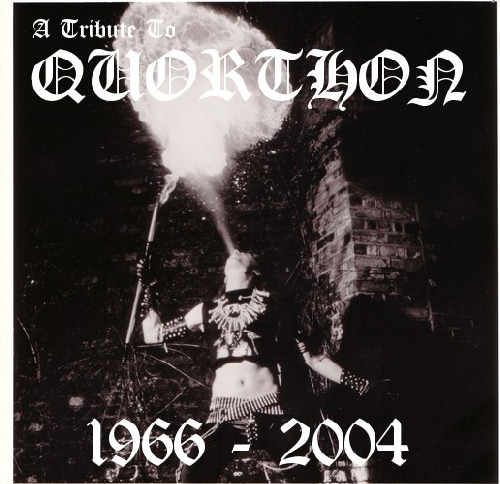
Perhaps it will strike some as odd that Amen Dunes – the nom de scène of sorts for singer/songwriter Damon McMahon – would select in the interview below a relatively obscure Canadian black metal as the group he was most impressed with in the past few years.
“Through Donkey Jaw” – the latest Amen Dunes album – was one of the most mysterious and moving collections of musical mantras we had the pleasure to become obsessed with over the recently concluded year, though we had convinced ourselves that these Dunes had more in common with our old friend Syd, rather than the equally quirky Quorthon.
Such is the beauty of our evolving listening experience. With this information in hand (which led to a head-spinning introduction to the poetry of Albert Lozeau), “Through Donkey Jaw” has taken on an altogether different atmosphere on our repeat listens, though an atmosphere no more wanting for mysticism and moving passages.
In advance of his appearance at Austin Psych Fest 5, we’re happy to present this interview with Amen Dunes. Enjoy.
If it’s appropriate to start with a topic just outside of your music, can you tell us a little bit about the photo used on the cover of “Through Donkey Jaw”? What is its origin? It’s an arresting image, not least because our memory of the photo is never quite defined – we see something different each time we look. What were your thoughts when you first saw the photograph and how have those thoughts changed, if at all, now that the photo has a lasting connection to the songs contained therein? Do you find that your impressions of visual art have a notable impact on the music you create?
The photo was taken by the artist Deborah Turbeville. She is a friend of my friend, Tuomas Korpijaakko, who helps with all the Amen Dunes layout. After trying to figure out different possible album covers that didn’t work (like one idea was that we went out and found my mom and asked her to dig a ditch with a shovel … but that didn’t end up working too well), Tuomas called Deborah. She was super sweet and was just like, “Yeah, come over.” So we went up to her penthouse on W. 72nd St., this beautiful old apartment, truly Gothic European layout and decor and everything, and just hung out and looked at old prints of hers. The one that really stood out was the one that ended up on the cover. She just said it was just a photo of a friend of hers while they were at the beach one afternoon. I just thought the image matched the music. I am not super concerned with visual art per se, but I am super concerned with visuals and art and aesthetics. What I mean is I don’t care about the art world, but I am really sensitive to aesthetics. I wouldn’t say it influences my music, but it definitely is part of the music’s message, if that makes sense. I think an album’s visual representation, cover, etc., is super, super important. It basically tells you if the person who is making the music knows what’s up, to be honest, or at least in my opinion. It tells you if they have taste or awareness. So with Amen Dunes albums, I really care about the aesthetic – second of course to the music, though they are interdependent.
What led to your decision to give the album its title, “Through Donkey Jaw”? Does the title itself relate in any specific way to the songs on the album, or perhaps to a particular emotion felt in the recording of the album? We know the donkey jaw primarily from its biblical connection (Judges 15:16 – “Samson said, ‘With the jawbone of a donkey, heaps on heaps; with the jawbone of a donkey I have struck a thousand men.'”) – is there a spiritual dimension to the album title for you?
I originally wanted to call track four on “DIA,” “Through Donkey Jaw.” That’s what the sounds on that song sounded like to me, but the label screwed up and printed and distributed all the working titles instead. So I had this title left over, and came to realize that the sounds that would come through a donkey’s jaw were also like the sounds of my singing voice in a way. Also, I felt a metaphorical kinship with the mule – ha! So I thought this would be a good title for an album of more sincere songs, ones that were more directly biographical.
I think there is an emotional and spiritual dimension to the title in a way, because I kind of see my creative path as “workhorse-like” in many ways, and my singing and music strained and struggled in a slightly similar way, too.
Continuing briefly on the theme of spirituality, one could easily mistake the album’s opening song, “Baba Yaga,” as one of distinct spiritual intent. It’s a brilliant song, unfolding in such a slow and dramatic fashion as to recall an invocation of some sort. Yet the lyrics point to something far more grounded and relatable – “You say I’m negative, but you know that it’s all made up” (and we should point to the very real possibility that our headphones are deceiving us). What can you tell us about the origin of this song? Was there a particular emotion that you were seeking to express when writing the song? Is there any relationship between the song itself and its title? Or is it “all made up”?
The title was just a convenience, but the lyrics were more directly related. I can’t say too much comfortably about what this song is about, but it is a cathartic hate song. A lot of my songs are, but particularly this one …
I think it sounds spiritual because it’s cathartic, but the origins are not spiritual at all. I was living on 18th Street that summer, in a very bad cycle of things, and kind of consumed by a negative environment and kind of scary people and habits. Now that I think back and remember, it was partially a confessional, on my negativity – “eager in my den” – and at the same time hinting that a song could be some kind of redemption from that – “a song is a sign, let it be soft.” This might sound kind of cheesy describing it now, but I don’t really give a shit – it was subconscious (that’s why the lyrics are only half logical – I wrote down whatever I hummed the first time around) and was my reality at that moment.
How much forethought did you put into the sequencing of songs on “Through Donkey Jaw”? Was this a change of pace from previous Amen Dunes releases? The new album seems to contain less improvisation within the songs than its predecessor, while the album as a whole seems to come more unglued as it progresses. Is this intentional, or are we potentially guilty of attaching our own neuroses to your songs?
I always put a ton of effort into the sequencing of albums, so this one was no less involved. It didn’t intentionally become more loose, if that’s how it appears.
This album definitely was intentionally a collection of straighter songs, save two or three tracks on the record. That was the idea – to lay down a collection of more straight ahead songs.
Would you care to comment on the rumor (the rumor that we are attempting to start right now) that you have recently completed recording on a limited-edition cassette tape for Amen Dune Fan Club members, consisting solely of Peter Gabriel covers, entitled “Shock the Donkey”?
Ha – no comment.
What is the most unexpectedly moving musical performance you have seen in the past few years – meaning a performance that you attended with minimal expectations yet came away from being very fulfilled? What was it about that performance that struck you? What do you attempt to capture in a live Amen Dunes performance that may be different than its recorded corollary?
I don’t think I try anything different live than on record. It’s just naturally more stripped down by virtue of the band being a three piece, sometimes just me and a drummer. I guess live it becomes a more tense, minimal kind of thing.
The best shows … the best show I saw was this band from Canada called Akitsa. They are total outsiders in many ways in the black metal world, but they kick the shit out of all the stupid hipster black metal projects I’ve seen. They have their own look – they were super clean Aryan looking dudes – and a total non-metal sound live that is insanely simple powerful and creative. His voice was like Diamanda Galas or something.
They were totally, boldly different from everyone there – they looked like someones uncle or something – but their music was totally unaffected, non-trendy, nasty ass heavy musical shit.
You basically never see bands that are like this – unpretentious, authentic, emotional and heavy. Everyone has some stupid gimmick these days.
How do you think your overall relationship with music has evolved since you first started Amen Dunes, if at all? Do you still find yourself being able to be surprised by new music, or by being introduced to certain music for the first time? Has anybody ever told you that, on certain inflections, your singing voice sounds a bit like Brian Wilson?
No, they haven’t, but thank you.
There are some newer bands I like a lot, like Ouroborus, Actress, Fabulous Diamonds, Inner City, El-G, The Men … but there aren’t that many. I think by virtue of the internet it’s become a lot harder to give music a full enough listen. Which is totally a shame, but its becoming true.
What music have you been listening to lately? If push comes to shove, what is your favorite Beach Boys song of all time?
I’ve been listening to the new Alva Noto record, Hanatarash (today), Eyeless in Gaza (like always), Gareth Williams, Lifetones … Christmas music.
Favorite Beach Boys? “Wind Chimes,” maybe? “Please Let Me Wonder”?
Siddhārtha Gautama (a huge Brian Jonestown Massacre fan, from what we hear) once said the following:
“Rage is a powerful energy that with diligent practice can be transformed into fierce compassion. However much we disagree with our enemies, our task is to identify with them. They too feel justified in their point of view.” Your thoughts? Do you feel you’ve channeled rage into the music of Amen Dunes in any way?
I think he has the right idea, but easier said than done, Siddhartha …
I definitely channel rage into the music of Amen Dunes. In fact, that’s 99% of the influence for Amen Dunes.
What’s next for Amen Dunes?
I’m planning the self-release of an LP or EP of a little more out songs and sound pieces, and then going to start writing and recording the next Amen Dunes record.
It will one day be easy to recall the time our minds were not under the spell of – if not fully destroyed by – the force known as “Spirit Smoke,” the recent release from The Great Society Mind Destroyers. Today is not that day.
One day we will be fluent in both the technical and metaphysical explanation of the altogether awesome audio-alchemy that occurs when under the spell of “Spirit Smoke.” Today is not that day.
One day we will even speak reverently of the spell cast over us by this band, without even the briefest of thoughts regarding anyother “great society” – in fact, society not born of the Windy City and not using that wind to send the sounds of “Spirit Smoke” spiraling into the air will be conspicuous only in its absence. Today is, of course, not that day.
Today is a day that sees our footing unsure, our vision unclear within the infrastructure of this Great Society. Today is a day where the throes of death can still be felt in our consciousness, a recent victim of these Mind Destroyers. Today is a day that sees us unable to define the origin of “Spirit Smoke,” though we have identified its key, conquering elements: the shaking and shrieking distortion, the steady thunder roll of drums alive underneath, and the million-miles-away vocals that orbit the entire ordeal, offering proof of the band’s gargantuan gravitational pull.
From the opening explosion-in-reverse of “Temple Lurker” to the wandering weightlessness of “Higher Bodies,” “Spirit Smoke” drifts but never deserts. Each and every song lays waste to resistance, it’s chaos neither calculated, nor careless. Its chaos is in us – its chaos is us.
The explanation of the greatness that is The Great Society Mind Destroyers may arrive one day – but we aren’t holding our breath. Rather, we contentedly resolve to inhale deeply from this “Spirit Smoke” for some time to come.
“For years, I labored with reforming the existing institutions of society, a little change here, a little change there. Now I feel quite differently. I think you’ve got to have a reconstruction of the entire society – a revolution in values.” – Martin Luther King, Jr.
It’s not hard to go beyond in our praise of the new, twenty-track compilation from Bang Bang Boogaloo, “Beyond Beyond Is Beyond.”
It’s titular inspiration comes from the radio show hosted by the compilation’s supposed curator – a radio show that for the past three years has promised “cage-free rock & roll: the primordial pulse and rhythm of rock music without all those unsightly boundaries,” and then goes beyond the promise by actually delivering on the promise, in addition to having frequent in-studio guests like Apes-favs White Hills and The Entrance Band and … Jon Anderson?!?! Yes!
And while the supposed curator of the “Beyond Beyond Is Beyond” compilation will doubtlessly receive the fame and fortune that comes automatically from releasing a free, digital, twenty song, 111-minute, 22-second long compilation filled with incredible bands currently operating in the cage-free, psychedelic splendor of these United States … we’d like to suggest the influence of someone or something a bit more magickal upon the proceedings.
How else to explain the remaining fourteen slots filled with bands and artists from nearly every strata of high-weirdness possible from this purple-mountain majesty – from Jesse Sykes and The Sweet Hereafter to The Paperhead to Woodsman? How?!?
And – perhaps most important – how else to explain the fact that this free (did we mention free?), hand-crafted digital compilation will be released on January 24, 2012 … yet revolting apes like us can download the entire boogaloo right now?!? How?!?! How?!?! Fer’thesakeofSteveHowe … HOW?!?!
Download the entire, 20-song “Beyond Beyond Is Beyond” compilation right here:
When we were first given the gift of hearing the music of Glasgow’s The Cosmic Dead – that music being among the most mesmerizing, the most powerful, the most cosmically calculated chanting chaos that we listened to, repeatedly, in the whole of 2011 – we found it hard not to reflect on another gift we were given some thirty-plus years previously.
The gift in question was a copy of one of the most popular books of all time – “Cosmos” by Carl Sagan, the illustrated companion to the 1980 television series of the same name.
You needn’t be the Associate Director of the Center for Radio Physics and Space Research at Cornell University to make the connection between The Cosmic Dead and Sagan, who did as much as anyone else in the 20th century to advocate for the exploration of space using the best parts of our inquisitive nature. And – make no mistake about it – he’s dead.
More to the point, it’s a similar inquisitiveness that unites Sagan with The Cosmic Dead – an enduring quest for, if not the truth, future questions and future answers. We hear it in The Cosmic Dead’s loud, massively over-driven space-rock majesty, repeating its unearthly sounds for light years between our ears.
Certainly there are those among us on this very ridiculous webpage today who feel the appeal of The Cosmic Dead’s (sometimes) forty-minute jams is not designed for them. Stranger things have happened – including the time there was a best-selling book in America that trumpeted the following words:
“As the ancient myth makers knew, we’re children equally of the earth and the sky. In our tenure on this planet we’ve accumulated dangerous evolutionary baggage, propensities for aggression and ritual, submission to leaders, hostility to outsiders, all of which puts our survival in some doubt. But we’ve also acquired compassion for others, love for our children, a desire to learn from history and experience and a great soaring passionate intelligence, the clear tools for our continued survival and prosperity. Which aspects of our nature will prevail is uncertain, particularly when our visions and prospects are bound to one small part of the small planet Earth. But up there in the Cosmos an inescapable perspective awaits.”
We’re happy to offer you further insight into the inescapable perspective brought about by The Cosmic Dead, courtesy of not-currently dead drummer Julian Dicken. Enjoy.
What was the first music that ever captured your attention? Can you recall what it was about that music that appealed to you at that time? How has your opinion of that music changed over time, if at all?
A lesser man would be afraid to admit this, but not me sir. I can tell you without a hint of shame that it was hearing 2 Unlimited’s “There’s No Limit” on the radio or maybe even the TV as a nipper. That was the first song I can remember being drawn in by and that stuck in my head long after I had heard it. It was then that I fell in love with the 3 R’s. Repetition, Repetition, Repetition; and then some more after that. Has my opinion of the song changed over time? Yes. Last time I heard it I remember thinking, “Ugh, what a piece of complete and utter horseshit.”
Digging perhaps a little deeper, what artists do you consider being most influential for you in terms of seeing music as exploratory – exploratory both from a purely sonic perspective but also from a personal, expanded consciousness perspective?
Probably those bands from late 60’s / early 70’s West Germany that usually fall under that rather broadly inclusive umbrella term of “krautrock.” Neu! and Can are big influences on the way I approach things rhythmically; Dinger and Liebezeit have definitely played a big part in the way I drum. There’s something about that repetitive, primitive, almost machine like insistence, mixed with (more so in the case of Liebezeit) jazz-like sensibilities, that really appeals to me.
The great thing about stripping a beat down to its bare essentials, as with the case of the 4/4 “motorik” beat, is that it can leave a lot of room for the music to flow in this really driving yet organic way. In its own time and under its own terms. It doesn’t feel forced. I think Neu! were absolute masters of that, and I often listen to them when I work on my illustrations as I find it has this very calming, relaxing effect and seems to really let your thoughts flow naturally and readily. I find them very therapeutic and helpful to listen to in that sense.
How did the members of The Cosmic Dead come together? Did you have any experience playing in other projects together before this? How do you think the concept or direction of the band has evolved since your first practice?
Just good luck, really. There have been quite a few line-up alterations since our inception, but I think we’ve reached the stage now where we have a really solid line-up. To start from the beginning, I used to be in the band with our original bass player, Josh, and we both happened to move to Glasgow from our hometown of Morecambe. We then met James by pure chance when his girlfriend came round to view our flat when we were looking for another flatmate. We became friends and started jamming together. Just like that.
We met Omar after playing a gig at his flat, and after a while of being our “smoke and lights man,” he took over on bass duties. Lewis, our newest addition, was someone James had met years ago busking outside a gig with his other band, The Radiation Line. He just invited him along to rehearsals earlier this year, and here we are. When we first started, there was no real “concept” to speak of, just a desire to be very, very, very loud. I think we’ve really found our stride this year however, with much more of an expansive and psychedelic sound. I’m quite eager for us to progress and experiment more next year though – move away from being too much of a sum of our influences and hopefully into more original territory. Karate chop some boundaries into dust and stuff. Or at least cross them out with a big, over-sized novelty crayon.
Who is responsible for the striking cover art featured on your debut cassette, and has anyone from Bubble Puppy indicated any surprise to learn that they, in fact, have skulls for faces?
I can take responsibility for that crime! From what I remember, James managed to find one of them on MySpace a good while ago and sent him a message about it. I don’t think he ever replied, though. He probably wasn’t very impressed. In all seriousness though, I’d like to think they would appreciate the nod. I mean, we are all big fans of Bubble Puppy. Saying that, they might just end up trying to sue us for all we’ve got. That’s one for our legal team to ponder … It was another complete accident that the cover came to be, though. “I heard a song of theirs on a compilation of psychedelia a while back, and decided to search for them on Google images to see what they looked like. I came across the cover of “A Gathering of Promises,” and lo and behold, they looked uncannily like the line-up of The Cosmic Dead at that time! I just put the original image up on our website for a laugh, and it just ended up getting used as part of the artwork. I think I was really into the idea of appropriation in art at the time – still am to an extent – so that would have been a big part of it. I do like to think that the cover ties in somewhat with our name, though. I mean, there’s obviously the “dead” part, but another level, I wanted to create some kind of visual nod towards the notion of what we’re about musically. We may reference and be influenced by bands of the past, of the 60’s and 70’s, but that’s very much a thing that is dead and buried now. However, I think it’s important that if you are taking ideas, ideals, sounds or whatever from the past, that you add something new to the equation, do something different with it, which is what I’d like to think we aim for musically. Personally, I think there’s nothing worse and utterly pointless than a band that just completely emulates the sound of a band or bands from the past. It displays a complete lack of imagination and they might as well just be a tribute band, y’know? You have to advance and evolve ideas. I know that could be seen as a completely hypocritical statement for me to make, as our band could be perceived as quite musically regressive, but I honestly think we’re evolving beyond that, which will hopefully be reflected in our next album.
Speaking of nods to the past, the opening track on the above mentioned cassette is entitled “The Black Rabbit,” a track that has magnificent time-traveling abilities – it’s 18+ minutes pass in what feels like just moments. Is the track title a reference to Lewis Carroll, Grace Slick, both or neither? What else can you tell us about this track?
That song title does relate to Lewis Carroll, albeit indirectly. It was in fact inspired by the original 1903 “Alice In Wonderland” film adaptation, which I believe was one of the first ever silent motion pictures. But yeah, I decided to use that film in a video for a song of ours which was untitled at the time. For me, one of the most striking images in the film was the white rabbit that Alice chases down the rabbit hole (simply a man donning a full size rabbit suit – I’ll put money on it being a large influence on the costumes used in David Lynch’s “Rabbits” series!), so the song simply became “The White Rabbit.” We ended up recording a slightly different version of it for the album, so we changed the title to black instead of white, as although being different, they both originated from the same idea and riff. I like to think of them as two sides of the same coin. We’re also all big fans of the televisual landmark known as “Quantum Leap,” as well as the various exploits of Doc Brown. So yeah, time travel is cool with The Cosmic Dead. Just don’t kill your granddad when you travel back in time, kids. Or else the very fabric of the universe will be irrevocably destroyed. Obviously.
What is the live experience of The Cosmic Dead like – or at least, what would you like the live experience of The Cosmic Dead be for the show attendee? Can you think of any time when you had relatively low expectations for a band’s live performance, but the band actually ended up blowing you away?
I think we’ve yet to reach our definitive live experience, but ideally I would like our concerts to be just as much of a visual affair as a sonic one, to create more of a sensory experience. I’m particularly fond of the idea of us investing in a decent projector at some point to get some seriously intense hypnotic visuals on the go. In essence, I guess I want our live shows to look and sound like we’ve just opened up the star gate in “2001: A Space Odyssey” and we’re taking the audience for a trip into the outer reaches of the universe … yeah, we definitely like to work within realistic parameters. Alternatively, we could just hand out tabs of acid at the door. It’d probably be cheaper …
In terms of being blown away by a live band I had low expectations for, I can’t really think of any examples to be honest. I generally only go out of my way to go to a gig if I expect that band to be particularly good. There have been numerous occasions, however, where I’ve seen local bands in Glasgow I hadn’t seen or heard before, and have been pleasantly surprised by how good they are. It’s one of the great things about the place: it’s big enough and there’s enough going on for you to accidentally stumble across stuff like that.
What music have you been listening to lately? Would you care to comment on the rumor (the rumor that I am attempting to start right now) that you next release will be a 66-minute version of “Uncle John’s Band,” entitled “Workingman’s Cosmic Dead”?
This week I have mostly been listening to the second High Rise album (brilliant, obscure, needle-in-the-red Japanese psych from the mid eighties), “Embryonic” by The Flaming Lips (psychedelic overtones, but it has a very contemporary and unique sound. I love it – the lyrics are fantastic as well), and the new Fall album, which isn’t fantastic, but not too bad, either. It contains a song called “Cosmos 7,” though, so kudos for that, Mr. Smith. The rumor that The Cosmic Dead will release a 66-minute version of “Uncle John’s Band” is entirely true; you clearly have good sources, sir. It will not, however, be our next album but merely an isolated release. So although your agents are good, they aren’t that accurate. Maybe they could do with taking a leaf out of the KGB’s book, rather than running about attempting to establish themselves as philandering James Bond-like figures. Very unprofessional, that.
How, if at all, does being based in Glasgow affect the sound of The Cosmic Dead? What are the best and worst things about living in Glasgow?
I do think living in Glasgow probably does affect our sound to an extent, but not hugely. I’d say it has more of an effect on the way we approach making our music and playing live shows rather than the actual sound of our music itself. One of the good things about being part of a musical community, especially if you play with lots of bands who work hard to be technically proficient and exciting live, or rather, just inject a lot passion into whatever they do, is that it has this positive rub-off effect on other bands. It probably just happens unconsciously, but they see other bands live, see how good they are, and then know that they somehow have to match that or aim to surpass it themselves. Not in a one-upmanship kind of way – it’s more that a certain band or bands will set a standard or precedent, and that encourages other bands to try and match it. I believe it’s an entirely healthy thing, and you see it happen more with bands who hang out together and encourage a sense of a community. That’s one of the great things about Glasgow. We’re lucky enough to have grassroots DIY promoters like Winning Sperm Party and Cry Parrot who really encourage and venerate that sort of stuff to a great extent. I wouldn’t really say there are any real negatives to living in Glasgow. I mean, personally, it’s everything I could’ve hoped for, especially compared to the town I grew up in, which is a very small place. Back there, there was an overriding sense of bitterness and claustrophobia, and that can be really stifling and generally detrimental to creativity. So by comparison, moving to Glasgow was a bit like finding yourself sipping herbal tea with The Velvet Underground in Andy Warhol’s Factory circa 1967. Ha ha ha.
In his essay “Background Radiation: The West German Republic Tunes In To the Cosmos,” Ken Hollings remarks that, “The sound of radio static connects inner and outer space. Tuning through a wireless dial also means discovering that unique audible space that exists between stations: a mysterious zone of harmonies and distortions that function according to some strange and distinct logic of their own.” Your thoughts?
Wow. I’d love to read that essay – sounds great! You know, I think that kind of idea is what any musician or band who considers their music to be psychedelic or consciousness-expanding are attempting to tap into, whether they are aware of it or not. It’s also funny that Hollings uses the analogy of tuning in-between stations on a radio, because I used to love doing that as a kid with my little handheld portable! I remember doing it every night when I was about 7 or 8, under the covers of my bed, long after I was supposed to be asleep. When I got bored of trying to look for foreign stations on long wave (I could usually only find Radio Luxembourg), I would just mess around with the dial and entertain myself with all of the crazy noises you could create flicking through the waves. In retrospect, I wouldn’t be surprised if I had become a synthesizer / signal generator obsessive today if I had been given the opportunity to own such equipment or could afford to buy it.
But anyway, I’m rambling … I think it’s really interesting to listen to those NASA-released Voyager recordings of radio waves that have been emitted by the planets and beyond, and then converted into an audio signal. If you’ve not given them a listen, please do – they’re incredible. Each planet or moon has its own unique song, which all sound like beautiful, haunting, sometimes eerie (check out Jupiter) ambient drones. But the thing that I find fascinating, and please bear in mind that my knowledge on the subject is admittedly rather thin so I may be wrong here, (maybe one of your readers could rectify for me!), but my internet research would suggest that the Voyager probes, which were launched in 1977, were the first to actually record the “sounds” or rather, signals, of the planets to a decent degree (I believe recordings from Earth pick up very little). Now, here’s where I could be wrong, but I’m currently under the impression that no recordings like this existed in the public domain pre-Voyager, and yet, there’s this correlation between the Voyager recordings and the sounds found on the records of many psychedelic bands of the late 60’s onwards (generated primarily by the growing use of electronic equipment such as oscillators and synthesizers), and even sci-fi films and television before that. Throw into the equation the growing use of lyrical themes and imagery of space and the cosmos in music, and it gets even more interesting. Arguably, this all became prominent in art due to the influence of the space race and the moon landings, but for people to make a guess at what space and the planets could actually “sound” like, and be so on the money, is utterly amazing. Maybe it was just mere coincidence, or maybe we did “tune in” to the cosmos … who knows? Either way, it’s bloody fascinating stuff!
What’s next for The Cosmic Dead?
Lots and lots o’ things! Paradigms Records are putting out our self-titled debut album on CD, and we’re planning to put a bunch of cassettes out on various tape labels soon. They’ll probably just contain jams, rehearsal recordings, droney stuff, chants maybe – that kind of thing. They won’t be albums, though. We want to make a clear distinction between the two. We’ll definitely be releasing a second album on vinyl and probably CD in 2012, though. We’re also currently in the process of booking a UK tour for the end of February, so that should be nice, as it’ll mark our first shows outside of Scotland. We’d also love to play outside of the UK eventually, as we appear to have quite a lot of fans overseas! We’ll also probably book a big show at the end of 2012, sell it out, and blow ourselves up at the end of the set in a blaze of glory. There ain’t nobody gonna top that …
He has been – and continues to be – many other things in addition. Comedian, actor, well-dressed, well-read, husband, high … he is massive and he contains multitudes.
For us, he is nothing less than an inspiration in creativity, in thought, in the promotion of peace and love, and – not insignificantly – in being really fucking cool.
For over a year now, we have subscribed to his podcast (or Proopcast, should you prefer), unambiguously titled “The Smartest Man in the World.” To say that we have enjoyed this podcast would be an understatement the likes of which Mr. Proops would not touch with a ten-foot kitten. Week after glorious week, Proops offers his thoughts, his answers, his simultaneously silly and serious stories of life, love, Jewish baseball players and every other disastrous and/or wonderful thing in the world.
Did we mention the podcast is absolutely hilarious, too? We should mention that.
This past year, Rolling Stone described “The Smartest Man in the World” thusly:
“Here he is, though, in front of a live audience each week, bravely recording some of the boldest comedy on the podcasting frontier right now. Proops proved himself a keen improviser on ‘Whose Line Is It, Anyway?’ over a decade ago, but his performance there only hinted at how nimble he is here, guiding seemingly steam-of-consciousness thoughts about current events right into jokes that appear handcrafted and fussed over. He may get political at times, but he’s more Lenny Bruce than Bill Maher: occasionally not funny, but never boring.”
This may be the most – per chance, the only! – spot-on thing published in Rolling Stone in the past forty years. Truth is, “The Smartest Man in the World” is indescribable. And for some indescribable reason, Mr. Proops blessed us with some of his time in order to answer our ridiculous questions.
We’d love to hear some of your thoughts on your stated two favorite genres of music. First up, glam. What was your first introduction to glam and what was your initial reaction? What is it that makes glam such an unquestionable fun and vibrant form some 40 years past its initial explosion? Can there be a true glam band – by your definition – in the current day? Can there even be one after the death of Marc Bolan?
I heard it when I was a teen. I was introduced to Ian Hunter by a friend. I also loved David Bowie and had his hits album, “Changes,” and listened to it constantly. Glam is fun for the irreverence, open sexual attitudes, the campness of the guys and the undeniable roots rock of the music. Lady Gaga is a version of glam, as is Goldfrapp. Rock is not a place for glam anymore. Straight white men hate disco and glam because it includes women and queers.
Switching gears to your other stated musical preference, which artist or album best captures what you love about funk? Is it possible that funk is perhaps the most misunderstood genre of them all, and why? Is your answer influenced at all by the notion that any of the three members of The Police – one of your stated least favorite bands of all time – would be more likely to describe a section of one of their songs as “a bit funk” over “a bit glam”?
Too many to mention … Johnny “Guitar” Watson, The Brothers Johnson, George Duke, Chaka Khan, Tower of Power, The Time, Ohio Players, Heatwave … it never ends. Without James Brown, George Clinton and Sly Stone, we have nothing. The Police have never gotten near a funk riff. Thank funk.
We feel it’s appropriate to ask you your opinion writ large on both psychedelic music and psychedelic experience in general, given that you are originally from San Francisco and have met at least one Beatle. What images or sounds appear in your minds eye when you think of psychedelic music?
I think of Grace Slick and her tough approach to psychedelic. The San Francisco bands – the Grateful Dead and the Jefferson Airplane – were semi-nasty outfits, full of tough guys and drug addicts. Psychedelia is often seen as benign, but I think Blue Cheer and Moby Grape might re-write that notion. I like the butterflies and rainbows part a lot. The soft fun of the music is in the poetry.
What impact did your youth in The Bay Area have on your opinion of psychedelic music? Speaking of a 1967 visit to Haight-Ashbury, no less an authority than George Harrison said, “You know, I went to Haight-Ashbury, expecting it to be this brilliant place, and it was just full of horrible, spotty, dropout kids on drugs.”
George was rich and out of touch at that point. The Haight was always full of homeless and gangsters.
Given the eminent shagability of the aforementioned Harrison, what album would you be most likely to play for Mr. Harrison on an imaginary dinner date?
Well, he loved The Band … so maybe “Music From Big Pink.”
Given the original definition of a psychedelic experience being “characterized by the striking perception of aspects of one’s mind previously unknown, or by the creative exuberance of the mind liberated from its ostensibly ordinary fetters,” what has been the most psychedelic live music performance you’ve ever seen? Can you recall ever going to see a performance with exceedingly low expectations only to find yourself truly transformed?
I took acid and saw The Tubes on New Years Eve, 1977, and lost my shit. They are a glammy, theatrical band and the constant changing of costumes and motifs really turned me on. I saw the Grateful Dead and the unity of the crowd was inspiring. Everyone was there for one reason and that is amazing.
Do you feel that one can truly be transformed by music? Can one be truly transformed by the spoken word and, if so, when was the last time it happened to you?
I am always being influenced by music and the spoken word. I listen to stand up and read books and speeches by Lincoln and Martin Luther King … Vaclav Havel and Aung San Suu Kyi’s words are inspiring. I listen to Bill Hicks and Carlin when I want to know it is okay to hold a different opinion.
Again, we feel it’s appropriate to ask you about the powerful nature of words, given the transformative words you share on “The Smartest Man In the World.” In fact, we find ourselves admiring greatly not only your own words, but also the words of others that you choose to share, from Martin Luther King, Jr., to Charles Bukowski. What has been the biggest surprise to you in regard to sharing your thoughts – and thoughts you admire – via the podcast? What is the downside, if any?
That people do respond to hearing Gil Scott-Heron for the first time, or even The Beatles. I think poetry is in everything. I seek to bring that to others. There is no downside.
In his remarkable book “The Harvard Psychedelic Club,” author Don Lattin quotes Phil Slater – who, as a graduate student at Harvard, administered LSD to students in government-sanctioned research in the early 1950’s and later became a bestselling author with “The Pursuit of Lonliness: American Culture at the Breaking Point” – as saying the following:
“What [Timothy] Leary did more than anything else was activate conservative anxiety in America. The way he phrased the rejection of the status quo fit the hippies and the political left, and he did it in a way that scared people hugely. While all the hippies and feminists and the radicals and the civil rights people argued about which was the most important way to go, the only people who really understood that it was all one thing was the right wing.”
Your thoughts?
Yipes. Well, the right only wants to crush and dominate. The rest of us have too many agendas. The media is a lapdog to monied interests and the government and the corporations want us all to be willing slaves. Drugs and enlightenment and free thought are never an easy sell in a counrty where we listen to people talking about how the Lord slected them and whatnot.
In the declining weeks of 2011, our musical attention was folded up neatly and delivered directly to the self-titled, self-assured debut album from Quilt. Upon early entry to 2012, we find that attention unwavering.
The trio’s layered sound, which we praised for its inspired vocal harmonies, generous choral-pop-psych hooks, rhythmic diversity and overall beauty, is a rewarding combination, the effect of which only grows after repeated listens. The Quilt musical landscape is painted with such precision and spirit that we soon began to suspect that its creators were real and not imaginary.
To confirm our suspicions, we enlist the assistance of someone who knew a bit about where the imaginary fits in our lives, as well as knowing a bit about the use of the letter “q.”
“He who sings,” said our friend Miguel de Cervantes, “scares away his woes.”
As we enter this new year with no shortage of woes, we thank Quilt for their (perhaps subconscious) efforts to scare them away, and for each member (Shane Butler, Anna Fox Rochinski, and John Andrews) offering proof of their existence by being kind enough to answer our interview questions below. Enjoy.
What recording artist or band has been most important in expanding your own musical parameters, that would probably not be apparent to most when listening to Quilt? What makes this particular artist or band so compelling to you? What is a recent addition to your listening habits that you would have thought unlikely even just a year ago? That would not be apparent to a listener?
Anna: Good question … the song “The Rain” by Missy Elliott is incredible and I listen to it all the time. Aside from this song, I do really love hip hop. In terms of additions to my listening habits, a year ago, I wouldn’t have predicted that I would have listened to so much NPR in 2011, which was playing all day every day at my old job. I like it OK, but after about 5 hours it began to feel so dry that we’d have to switch on the hilarious loudmouth conservative talk radio guy to balance it all out.
Shane: Over the past year, when I was living in NYC, I spent a lot of time going to La Monte Young’s Dreamhouse. Young’s work spends most of its time focusing on the in-between sounds and spaces of long drones, which I find super interesting. He used to study with Pandit Pran Nath, a raga vocalist from India … they would just sit and jam voices together for long expanses of time. There are definitely drone elements found in Quilt, but the ways in which the site-specificity of his and other experimental artists (such as Maryanne Amacher, Terry Riley, Morton Subotnik, John Cage) has influenced my approach to creating sounds is definitely strong. It’s one of the reasons I really like having three voices in a band … even though often the sound is all flowing out of one or two PA monitors, the visual effect of watching three people sing makes the set/sound more spatially interesting, I think. In terms of recent additions, I have been revisiting a lot of radio stuff that i grew up with over the past couple of months … the 90’s were pretty bizarre.
What was your first experience playing in a band, if there was such an experience before Quilt? What did you take from that experience and apply to Quilt? Had you any previous relationship – musical or otherwise – with the other members of the band before coming together as Quilt?
Anna: I mostly played as a solo folk act, as well as in the occasional improv drone band, mostly through an art/music collective in Boston called the Whitehaus Family Record. This is one of the arenas that Shane, Taylor, John and I all had ties to in the first place. Shane and Taylor played in a folk duo, and we started Quilt together in late 2008, making it up as we went along, and it was a really amazing process. When Taylor moved on and John came into the picture this year, we had already played on bills with his solo act before, and he’d been on our first tour with us, opening up for us and hanging out, and since he joined the band as drummer we have all been learning together about furthering our sound. It’s just been a series of gifts, one after the other …
Shane: I started playing in bands when I was in high-school. I had a kind of psychedelic post-punk band called T.V. Eye (based on The Stooges song) in high school. When I was in college, I was in a improvisational-drone act called Yawn Alms. We made a release or two and played for about two years. I also at that time was playing a lot of shows solo (acoustic, mostly) which turned into me playing with Taylor Mcvay (the original drummer of Quilt) as The Good Party. Then we started Quilt with Anna and Andrew Connor (from Yawn Alms). We all used to hang out and play shows around the Boston underground scene – that’s how we kind of formed the band.
John: I was twelve years old when I played drums in my first band. We only had one song, and our “shows” consisted of inviting other neighborhood kids in my bedroom to watch us play the one, very repetitive, song. Shane played in a punk band in high school. Apparently, he used to throw broccoli into the crowd during shows. Once he started college in Boston, he and Taylor Mcvay started The Good Party. They were a beautiful folk two piece which eventually, to an extent, transcended into the original line up of Quilt, along with Anna. The Good Party still does shows here and there. I joined the band in February 2011 after Taylor left the group. I also play music in a band called Wisdom Tooth from New Jersey. I met Anna and Shane through doing that. However, we’re all convinced that we’ve met in a previous life before.


 Revolt of the Apes